


Find the Diamond Stud Size That Fits Your Life
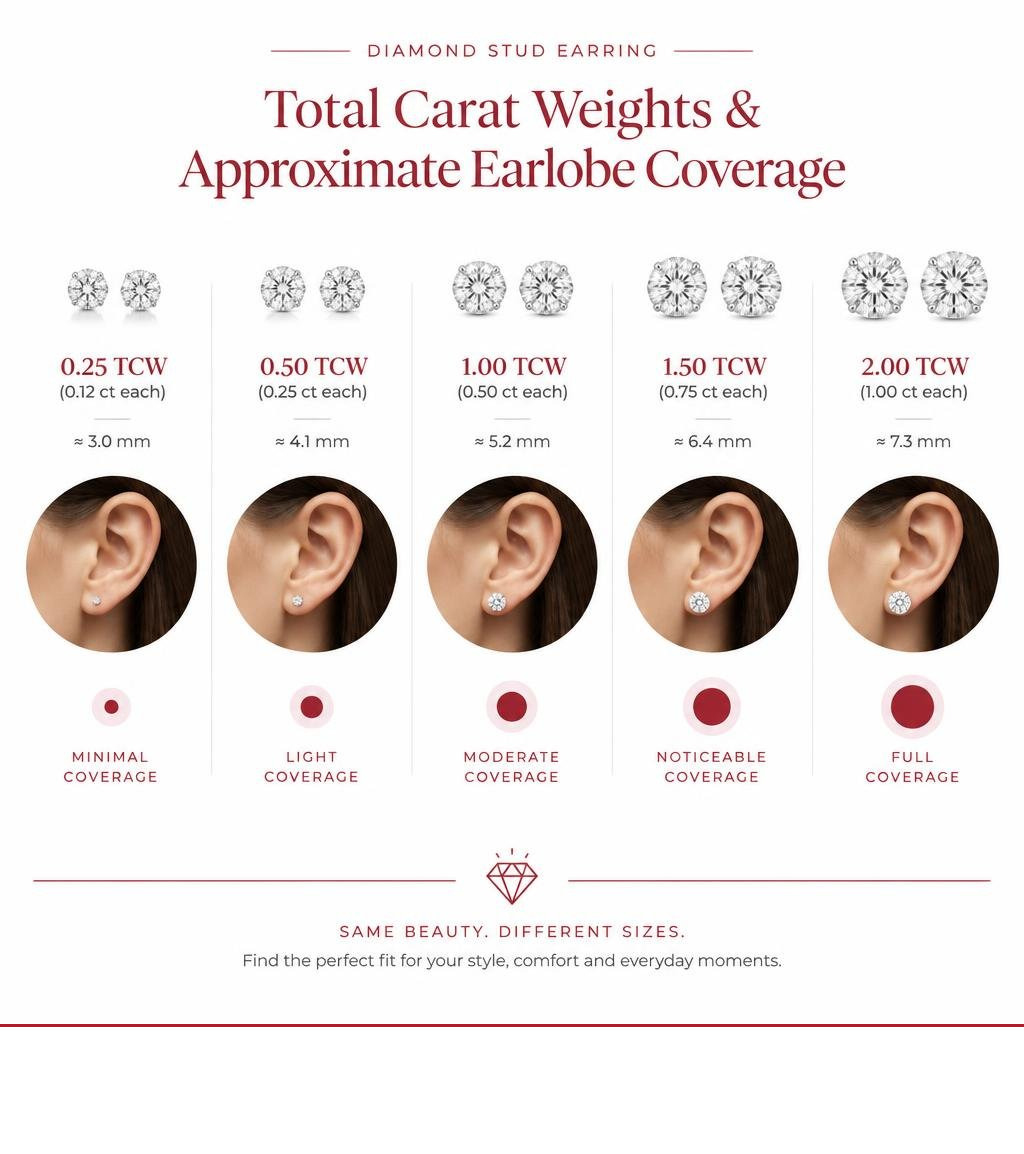
The right pair of diamond stud earrings should look balanced on your ear, feel secure all day, and suit how you dress. For most people, 0.50 to 1.00 total carat weight (TCW) offers an easy everyday size, while 1.50 TCW and above creates a more noticeable, occasion-ready look. Choose size based on your earlobe coverage, comfort, budget, and whether you want quiet sparkle or a statement.
Diamond studs remain a jewellery essential because they work with almost everything: jeans, workwear, wedding attire, and formal evening looks. But bigger is not always better. The best choice pairs visible brilliance with a well-made setting, reliable backs, and diamond quality that makes sense for the size you choose.
At Inglis Jewellers, we help clients find diamond studs with lasting craftsmanship and proportions that feel personal, not one-size-fits-all. For a broader look at how diamonds are graded and valued, the Gemological Institute of America offers independent educational resources on diamond quality.
The Essential Sizing Guide for Diamond Stud Earrings
When shopping for studs, the single most important metric to understand is Total Carat Weight (TCW). Unlike engagement rings, where the carat weight refers to a single center stone, earrings are sold by the combined weight of both gems. A 1.00 TCW pair consists of two 0.50-carat diamonds—one for each ear.
Finding your ideal size involves balancing visual presence, daily comfort, and earlobe anatomy. A stone that looks petite on one person may dominate the lobe of someone with smaller features. Furthermore, as carat weight climbs, the depth of the stone increases, shifting how the earring sits against your skin. Navigating these nuances is simple once you understand how diamond measurements translate to real-world wear, especially when reviewing our comprehensive diamond buying guide.
| Total Carat Weight (TCW) | Weight Per Ear | Approx. Diameter (Round) | Earlobe Coverage & Visual Impact |
|---|---|---|---|
| 0.25 TCW | 0.125 ct | ~3.2 mm | Subtle, delicate accent; ideal for second piercings |
| 0.50 TCW | 0.25 ct | ~4.1 mm | Understated everyday sparkle; classic minimalist look |
| 0.75 TCW | 0.375 ct | ~4.6 mm | Balanced presence; noticeable without feeling heavy |
| 1.00 TCW | 0.50 ct | ~5.1 mm | The gold standard; classic, versatile luxury |
| 1.50 TCW | 0.75 ct | ~5.8 mm | Bold and eye-catching; effortless transition from day to night |
| 2.00 TCW | 1.00 ct | ~6.5 mm | Statement size; generous lobe coverage with premium brilliance |
| 3.00+ TCW | 1.50+ ct | ~7.4+ mm | Dramatic luxury; best paired with secure, wide-base backings |
Choosing the Right Diamond Stud Earrings for Everyday Wear
For daily wear, sizes ranging from 0.50 TCW to 1.00 TCW are overwhelmingly favored. A 0.50 TCW pair provides a tasteful glint of light that looks natural at the gym, in boardrooms, or running weekend errands.
At 1.00 TCW (half a carat per ear), the stones measure roughly 5.1 millimeters across. This size achieves an ideal balance: substantial enough to capture attention from across a table, yet compact and lightweight enough to sleep in comfortably without pinching or weighing down your lobe.
Statement Sizes and Special Occasions
Stepping into 1.50 TCW and beyond shifts the conversation from subtle refinement to striking glamour. These larger stones excel in evening lighting, drawing focus during formal events, celebrations, and galas.
However, larger diamonds carry more physical weight. Without proper support, studs exceeding 1.50 TCW can droop forward, pointing toward the floor rather than outward toward your audience. To maintain an upright, flattering presentation and protect your investment, we recommend utilizing premium locking mechanisms such as LOX earring backs, which secure the post firmly against the earlobe.
Evaluating Diamond Quality: The 4Cs for Studs
Evaluating diamonds for earrings differs fundamentally from assessing diamonds for rings. A ring is examined up close from mere inches away. Stud earrings, by contrast, are viewed at conversational distance and are frequently in motion. This allows you to allocate your budget strategically across the 4Cs (Cut, Clarity, Color, and Carat).

- Cut: Cut is paramount. An Excellent or Ideal cut maximizes light return, ensuring your studs sparkle vividly across a room, even in dim lighting.
- Clarity: Because earrings are rarely inspected under magnification, eye-clean SI1 or VS2 clarity grades offer exceptional visual beauty while avoiding the premium cost of flawless grades.
- Color: Diamonds in the near-colorless range (G to J) face up bright white when mounted in white gold or platinum. If you prefer yellow or rose gold, you can comfortably choose stones in the I–K range, as the warm metal complements faint warmth in the diamond.
- Carat: Optimize your carat selection once your cut quality is locked in.
Understanding these nuances mirrors the core evaluation methods detailed in our diamond rings guide.
Diamond Shapes and Visual Dimensions
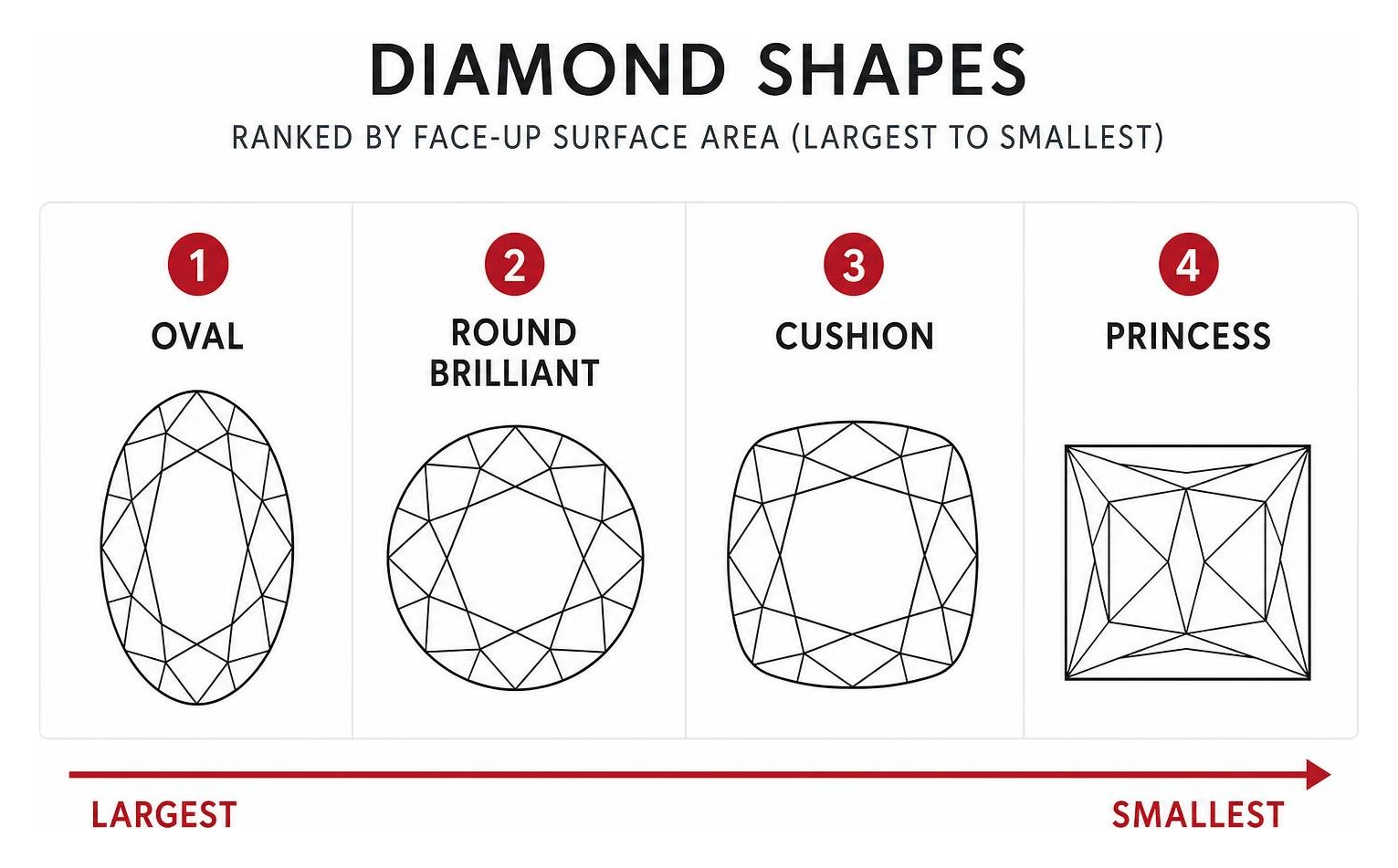
The silhouette of your diamond dictates how light disperses and how large the stone appears relative to its carat weight:
- Round Brilliant: The undisputed classic, cut with 57 or 58 facets engineered to deliver the highest level of brilliance and fire.
- Princess Cut: Square stones with clean, modern lines and intense geometric sparkle. They offer a contemporary aesthetic with slightly more edge.
- Cushion Cut: Soft, pillow-like contours blending vintage romance with modern facet patterns.
- Oval Shape: Featuring an elongated table, oval diamonds spread carat weight across a larger surface area, creating the illusion of a significantly larger stone.
Natural Diamonds vs. Lab-Grown and Simulants
Today's market offers diverse avenues for achieving your desired look:
- Natural Diamonds: Formed deep within the Earth over billions of years, mined diamonds carry timeless tradition and heirloom appeal.
- Lab-Grown Diamonds: Chemically, physically, and optically identical to mined diamonds, lab-created gems offer remarkable value, allowing you to choose larger carat weights or higher clarity grades within your target budget.
- Simulants (Moissanite): Composed of silicon carbide, moissanite is an entirely different mineral known for dramatic rainbow fire and exceptional durability, making it an attractive alternative for budget-conscious fine jewellery lovers.
Choosing the Best Setting and Metal Options
The setting serves two purposes: securing your diamond and enhancing its visual presentation.
- 3-Prong Martini Settings: Shaped like a cone, martini settings sit flush against the earlobe, minimizing forward tilt. They show less metal, putting the focus entirely on the diamond.
- 4-Prong Basket Settings: A flat-bottomed, sturdy classic that holds diamonds securely while lifting them slightly off the lobe for maximum light entry.
- Bezel Settings: A smooth rim of precious metal encircles the diamond's perimeter. Bezel mountings protect the diamond's girdle from daily bumps and visually expand the perceived size of the stone. Explore the advantages in our diamond bezel earrings guide.
When selecting precious metals, 14k or 18k white gold and platinum enhance the crisp, icy brilliance of high-color stones. 14k yellow gold and rose gold bring rich contrast and vintage warmth to the design.
Security and Earring Back Selection
Losing a fine earring is an experience we want every client to avoid. Selecting the appropriate backing style provides both comfort and peace of mind:
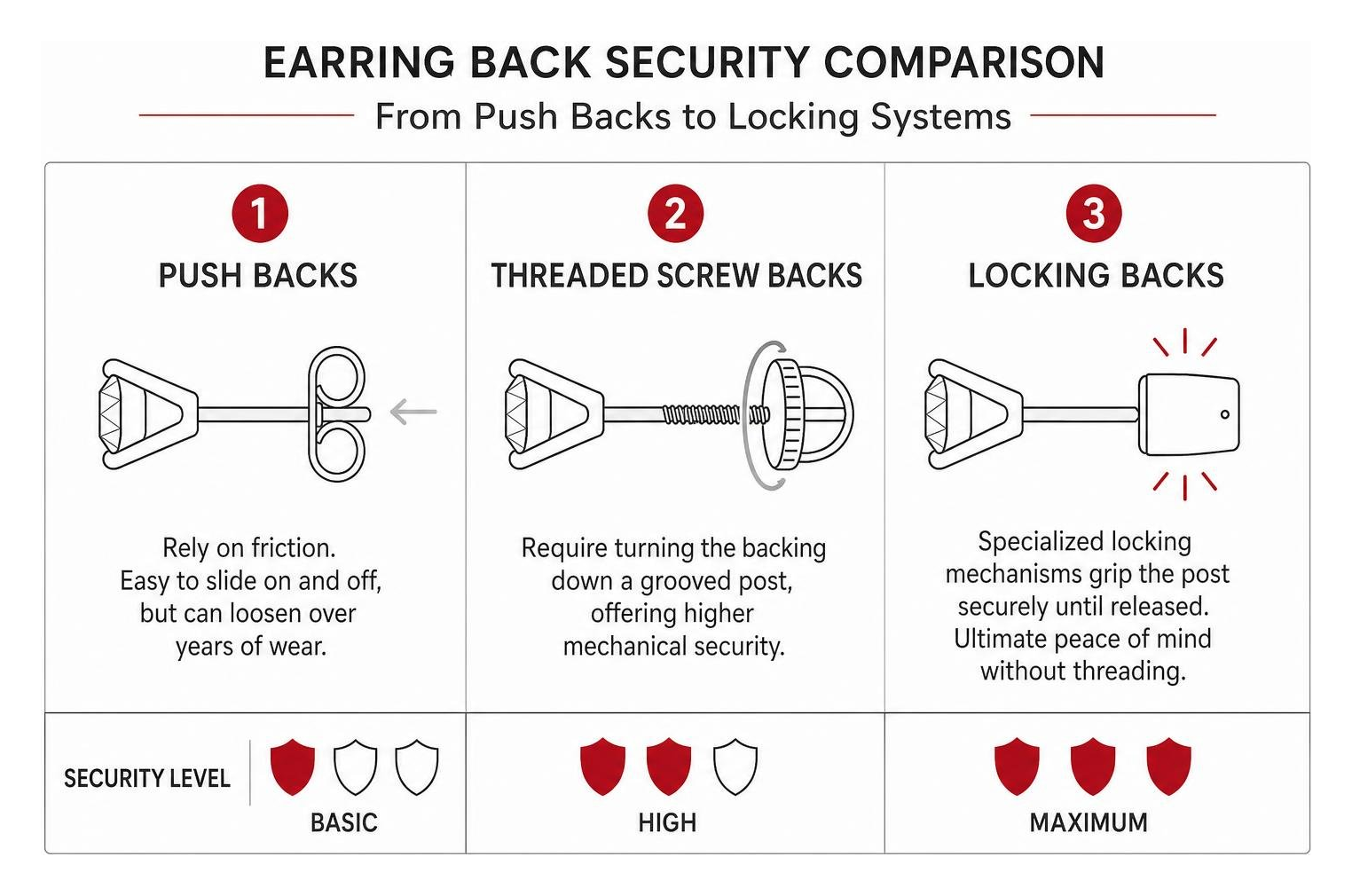
Standard push backs rely on friction, making them easy to slide on and off, though they can loosen over years of wear. Threaded screw backs require turning the backing down a grooved post, offering higher mechanical security. For the ultimate peace of mind without the hassle of threading, specialized locking mechanisms grip the post securely until released. Review our overview of the types of earring backs and how to remove them, or browse the earring backs names guide to determine the right match for your daily routine.
Styling, Care, and Common Buying Mistakes
Diamond studs are uniquely versatile. Pair them effortlessly with casual weekend wear, tailored business suits, or bridal gowns. For modern styling, layer diamond studs alongside secondary lobe piercings, gold huggies, or textured accents. They also create a stunning textural contrast when worn near elegant handmade pearl drop earrings.
When purchasing, avoid these common missteps:
- Sacrificing cut for carat: A large, poorly cut diamond appears lifeless and dull.
- Overpaying for invisible clarity: VVS grades are unnecessary for earrings; eye-clean SI1 stones look identical to the naked eye.
- Skipping independent certification: Always ensure diamonds are graded by accredited gemological laboratories like GIA or IGI.
How to Clean and Protect Diamond Stud Earrings
Lotions, hair products, and natural skin oils accumulate quickly behind earring settings, diminishing their natural brilliance.
To restore their original shine at home, soak your studs in a bowl of warm water mixed with mild dish soap for ten minutes. Gently brush around the prongs and pavilion using a soft-bristle toothbrush, rinse under clean lukewarm water (ensure the drain is securely covered), and pat dry with a lint-free cloth. Periodic ultrasonic cleanings and professional prong checks by our bench goldsmiths ensure your stones remain brilliant and securely seated.
Frequently Asked Questions About Stud Sizing and Quality
Is a 1-carat total weight diamond stud too big for daily wear?
Not at all. A 1.00 TCW pair features 0.50-carat stones in each ear (~5.1 mm wide). This proportion provides an eye-catching, sophisticated presence without feeling heavy or overwhelming for everyday activities.
Which diamond shape looks largest in a stud setting?
Oval and marquise shapes offer the largest face-up surface area per carat due to their elongated geometry. Among traditional symmetrical cuts, round brilliant diamonds offer greater spread and light reflection than princess or cushion cuts of equivalent carat weight.
How do I verify the authenticity of diamond studs?
Authenticity is established through reputable laboratory grading reports (such as GIA or IGI), thermal gemological testing, and physical inspection under magnification by an experienced jeweller.
Conclusion
Choosing the perfect diamond studs comes down to lifestyle, personal taste, and thoughtful craftsmanship. Whether you are drawn to subtle half-carat classics or head-turning statement pairs, the right setting and cut will bring decades of daily enjoyment. For an in-depth comparison of diamond sizing and alternative gemstones, explore our 1-carat moissanite ring guide.
At Inglis Jewellers, our master goldsmiths and jewellery specialists take pride in helping you find pieces that stand the test of time. Visit our showrooms in Truro, New Glasgow, and Sydney, Nova Scotia, or Riverview, New Brunswick, to try on various sizes and settings in person.