


Why Fancy Colored Lab Diamonds Are Transforming Modern Jewellery
Fancy colored lab diamonds are real diamonds grown in a controlled setting, with the same 10-on-the-Mohs-scale hardness as mined diamonds. They offer bold pink, blue, yellow, and green colour options that are rare in nature, while giving buyers more freedom to prioritize colour, cut, size, and a custom setting.
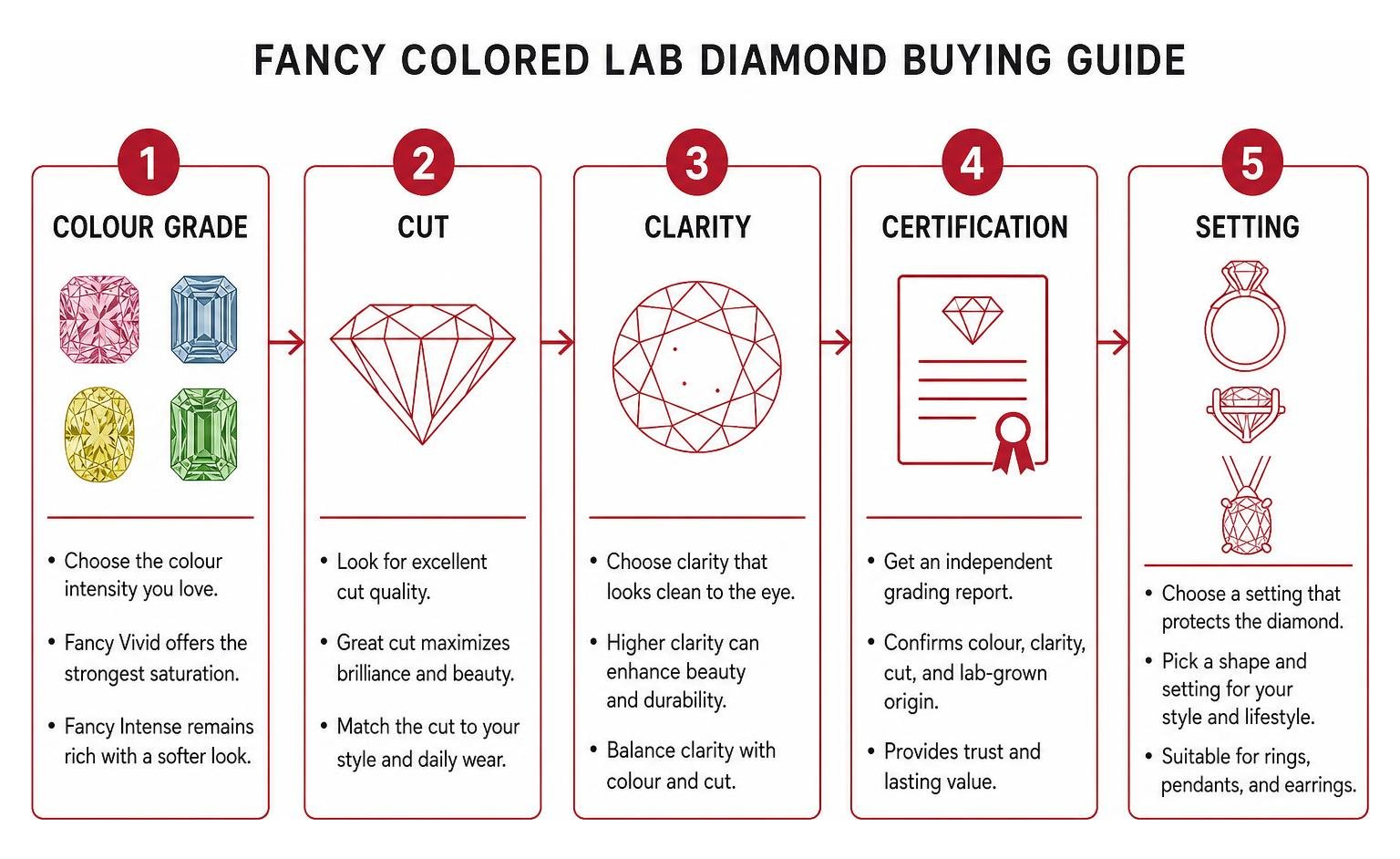
For a lasting piece, focus on three things first:
- Choose the colour intensity you love. Fancy Vivid delivers the strongest saturation, while Fancy Intense remains rich but can offer a softer look.
- Look for an independent grading report that confirms the stone's colour, clarity, cut, and lab-grown origin.
- Select a shape and setting that protect the diamond and suit daily wear, from radiant-cut engagement rings to colourful pendants and earrings.
These diamonds can also be a fresh take on the traditional April birthstone. While they are durable enough for everyday jewellery, value varies widely by carat weight, colour intensity, clarity, cut quality, and certification. Lab-grown diamonds can be a more responsible choice than mined stones, but their sustainability depends on how the grower sources energy and manages production.
At Inglis Jewellers, we help clients turn distinctive diamonds into well-crafted, personal jewellery designed to be worn for years.
Exploring the Spectrum and Science of Fancy Colored Lab Diamonds
When people first encounter fancy colored lab diamonds, they often ask whether the vibrant shades are painted on or somehow artificial. The reality is far more fascinating: these gems are created using the exact same physical and chemical principles that produce natural diamonds beneath the earth's crust.
Modern diamond laboratories use two primary methods to grow rough crystals: High Pressure High Temperature (HPHT) and Chemical Vapor Deposition (CVD). To achieve mesmerizing shades of blue, yellow, pink, and green, scientists introduce specific trace elements or controlled post-growth treatments into the diamond crystal lattice.
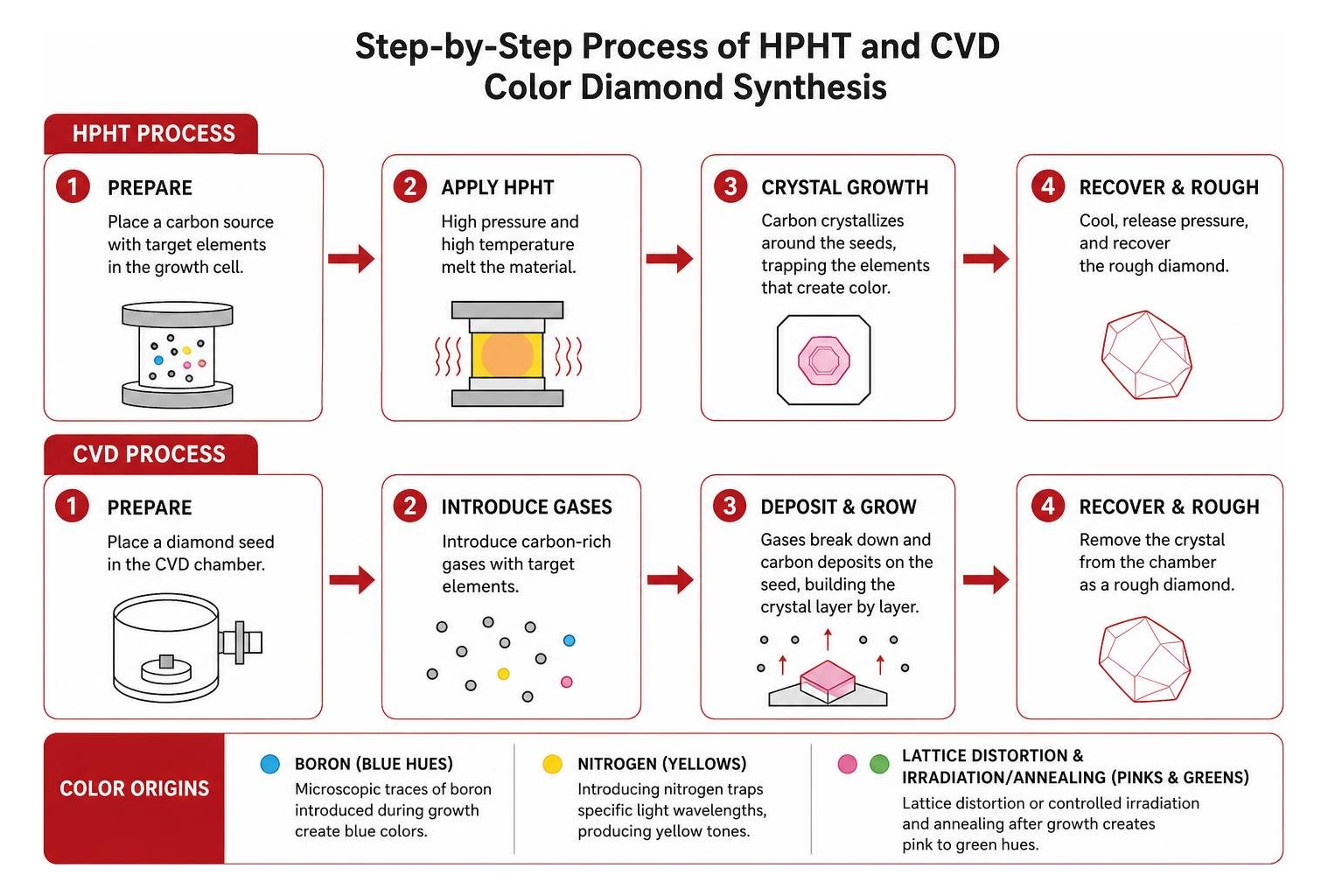
- Boron (Blue Hues): Adding microscopic traces of boron during the growth phase yields striking sky-to-ocean blues.
- Nitrogen (Canary and Fancy Yellows): Introducing nitrogen traps specific light wavelengths, producing radiant yellow tones.
- Lattice Distortion and Irradiation/Annealing (Pinks and Greens): Pink diamonds often result from a specialized combination of plastic deformation within the crystal lattice or controlled post-growth irradiation and thermal annealing, resulting in blush to vivid magenta hues.
Every quality stone comes with a grading report verifying its origin and quality. Shoppers looking for peace of mind can explore independent lab registries to inspect certified fancy color lab grown diamonds graded by reputable institutions like the International Gemological Institute (IGI).
Color Intensity: Fancy Vivid vs Fancy Intense
Unlike colourless diamonds, which are graded from D to Z based on the absence of tint, colored diamonds are evaluated on their hue, tone, and saturation. The two most sought-after intensity classifications are Fancy Intense and Fancy Vivid.
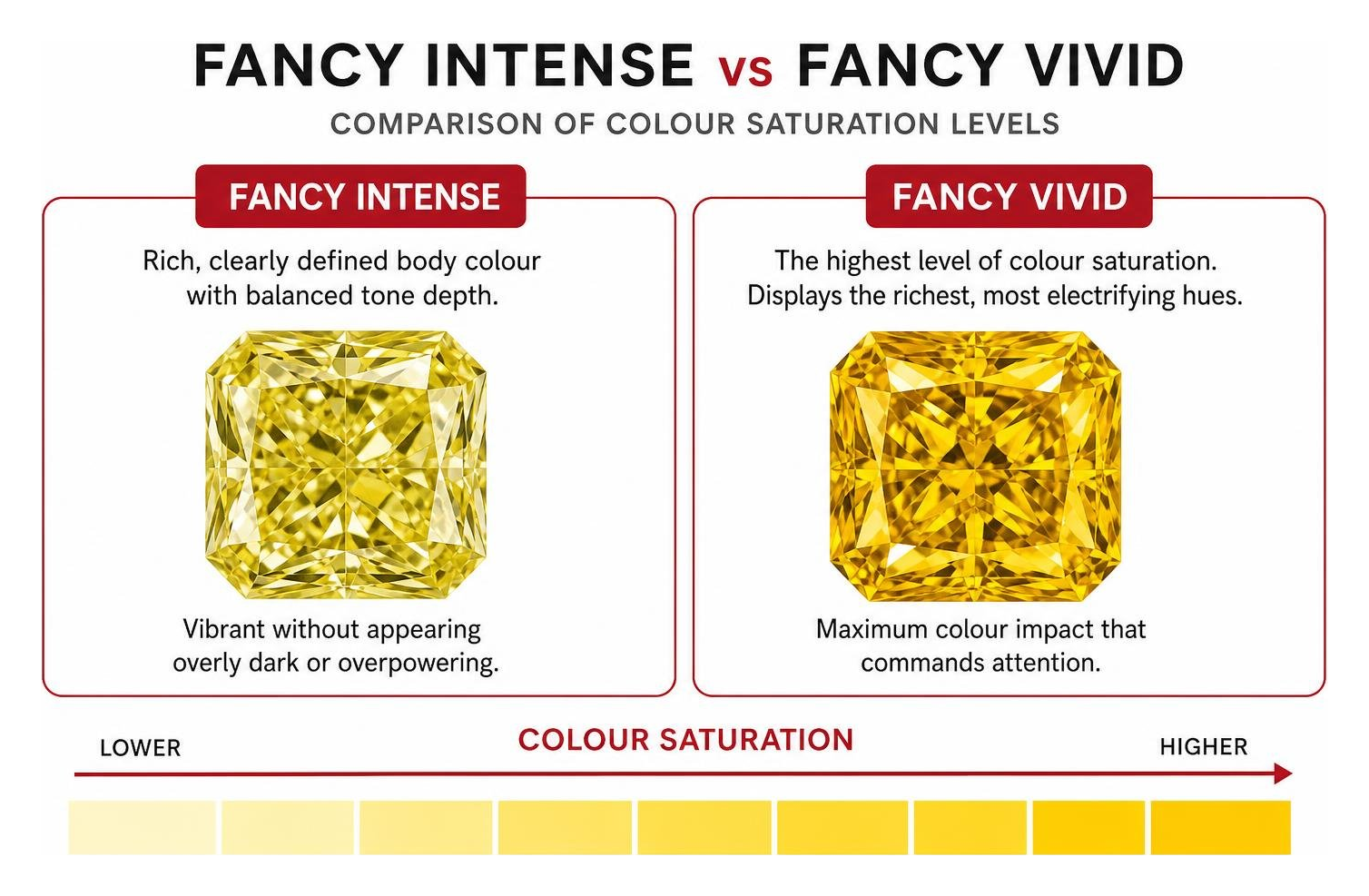
Fancy Intense diamonds showcase a rich, clearly defined body colour with balanced tone depth. They are vibrant without appearing overly dark or overpowering.
Fancy Vivid stones represent the absolute pinnacle of colour saturation. They display the richest, most electrifying hues possible. If you want a gem that commands attention from across the room, Fancy Vivid is your target. If you prefer a subtle, pastel warmth, Fancy Intense or standard Fancy grades might suit your taste better.
Mohs Hardness and Everyday Durability
One common misconception is that fancy lab stones might be softer than mined white diamonds. Lab-grown colored diamonds rate a solid 10 on the Mohs hardness scale.
This rating means they possess identical scratch resistance, structural integrity, and thermal stability to mined stones. They easily endure daily hand washing, friction against clothing, and accidental knocks against hard surfaces, making them just as resilient for daily wear as any natural diamond.
Popular Shapes, Cuts, and Clarity Selection
The cut of a colored diamond does not work the same way as it does for a colourless diamond. For white diamonds, cutters design facets to maximize light dispersion and eliminate color. For fancy stones, cutters aim to concentrate and intensify hue depth as light reflects through the gem.
When browsing man made diamonds in Canada, you will discover several popular fancy shapes designed specifically for color enhancement:
- Radiant Cut: Features hybrid step-and-brilliant faceting that amplifies saturation while maintaining fiery sparkle.
- Cushion Cut: Soft, pillow-shaped corners and deep pavilions pool colour inside the stone's center.
- Oval Cut: Delivers brilliant sparkle and an elongated profile that maximizes surface area per carat.
- Emerald Cut: Uses long, open step facets for vintage appeal, best suited for deeply saturated hues.
Balancing Clarity Grades from VS1 to VVS2
With colourless diamonds, buyers often spend heavily to reach higher clarity tiers to avoid visible blemishes. With colored stones, the body colour naturally helps mask microscopic inclusions.
Opting for an eye-clean VS1 or VS2 stone allows you to allocate more budget toward carat size or higher colour saturation without sacrificing visual beauty. If ultimate peace of mind matters most, choosing a VVS2 diamond guarantees exceptional internal purity even under 10× magnification.
The Modern April Birthstone Alternative
Diamond has served as the classic birthstone for April for generations. While traditional colourless diamonds remain popular, modern jewellery wearers increasingly turn to fancy colored stones to celebrate birthdays and milestones.
A canary-yellow cushion ring, a blush-pink pendant, or an ocean-blue diamond band offers a personalized celebration of April that stands apart from standard white diamond jewellery.
Understanding Value: Pricing Factors and Smart Shopping
The marketplace for lab-grown colored diamonds gives consumers access to statement pieces once reserved for private collectors.Mined fancy pink or vivid blue diamonds can easily reach millions of dollars at auction. In contrast, lab-created versions offer incredible value across an accessible spectrum.
Below is an overview of representative market pricing based on independent industry data:
| Carat Weight | Shape | Color Intensity | Clarity | Typical Market Price (USD) |
|---|---|---|---|---|
| 1.50 Ct | Round Brilliant | Fancy Vivid Pink | VVS2 | ~$530 |
| 4.01 Ct | Radiant Cut | Fancy Vivid Pink | VVS2 | ~$2,177 |
| 5.05 Ct | Radiant Cut | Fancy Vivid Pink | VVS2 | ~$2,875 |
| 9.99 Ct | Radiant Cut | Fancy Vivid Pink | VS2 | ~$13,007 |
| 12.12 Ct | Oval Cut | Fancy Vivid Pink | VS1 | ~$3,394 |
| 16.57 Ct | Emerald Cut | Fancy Intense Pink | VVS2 | ~$2,794 |
(Data source: Representative industry certifications for fancy colored lab diamond listings.)
To better understand overall diamond budgeting, take a look at our detailed breakdown on the cost of lab grown diamonds.
Pricing Breakdown for Fancy Colored Lab Diamonds
Lab diamond pricing typically starts around $250 for delicate accent sizes and scales upward toward high-end custom stones. The total price is influenced by:
- Hue & Saturation: Deeply saturated Vivid pinks and intense blues command higher premiums than soft yellows.
- Carat Weight: Larger raw crystal yields require longer chamber time and higher energy output.
- Cut Precision: Top-tier cuts maximize light performance and boost value.
If you are budgeting for a centerpiece stone, reviewing our 2 carat diamond ring price guide will help you gauge standard setting and mounting costs alongside your diamond investment.
Optimal Seasons to Purchase for Maximum Savings
To get the most value out of your jewellery purchase, consider planning around major retail discount cycles:
- Late Autumn / Black Friday: Excellent for securing loose center stones at promotional discounts before the holidays.
- Post-Holiday Winter (January–February): Retailers often refresh inventory after the holiday proposal rush, opening up great diamond opportunities.
- Mid-Summer Off-Peak (June–July): Slower bridal traffic periods often bring seasonal savings and flexible bespoke design timelines.
Sustainability, Ethics, and Custom Setting Potential
Choosing a lab-created gemstone offers peace of mind regarding ethical sourcing. Because these diamonds are grown in advanced laboratory environments, they are completely conflict-free.
When planning a proposal, our engagement rings Canada guide offers insights into matching ethical center stones with durable precious metals.
Designing Custom Rings with Fancy Colored Lab Diamonds
A loose colored stone reaches its full potential when paired with a custom setting tailored to its unique proportions and hue.
- Solitaires: A minimalist yellow or rose gold band keeps attention focused entirely on a vivid pink or blue center diamond.
- Three-Stone Mountings: Framing a Fancy Vivid canary yellow center stone with bright white diamond side trapezoids creates balanced contrast.
- Halo Accents: Encircling a colored diamond in pavé melee diamonds enhances brilliance and provides edge protection for daily wear.
If you are ready to create your own piece, explore our ultimate guide to custom jewellery design to learn how we guide you from initial sketch to final polish.
Frequently Asked Questions About Lab-Created Colored Stones
Can fancy colored lab diamonds fade or change color over time?
No. The colour in a lab-created diamond is locked inside its crystal structure. It is chemically stable and will not fade, alter, or degrade when exposed to sunlight, daily swimming, or everyday household soap. Regular cleanings with warm water, mild dish soap, and a soft-bristle toothbrush will keep your stone sparkling bright.
How does cut quality affect the perceived color of a colored lab diamond?
Cut quality is critical for colored diamonds. An expert cut bounces light through the pavilion multiple times, enriching colour saturation. A poorly cut stone can leak light through the bottom, leaving the diamond looking washed out or pale.
Which metal setting best complements yellow, blue, and pink colored lab diamonds?
- Yellow Diamonds: Pair beautifully with 14k or 18k yellow gold prongs to enrich golden body hues, often set on a platinum band for contrast.
- Pink Diamonds: Rose gold prongs blend seamlessly with blush tones, highlighting soft pink highlights.
- Blue & Green Diamonds: Platinum or white gold settings provide a crisp, mirror-like background that lets cool colours stand out.
Conclusion
Fancy colored lab-grown diamonds combine modern technology with classic jewellery craftsmanship. Offering vibrant colours, guaranteed Mohs 10 durability, and exceptional value, they allow you to design one-of-a-kind statement pieces without compromise.
At Inglis Jewellers, our goldsmiths and jewellery specialists across Nova Scotia and New Brunswick—in Truro, New Glasgow, Riverview, and Sydney—are here to help you bring your dream piece to life. Whether you are crafting a custom engagement ring or a personal milestone gift, we provide the trusted advice and hands-on guidance you need.
Explore our comprehensive breakdown on the cost of lab grown diamonds to plan your design today.