


Compare Engagement Rings in Canada by Style, Price, and Provenance
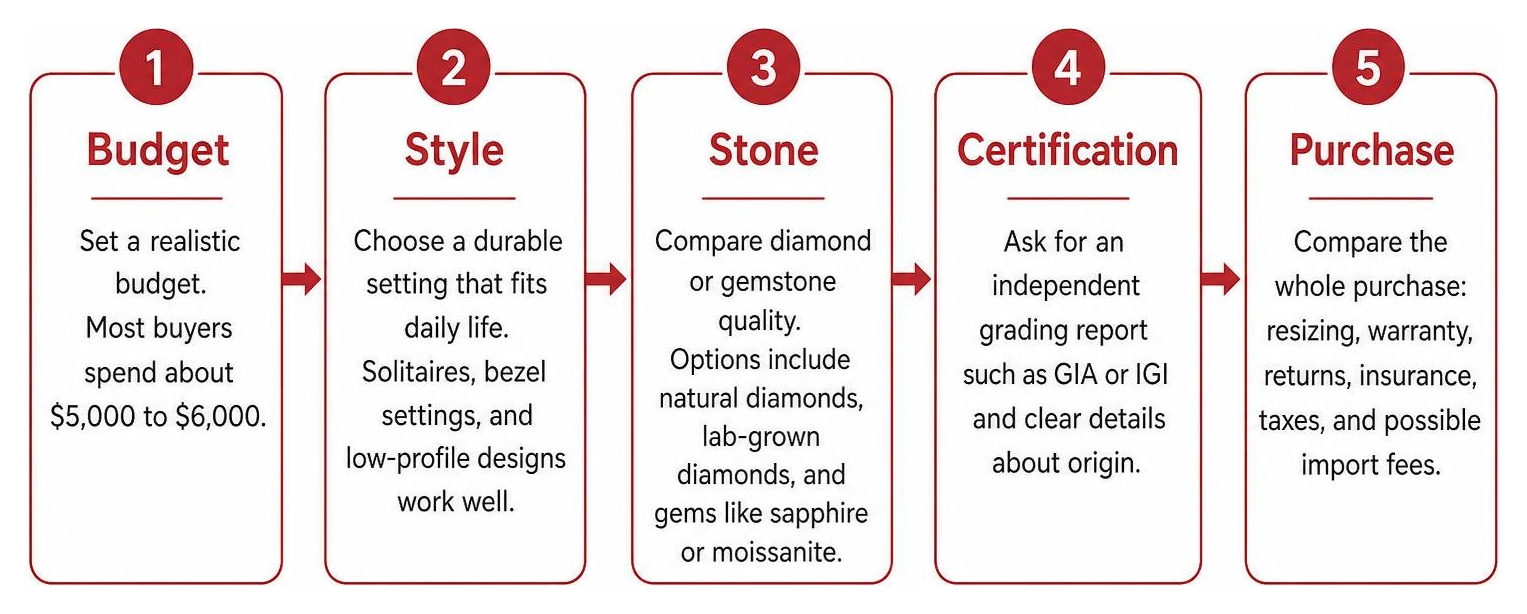
For engagement rings in Canada, start by choosing a setting that fits daily life, then compare diamond or gemstone quality, metal, certification, and after-sale care. Most buyers spend about $5,000 to $6,000, but a well-made ring can cost far less or much more depending on the centre stone, design, and materials.
A simple way to narrow your options:
- Pick a durable style: Solitaires, bezel settings, and low-profile designs suit active routines and winter gloves.
- Set a realistic budget: Compare natural diamonds, lab-grown diamonds, and gems such as sapphire or moissanite.
- Check the paperwork: Ask for an independent grading report, such as GIA or IGI, and clear details about origin.
- Compare the whole purchase: Include resizing, warranty, returns, insurance, taxes, and possible import fees.
Canadian couples are also placing more value on ethical sourcing. Canadian diamonds, Kimberley Process documentation, recycled metals, and lab-grown diamonds can all influence the final choice. With more than 60% of purchases involving online research or shopping, it is especially important to compare more than the listed price.
At Inglis Jewellers, we help buyers compare lasting designs, trusted materials, and personalized options with clarity.
Engagement Rings Canada: Style Trends and Setting Options

Choosing the perfect ring is a blend of personal aesthetics, symbolic meaning, and practical daily wear. In 2026, engagement ring designs celebrate individuality more than ever before. Whether you appreciate minimalist lines or intricate, vintage-inspired filigree, modern jewellery craftsmanship allows you to personalize every detail to match your love story.
Popular Styles for Engagement Rings Canada Couples Love
When browsing for engagement rings, Canadian couples gravitate toward designs that seamlessly marry timeless romance with contemporary artistry:
- Classic Solitaires: The quintessential engagement silhouette remains ever popular. Minimalist Bridal Engagement Solitaires let the centre stone take centre stage, offering a clean, sophisticated look that never goes out of style.
- Halo Settings: For maximum brilliance and presence, vintage-inspired Bridal Engagement Halo designs encircle the centre gem with a frame of smaller accent diamonds, creating dramatic sparkle and making the centre stone appear larger.
- Three-Stone Rings: Symbolic of a couple’s past, present, and future, Three Stone Engagement Rings offer balanced proportions and allow for creative combinations, such as pairing a classic centre diamond with colourful sapphire side stones.
- East-West Orientations: A fresh modern twist on fancy shapes, East West Engagement Rings place elongated stones (like emerald or oval cuts) horizontally across the band rather than vertically.
- Nature-Inspired Motifs: Organic curves, leaf patterns, and vine detailing make Nature Inspired Engagement Rings a top choice for nature lovers seeking a botanical, handcrafted feel.
Lifestyle and Winter Durability: Choosing Settings and Metals
Canada’s cold climate and active lifestyle require thoughtful consideration when picking setting types and precious metals. Freezing temperatures mean thick winter gloves, heavy coats, and frequent temperature shifts, which can put high-profile, delicate ring settings at risk of snagging or loosening.
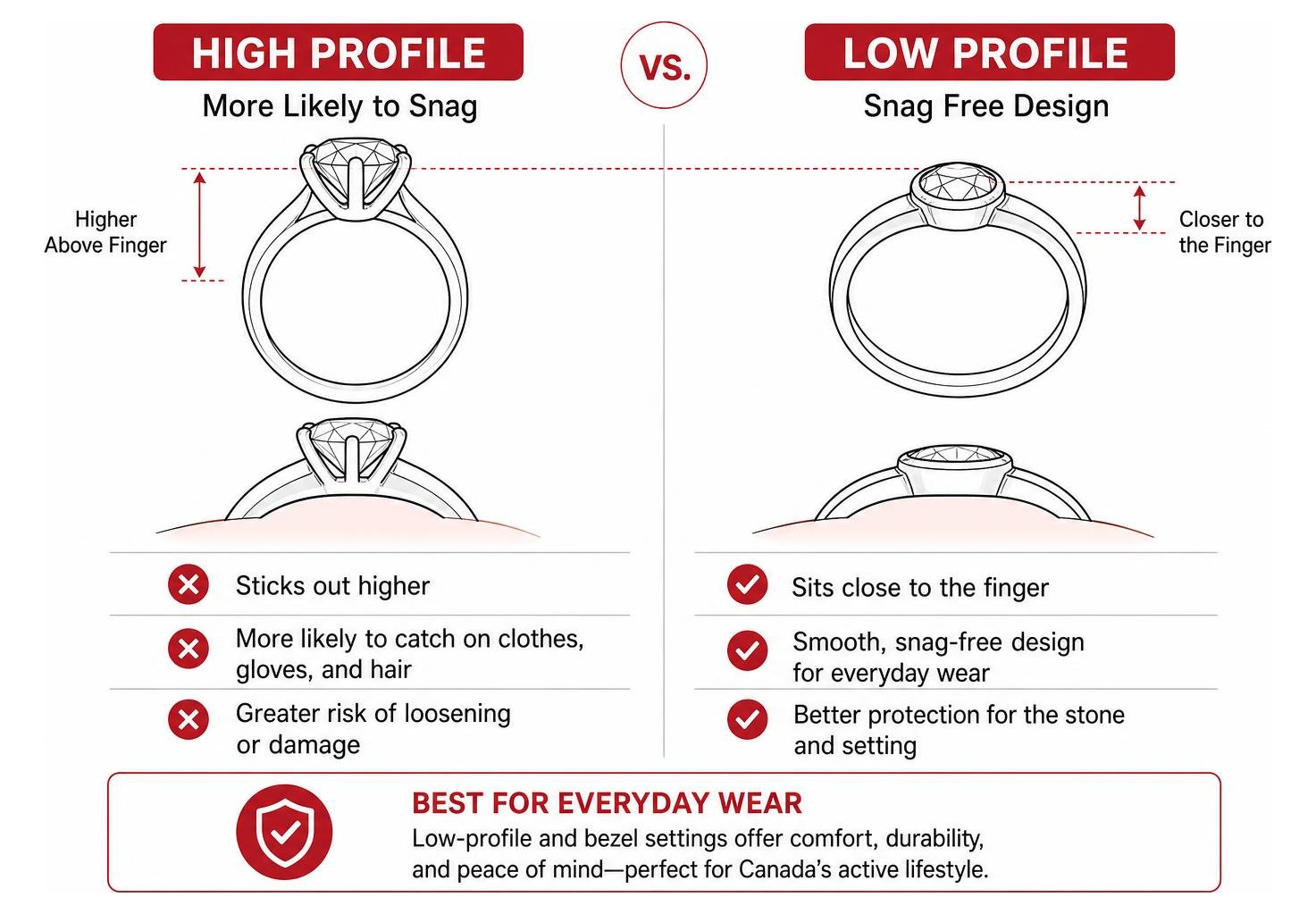
To ensure your ring withstands daily wear across all seasons:
- Low-Profile and Bezel Mounts: Settings that cradle the gem close to the finger or enclose it in a protective rim of precious metal are far less likely to snag on knitwear or scrape against steering wheels.
- Secure Prongs: If you love traditional claw settings, opt for well-crafted, rounded, or v-tip prongs that secure vulnerable diamond corners without catching on fabrics.
- Precious Metal Selection: Platinum offers exceptional cold-weather density and naturally hypoallergenic durability, making it virtually scratch-resistant against heavy wear. For warm, rich tones, consult our 14k Gold Engagement Ring Guide to understand why 14k white or yellow gold provides the ideal balance of pure gold beauty and structural alloy hardness.
Gemstone Alternatives and Lab-Grown Diamonds
While nearly 75% of Canadian couples still prefer diamonds, modern buyers have expanded their horizons to include stunning diamond alternatives and innovative synthetic options:
- Lab-Grown Diamonds: Chemically, physically, and optically identical to mined diamonds, Lab Grown Diamond Engagement Rings allow couples to maximize carat size and clarity while maintaining budget flexibility. If you are weighing the benefits of each, our guide to Natural vs Lab Grown Diamonds details their formation, environmental impact, and value retention.
- Vibrant Gemstones: Colourful Bridal Engagement Gemstone rings—such as velvety blue sapphires, rich emeralds, and fiery rubies—provide distinctive character. Sapphire (measuring 9 on the Mohs hardness scale) is particularly well-suited for everyday resilience.
- Moissanite: Known for its fiery dispersion and accessible price point, moissanite gives buyers brilliant sparkle and excellent durability for everyday wear.
Engagement Ring Pricing, Diamond Certification, and Ethical Sourcing in Canada
A transparent understanding of diamond pricing and ethical origin gives you complete confidence in your investment.
How to Budget for Engagement Rings Canada Shoppers Compare
The average Canadian spends between $5,000 and $6,000 on an engagement ring, typically saving over 3 to 6 months. About 40% of buyers take advantage of structured financing plans or layaway options to ease payment schedules.
When planning your budget, take time to explore Affordable Engagement Rings that optimize the 4Cs (Cut, Colour, Clarity, Carat) without compromising structural integrity. For larger carat weights, reviewing benchmarks like the 2 Carat Diamond Ring Price or 3 Carat Diamond Ring Price helps clarify how cut precision and clarity grades impact final retail costs.
| Ring Category | Typical Canadian Price Range | Key Features & Value Factors |
|---|---|---|
| Natural Canadian Diamond (1.0ct) | $5,500 – $9,500+ | Ethically mined in northern Canada, fully certified origin, classic value retention. |
| Lab-Grown Diamond (1.0ct – 2.0ct) | $1,800 – $4,500 | Identical optical properties to mined diamonds, larger carat weight per dollar spent. |
| Precious Gemstone (e.g., Sapphire) | $1,500 – $4,000 | Rich natural colour, exceptional durability, unique alternative aesthetic. |
| Moissanite | $1,000 – $2,500 | Outstanding fire and brilliance, budget-friendly synthetic alternative. |
Canadian Diamonds, Kimberley Process, and Grading Certifications
Ethical sourcing is a major priority for modern shoppers, with roughly 35% of Canadian buyers prioritizing conflict-free or sustainably harvested materials.
- Canadian Diamonds: Mined under world-leading environmental and labour regulations in the Northwest Territories and Nunavut, authentic Canadian Diamonds feature unique tracking numbers and laser inscriptions on their girdles to guarantee their provenance.
- The Kimberley Process: An international certification scheme established to prevent the trade of conflict diamonds, ensuring every imported rough stone meets strict ethical standards.
- Independent Grading Reports: Always confirm that your centre stone is backed by a reputable third-party grading laboratory such as the Gemological Institute of America (GIA) or the International Gemological Institute (IGI). These reports verify exact colour, cut quality, clarity, and carat specifications.
Buying Channels, Customs, and Consumer Protections
Where you buy your ring impacts your long-term ownership experience, maintenance support, and overall value.
Local Jewellers vs. Online Retailers vs. Big-Box Stores
Understanding the advantages of different retail channels helps streamline your search:
- Local Canadian Jewellers: Full-service independent jewellers provide personalized guidance, custom goldsmithing, and in-person stone inspection. Choosing trusted regional specialists for Engagement Rings in Nova Scotia or New Brunswick ensures reliable ongoing maintenance, professional cleanings, and complimentary sizing.
- Online Retailers: While online storefronts offer extensive inventories and convenient comparison shopping, they lack the hands-on inspection of sparkle, light return, and finger fit before purchase.
- Big-Box Stores: Mass-market retailers offer standard catalogue styles but frequently lack custom manufacturing capabilities and on-site goldsmith repairs.
Return Policies, Warranties, and Import Duties
Before finalizing any purchase, review Canadian consumer protections and potential cross-border expenses:
- Return Windows and Custom Pieces: Canadian consumer law standardizes retail transparency, but bespoke, custom-engraved, or specially sized rings often carry specific return conditions. Always review return policies before signing off on custom cad designs.
- Cross-Border Duty & Taxes: Ordering a ring from international online vendors outside Canada can result in surprise costs. The Canada Border Services Agency (CBSA) applies applicable provincial taxes (HST/PST/GST), carrier brokerage fees, and import duties on jewellery, which can quickly erase any initial online discount.
- Ring Insurance: We recommend insuring your ring through specialized jewellery insurers or adding a rider to your Canadian home or tenant insurance policy immediately after purchase.
Frequently Asked Questions About Buying Engagement Rings in Canada
What is the average amount spent on an engagement ring in Canada?
The national average sits between $5,000 and $6,000. However, there are no hard rules—smart buyers prioritize diamond cut quality and setting craftsmanship over arbitrary salary formulas.
How can I verify that a diamond is genuinely Canadian?
Authentic Canadian diamonds come with an official Certificate of Origin, a tracking number, and a micro-laser inscription on the diamond's girdle (such as a CanadaMark symbol or polar bear motif) that can be verified under magnification.
What setting is best suited for an active lifestyle and Canadian winters?
Bezel, semi-bezel, and low-profile cathedral settings are ideal. They hold the gem securely, eliminate sharp catching points, and sit comfortably under winter gloves and athletic gear.
Conclusion
Finding the perfect engagement ring is an exciting milestone that combines personal style, structural durability, and lasting emotional value. By understanding diamond certifications, metal properties, and lifestyle requirements, you can choose a ring that shines brilliantly for decades to come.
At Inglis Jewellers, our expert goldsmiths and jewellery consultants are dedicated to guiding you through every step of your bridal journey. For deeper insights into cuts, settings, and diamond grading, explore our comprehensive Diamond Rings Guide 2026.