


When a Piece You Love Needs More Than Just a Cleaning
When you're looking for fine jewelry repair near me, here's what you need to know right away:
How to find quality fine jewelry repair locally:
- Search for in-house jewelers — shops where repairs are done on-site, not sent out to a third party
- Check for credentials — look for GIA-trained staff or certified bench jewelers
- Read recent reviews — consistent 4.8+ star ratings across Google and Yelp signal trustworthy service
- Ask about estimates — reputable shops offer free, no-obligation estimates before any work begins
- Confirm turnaround time — most repairs take 2 to 10 business days; simple fixes are often same-day
Fine jewelry isn't just valuable — it's personal. A grandmother's gold chain. An engagement ring worn every day for twenty years. A vintage brooch that can't be replaced.
When something goes wrong with a piece like that, the stakes feel high. And they are.
The challenge isn't just finding someone who can fix it. It's finding someone you trust to fix it — without cutting corners, swapping stones, or sending your heirloom across the country to an unknown workshop.
That's exactly what this guide helps you do. Whether you need a quick prong check or a full antique restoration, you'll know what to look for, what to ask, and what to watch out for.
What Services Are Offered by a Fine Jewelry Repair Near Me?
When you begin searching for a professional to repair your cherished pieces, you will find that a full-service local jeweler offers a wide array of specialized options. Fine jewelry repair is a highly technical craft that blends traditional metallurgy with modern precision technology.
To understand the full scope of what an experienced goldsmith can do for your collection, you can read our comprehensive Jewellery Repairs Complete Guide. In the meantime, let us break down the most common services you should expect from a qualified local repair specialist.
Ring Resizing and Shank Adjustments
Our fingers change size over time due to weather, lifestyle changes, or simply the passage of the years. Fortunately, your favorite rings do not have to sit in a drawer. Ring resizing is one of the most frequently requested services.
Depending on the design of your ring, a jeweler will use one of several methods:
- Sizing Down: The jeweler cuts a small portion of the band (the shank) away, brings the two ends together, and solders them with matching metal.
- Sizing Up: The jeweler can either stretch the metal slightly (if it only needs to go up a fraction of a size) or, more commonly, cut the band and insert a matching piece of precious metal.
- Compression Sizing: For plain bands, compression or expansion machinery can adjust the size by one or two increments without any cutting at all.
No matter the method, a skilled jeweler ensures perfect metal matching. This means using the exact same karat and alloy of gold, platinum, or silver so that the repair joint is completely invisible and structurally sound.
Stone Replacement and Prong Retipping
Have you noticed a diamond that seems to wiggle in its setting, or has a small accent stone gone missing entirely? Worn-down prongs are the leading cause of lost gemstones. Over years of daily wear, the tiny metal claws holding your stones in place rub against clothing and skin, slowly wearing away.
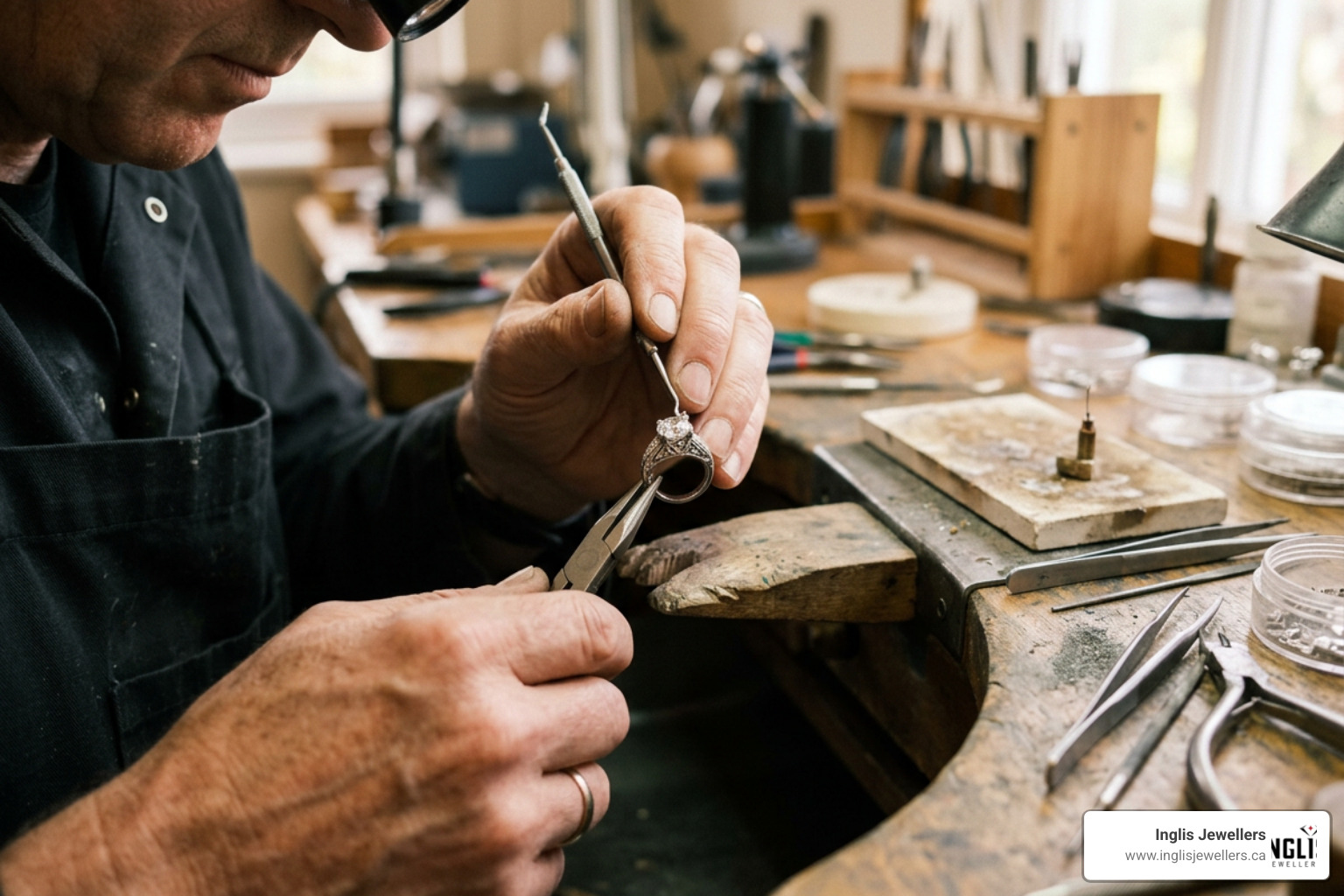
At our specialized Goldsmith Studio, we handle everything from tightening loose stones to rebuilding entire settings.
- Prong Retipping: If the prong is still mostly intact but thin, the jeweler adds a small bead of matching metal to the top to secure the stone.
- Prong Replacement: If a prong is completely broken or worn flat, the jeweler will rebuild the entire claw from the base.
- Stone Matching: If you have lost a stone, a master jeweler will carefully match the color, clarity, cut, and carat weight of the remaining stones so the replacement blends in seamlessly.
Chain, Clasp, and Bracelet Repair
A snapped necklace chain or a broken bracelet clasp can happen in a split second. Fortunately, these are highly straightforward fixes for a professional.
- Soldering Broken Chains: Traditional torch soldering or modern laser welding is used to fuse broken links back together.
- Clasp Replacement: If a spring ring or lobster clasp has lost its spring tension, we simply replace it with a brand-new, secure clasp of matching metal.
- Laser Welding: For delicate, thin chains or pieces with heat-sensitive gemstones nearby, laser welding is the gold standard. It allows the jeweler to apply intense, pinpointed heat to a microscopic area without heating the rest of the piece, keeping fragile gems perfectly safe.
How to Find a Reputable Fine Jewelry Repair Shop
With so many options appearing when you search for fine jewelry repair near me, sorting the experts from the amateurs can feel overwhelming. Your jewelry holds both financial and sentimental value, so taking a few minutes to vet a shop is always worth the effort.
What Credentials and Reviews to Look For
The best local repair shops employ certified professionals. When researching, look for:
- GIA Training: Staff members trained by the Gemological Institute of America understand the precise physical properties of the gemstones they handle.
- Certified Bench Jewelers: Look for goldsmiths who have formal certifications in metallurgy and jewelry construction.
- In-House Repairs: Always ask if the work is completed on-site. When your jewelry stays in the building, the risk of loss or transit damage drops to zero.
- Real Customer Testimonials: Look for shops with hundreds of 5-star reviews. Pay attention to reviews that mention honesty, clear explanations, and beautiful final results.
By focusing on established physical storefronts with a strong local presence, you can ensure your jewelry is in safe hands. Checking professional repair standards in neighboring cities across the Atlantic Canadian jewelry industry can also give you an idea of the level of excellence you should expect.
Red Flags to Avoid When Searching for Fine Jewelry Repair Near Me
To protect your investments, keep an eye out for these common warning signs:
- Outsourcing Everything: If a shop immediately tells you they have to ship your ring to a mass-production hub in another province or country, think twice.
- Lack of Specialized Insurance: A reputable jeweler carries comprehensive insurance that covers your items while they are in their possession.
- No Upfront Estimates: Avoid shops that refuse to give you a clear, written estimate before starting the work. You should never be surprised by the bill at pickup.
- Vague Search Results: When searching online, search engines sometimes display distant out-of-region services. For instance, a search might accidentally serve up a boutique or a list of repair shops in another country when you are actually looking for local expertise near our homes in the Maritimes. Always verify the physical address of the shop before driving over!
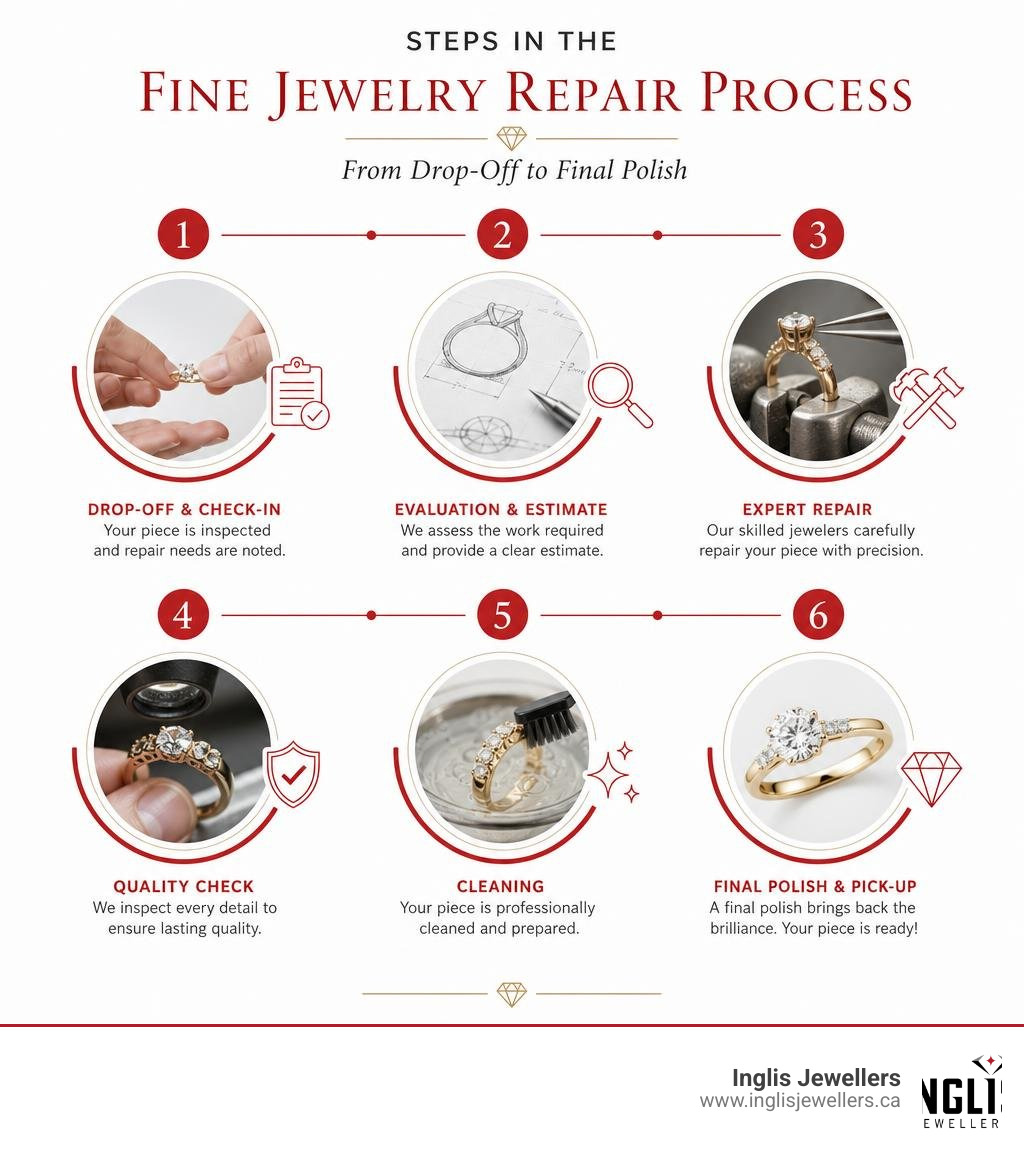
Understanding the Jewelry Repair Process: What to Expect
If you have never had a piece of jewelry repaired, you might feel a little nervous about leaving your valuables behind. Knowing exactly what happens from the moment you walk through our doors can put your mind at ease.
We pride ourselves on transparency. To learn more about our philosophy on handling your precious items, read about Our Goldsmith Gallery Craftsmanship Custom and Care. Here is a step-by-step breakdown of what you should expect during a standard repair visit.
Step 1: Detailed Inspection and Cleaning
Before any work begins, your jewelry must be thoroughly cleaned and inspected.
- Professional Cleaning: Over time, lotion, soap, and dirt build up under stones, masking cracks or structural weaknesses. We use professional ultrasonic cleaning (which uses high-frequency sound waves to create microscopic bubbles that lift away dirt) and high-pressure steam cleaning to make the piece spotless.
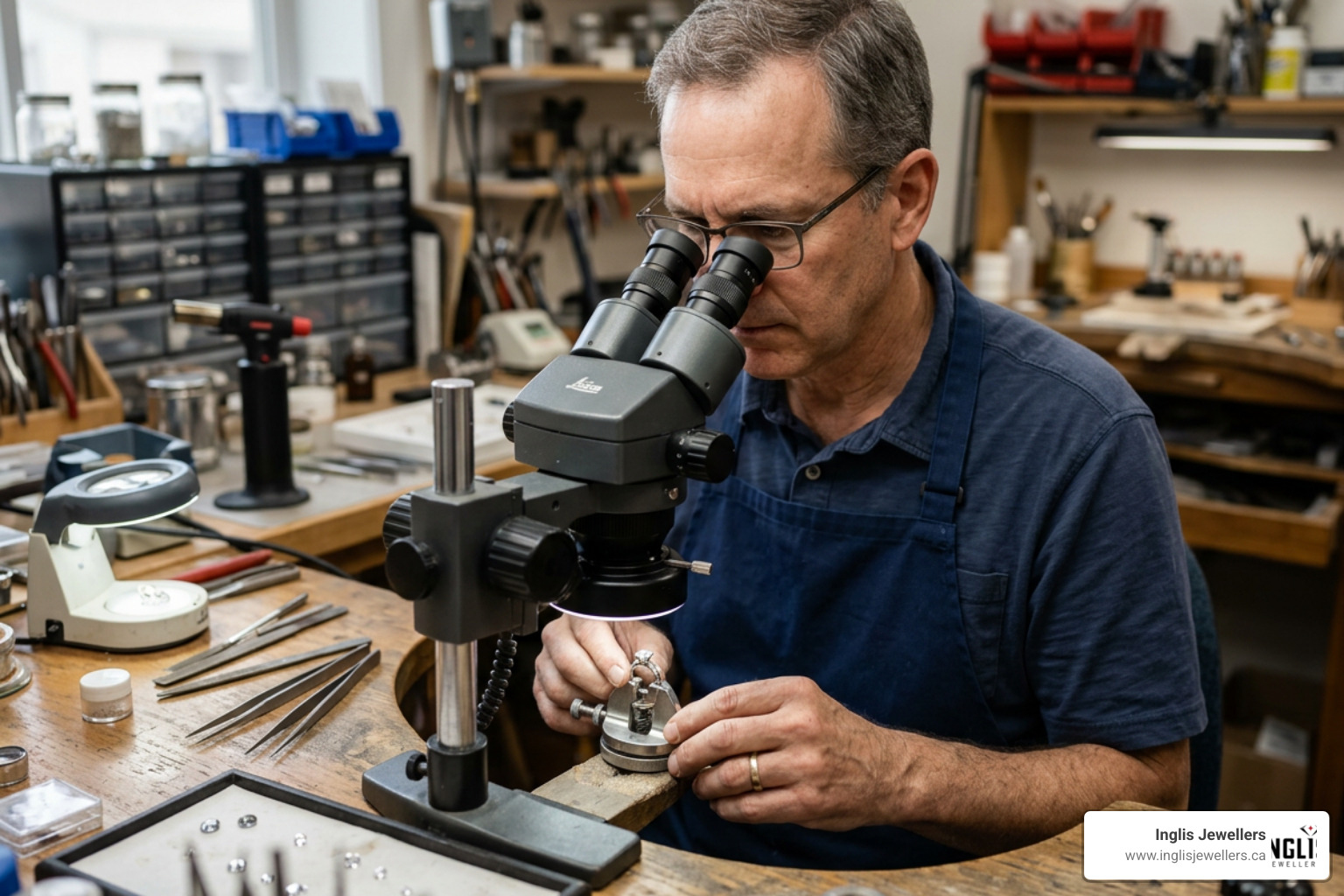
- Magnified Inspection: Using a jeweler's loupe or a high-powered microscope, our goldsmiths inspect the piece. We check the tightness of every single stone, inspect the prongs, look for hairline fractures in the metal shank, and document any unique inclusions in your gemstones. This ensures we catch hidden issues before they turn into major damage.
Step 2: Getting an Honest Estimate and Timeline
Once the inspection is complete, we provide a clear, detailed estimate. This includes:
- The Cost of Materials: The price of any gold, platinum, solder, or replacement stones needed.
- The Labor Involved: The time required for our master goldsmiths to perform the repair.
- The Timeline: Most standard repairs are completed within 2 to 5 business days. Simpler tasks can sometimes be handled same-day or next-day, while highly complex restorations may take up to 10 business days.
We explain every recommendation clearly so you can make an informed decision with zero pressure.
Step 3: The Repair and Final Quality Check
Once you approve the estimate, your jewelry goes to our workbench.
- Precision Repair: Our goldsmiths use traditional hand tools combined with modern laser welders to execute the repair flawlessly.
- Refinishing & Polishing: After the structural repair is complete, the piece is polished to remove any surface scratches. If it is a white gold piece, it receives a fresh rhodium plating to restore its bright, mirror-like finish.
- Final Inspection: Before we contact you for pickup, a separate quality control check is performed under magnification to ensure the repair meets our rigorous standards.
Cost and Turnaround Times for Common Repairs
How much will it cost, and when will you get it back? While every piece of jewelry is unique, having a general baseline can help you plan.
Below is a helpful breakdown of typical costs and turnaround times for common fine jewelry repairs:
| Repair Service | Typical Turnaround Time | Estimated Cost Range (CAD) | Key Pricing Factors |
|---|---|---|---|
| Ring Resizing (Sizing Down) | 2 to 5 business days | $40 - $90 | Metal type, band width |
| Ring Resizing (Sizing Up) | 2 to 5 business days | $80 - $200+ | Karat of gold, width of shank, amount of added metal |
| Prong Retipping (Per Prong) | 3 to 5 business days | $35 - $65 | Number of prongs, stone sensitivity, metal type |
| Chain Soldering / Repair | Same-day to 3 business days | $30 - $75 | Chain thickness, location of break, metal type |
| Clasp Replacement | Same-day to 2 business days | $25 - $100+ | Clasp style (lobster vs spring), metal weight |
| Rhodium Plating | 2 to 4 business days | $60 - $120 | Size of the item, surface area |
| Watch Battery Replacement | While you wait / Same-day | $15 - $30 | Watch brand, water resistance testing |
Typical Turnaround Times for Fine Jewelry Repair Near Me
For minor adjustments—like replacing a spring ring clasp or swapping out a watch battery—many shops can perform the work while you wait or within the same day. However, complex work that requires custom parts, stone sourcing, or extensive rebuilding typically takes between 5 to 10 business days. We always recommend planning ahead if you need a piece ready for a specific event, such as a wedding or anniversary.
How Much Do Common Jewelry Repairs Cost?
Simple repairs generally start around $25 to $40, while complex structural restorations can range from $150 to several hundred dollars.
Several factors influence the final cost:
- The Metal Type: Working on platinum requires higher temperatures and specialized tools, making it more expensive than gold or silver.
- The Karat of Gold: Sizing up an 18K gold ring requires more expensive alloy material than a 10K gold ring.
- Gemstone Sensitivity: Heat-sensitive stones like opals, emeralds, and pearls require extra care, often necessitating the use of advanced laser welding, which can affect the labor cost.
Special Considerations: Vintage, Estate, and Designer Pieces
Not all jewelry is created equal. Vintage heirlooms and designer pieces require an extra level of expertise and care. If you have a piece that has been passed down through generations, you can read our specialized guide on Antique Jewellery Repair to understand how we preserve these historic treasures.
Restoring Antique and Heirloom Jewelry
Antique jewelry often features delicate filigree, hand-engraved details, and unique gemstone cuts that are no longer common today.
- Old-World Techniques: Restoring these pieces requires a deep respect for historical craftsmanship. A master jeweler will use specialized hand tools to rebuild worn details without erasing the natural patina and character that makes the piece valuable.
- Laser Technology: Because antique metals can become brittle over time, laser welding is highly beneficial. It allows us to reinforce weak spots without exposing the entire historic piece to high torch temperatures.
Working on Designer Jewelry and Pieces Purchased Elsewhere
A common question we hear is: "Will you work on jewelry that wasn’t bought at your store?"
The answer is a resounding yes. A reputable local jeweler should be happy to service your entire collection, regardless of where it was originally purchased.
Whether you need custom modifications, laser engraving, or stone matching for a designer brand, we treat every piece with the same high level of care.
How to Maintain Your Jewelry and Prevent Future Damage
While having a trusted jeweler nearby is fantastic, the best way to handle repairs is to prevent them from needing to happen in the first place! With a little bit of routine care, you can keep your jewelry sparkling and secure for a lifetime.
Routine Inspections and Professional Cleaning
We highly recommend bringing your daily-wear jewelry—especially engagement rings and wedding bands—in for a professional inspection and cleaning twice a year.
- Catching Small Issues Early: During these complimentary checks, we inspect prong tightness, clasp security, and look for signs of metal fatigue. Fixing a thin prong today costs a fraction of what it takes to replace a lost diamond tomorrow.
- Deep Tarnish Removal: Professional ultrasonic and steam cleanings remove stubborn dirt and tarnish from hard-to-reach areas that at-home cleaning simply cannot touch.
Safe At-Home Cleaning and Storage Practices
Between professional visits, you can keep your jewelry looking its best with simple at-home habits:
- The Warm Water Method: For most gold, platinum, and diamond jewelry, soak the pieces in warm water mixed with a few drops of mild dish soap. Use a very soft-bristled toothbrush to gently clean behind the stone settings, rinse thoroughly with clean water, and pat dry with a soft cloth.
- Avoid Chemical Dips: Commercial jewelry cleaners and harsh chemical dips can damage delicate gemstones like pearls, opals, and turquoise, and can even degrade the metal alloys in your gold over time.
- Proper Storage: Store your jewelry in a fabric-lined box with individual compartments. Hard gemstones like diamonds can easily scratch softer metals and gems if they are tossed together in a single drawer.
Frequently Asked Questions about Jewelry Repair
Can white gold jewelry be repaired without losing its bright finish?
Yes! White gold is naturally an off-white, slightly warm-toned alloy. To give it its bright, mirror-like white finish, it is plated with a thin layer of rhodium (a precious metal from the platinum family).
Whenever white gold is repaired, sized, or polished, some of this plating is naturally removed. To restore its original beauty, we perform a professional rhodium replating as the final step of the repair process. Over time, normal wear will cause the rhodium to wear away, showing a slight yellow undertone. We recommend replating your daily-wear white gold rings every 1 to 2 years to keep them looking brand new.
Is my jewelry safe while it is at the repair shop?
Absolutely. When you leave your jewelry with us, it is fully insured and stored in secure, fireproof vaults overnight. Furthermore, we document the precise characteristics of your gemstones upon drop-off. If your diamond has a laser inscription, we will verify it with you under magnification at both drop-off and pickup, giving you absolute peace of mind that your exact stone has remained safe.
Can rings made of alternative metals like tungsten or titanium be resized?
No. Alternative metals such as titanium, tungsten, and cobalt are incredibly hard and cannot be melted down, cut, or resized using traditional jewelry-making methods. If you own a ring made of these metals and your finger size changes, the ring will typically need to be replaced entirely. This is why we always recommend classic precious metals (gold, platinum, or sterling silver) for wedding bands and heirloom pieces intended to last a lifetime.
Conclusion: Trust Your Jewelry to Atlantic Canada's Experts
Your jewelry carries your most precious memories. When it is time to find a local partner to care for your collection, you deserve a team that combines old-world craftsmanship with modern technology.
At Inglis Jewellers, we have spent decades building our reputation as Atlantic Canada's trusted goldsmiths. With convenient physical locations in Truro, NS, New Glasgow, NS, Riverview, NB, and Sydney, NS, our team is proud to serve families across Nova Scotia and New Brunswick.
Whether you are looking for a trusted Jewelry Store St Johns NL connection, or you need to drop by one of our local Maritimes showrooms for a quick prong check, we are here to help.
Ready to restore your favorite piece to its original brilliance? Read our Jewellery Repairs Complete Guide or visit an Inglis Jewellers location near you today for a complimentary inspection and honest, upfront estimate. We look forward to helping your jewelry shine for generations to come!