


Why Antique Jewellery Repair Is About More Than Fixing a Broken Clasp
Antique jewellery repair is the process of restoring damaged, worn, or structurally compromised pieces — typically over 100 years old — back to a wearable and historically accurate condition.
Quick answers:
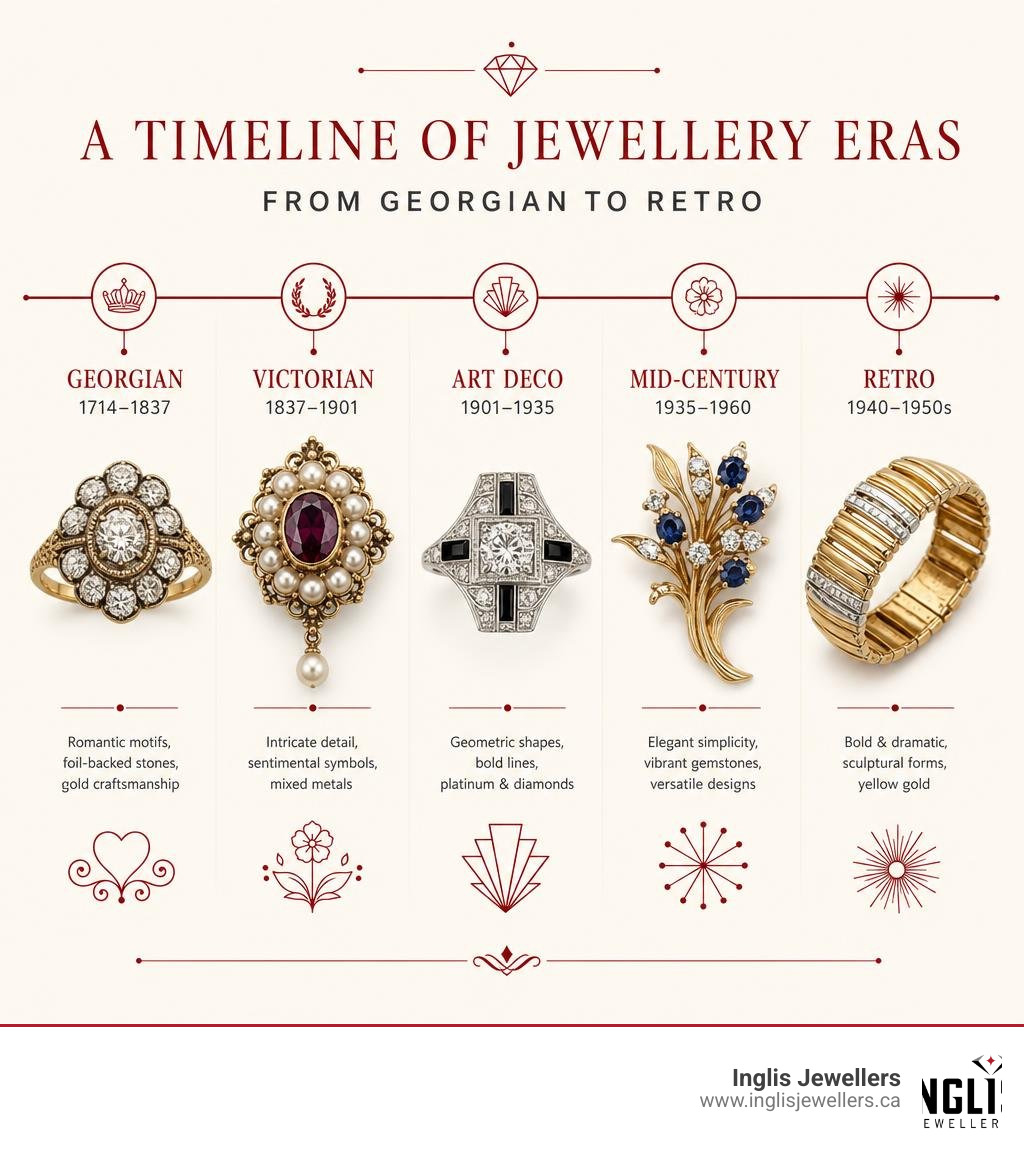
- What counts as antique? Generally, pieces over 100 years old. Pieces from 20–100 years old are considered vintage.
- What does antique jewellery repair include? Prong re-tipping, stone replacement, clasp repair, re-plating, structural rebuilding, filigree repair, and pearl restringing — using period-appropriate materials and techniques.
- How long does it take? Most restorations are completed in 2–3 weeks. Complex work can take longer.
- Does restoration affect value? Careful, era-appropriate restoration typically preserves or improves value by making pieces wearable and preventing further deterioration.
- Can it be done by mail? Yes — many reputable jewellers offer secure mail-in assessment and repair services.
Some pieces carry more than monetary worth. A ring worn by your grandmother, a brooch passed down through three generations, or an Art Deco bracelet found in an estate sale — these objects hold history. When they're damaged, the stakes feel higher than a simple fix.
That's what makes antique jewellery repair different from everyday jewellery repair. It isn't just about making something functional again. It's about preserving what makes the piece itself — its original construction, its era-specific details, its story.
This guide walks you through everything you need to know: how restoration differs from basic repair, what techniques and materials are involved, how to assess cost versus value, and how to care for a restored piece for generations to come.
Repair vs. Restoration: Understanding Antique Jewellery Repair
To the untrained eye, fixing a piece of jewellery might seem like a straightforward task. However, in fine craft, there is a vast, philosophical chasm between basic repair and full antique or vintage restoration.
Basic jewellery repair is primarily functional. If you snap the chain on a modern 14k gold necklace, a bench jeweller can quickly solder it back together. If a modern prong is loose, they can tighten it in minutes. The goal is to make the piece wearable again using modern, standardized tools and materials.
Antique and vintage restoration, on the other hand, is a meticulous preservation process. It requires the jeweller to step backward in time, adopting the mindset, tools, and technical limitations of the original maker. The primary goals are maintaining structural integrity and ensuring historical accuracy. If an Edwardian platinum ring has worn down over a century of love, we don't just slather modern metal over it. We analyze its original alloy, study its hand-engraved patterns, and reconstruct the worn areas so that the repair is completely invisible and historically correct.
| Feature | Basic Jewellery Repair | Antique & Vintage Restoration |
|---|---|---|
| Primary Goal | Functional wearability and quick turnaround. | Preservation of historical integrity, value, and structure. |
| Materials Used | Modern, standardized findings and alloys. | Period-appropriate metals, hand-cut gems, and old alloys. |
| Techniques | Modern laser welding, standardized soldering. | Hand-engraving, milgrain replication, historical soldering. |
| Value Impact | Maintains utility; minor impact on resale value. | Preserves or increases historical, aesthetic, and market value. |
| Timeframe | Often completed in a few days or a week. | Typically takes 2 to 3 weeks; complex pieces take longer. |
For those seeking localized care in Atlantic Canada, understanding these differences is crucial. Whether you visit us in Nova Scotia (Truro, New Glasgow, Sydney) or New Brunswick (Riverview), our on-site master goldsmiths treat every heirloom with the specialized attention it deserves. You can explore our regional expertise and learn more about our services on our dedicated Jewellery Repairs page.
The Philosophy of Antique Jewellery Repair Conservation
True antique conservation is guided by museum-quality standards. The golden rule of antique jewellery repair is to do as much as necessary, but as little as possible.
We prioritize conservation over outright replacement. If a Victorian-era ring has a beautiful, naturally developed patina—the soft, dark oxidation that settles into the recessed areas of silver or gold over a century—we do not aggressively polish it away to make it look "brand new." That patina is a badge of honor; it proves the piece's age and depth.
When you learn more about professional jewellery repair standards, you discover that a master restorer works to make their interventions completely seamless. Every solder joint, rebuilt prong, and replaced stone should look as though it was part of the original design, preserving the historical integrity of the piece.
When to Restore, Redesign, or Sell As-Is
When an heirloom arrives at our bench, we perform a thorough estate evaluation to help you decide the best path forward. We weigh three main options:
- Restore: If the piece is structurally salvageable, historically significant, or carries deep sentimental value, we recommend a faithful restoration.
- Redesign: Sometimes, an antique piece is simply too damaged to safely wear, or its style doesn't fit your personal taste. In these cases, we can harvest the original gemstones and precious metals to create a stunning new heirloom. You can explore custom jewellery design options to see how we breathe new life into old materials.
- Sell As-Is: If the piece has high intrinsic metal value but little sentimental connection for you, selling it might be the most practical choice.
Our team is always available to guide you through this evaluation process, ensuring you make the best decision for your cherished heirloom.
Common Damage and Specialized Techniques in Antique Restoration
Antique jewellery is prone to specific types of wear and tear due to its age and the softer metal alloys used in bygone eras. The most common issues include:
- Worn or Flattened Prongs: Decades of friction against clothing can wear down the metal claws holding precious stones in place, risking stone loss.
- Cracked or Broken Filigree: The delicate, lace-like wirework popular in Edwardian and Art Deco jewellery can easily fracture under pressure.
- Solder Fatigue: Older pieces were often assembled using soft solder, which degrades over time and causes components to detach.

To repair these delicate details safely, we rely on specialized techniques. For instance, we avoid soft solder whenever possible, opting instead for hard soldering or micro-laser welding. Hard soldering provides a permanent, high-strength bond that preserves the piece's structural integrity for decades.
Furthermore, working with platinum—a metal heavily favored during the Art Deco era—requires incredible skill. Our team has been working in platinum since 1990, utilizing specialized high-temperature torch equipment and advanced training to handle this notoriously stubborn yet beautiful metal. Our team utilizes these advanced methods to ensure that every restoration meets the highest standards of durability and beauty.
Sourcing Period-Appropriate Materials for Antique Jewellery Repair
You cannot repair a 150-year-old ring with modern, machine-cut materials without destroying its soul. If a Victorian ring is missing a diamond, replacing it with a modern, laser-cut round brilliant diamond will look jarringly out of place. Modern diamonds are cut for maximum white light reflection (brilliance), whereas antique diamonds were hand-cut to glow under soft candlelight.
To maintain absolute authenticity, we source period-appropriate materials:
- Antique Diamond Cuts: We hunt down authentic Old Mine cuts, Old European cuts, and delicate Rose cuts. You can read about sourcing vintage gemstones and diamond cuts to understand why these historic facets are so unique.
- Natural Seed Pearls: Many Victorian pieces feature tiny, half-seed pearls. We source matching natural pearls rather than modern cultured pearls.
- Recycled and Color-Matched Gold: Gold alloys have changed over the centuries. We use recycled gold and custom-mixed alloys to perfectly match the distinct warm, rosy, or greenish hues of antique metal.
By maintaining a global network of trusted suppliers, we are able to source these rare, period-correct components to ensure your jewellery remains authentic to its era.
Ethical and Conservation Considerations
Restoring jewellery ethically means honoring both the environment and the history of the piece. By choosing to restore an existing heirloom, you are participating in the ultimate form of sustainable luxury—no new mining is required.
We use recycled precious metals and ethically sourced, secondary-market gemstones for all our antique repairs. Additionally, we take great care to preserve historical hallmarks, maker's marks, and purity stamps located on the inside of shanks or the backs of brooches. These tiny stamps are the piece's birth certificate; polishing them away or soldering over them destroys its historical pedigree.
The Restoration Process: Timelines, Costs, and Assessments
We understand that leaving a precious family heirloom behind can be nerve-wracking. That is why we maintain complete transparency throughout our restoration process.
Typically, our repair and restoration services are completed within 2 to 3 weeks. However, highly complex projects—such as rebuilding a crushed filigree mounting or custom-cutting a replacement sapphire to fit an unusual Art Deco setting—can take several weeks or even months. We will always provide a realistic timeline upfront.

In-Person vs. Remote Mail-In Assessments
While we love welcoming clients into our warm, friendly showrooms across Nova Scotia and New Brunswick, we know that isn't always possible.
- In-Person Assessment: Drop by any of our locations in Truro, New Glasgow, Sydney, or Riverview. You will sit down with our knowledgeable staff, and we will examine your piece under a loupe or microscope to discuss your options.
- Remote Mail-In: If you live further afield in Atlantic Canada, you can safely ship your piece to us. We recommend using a secure, insured courier. Once we receive it, we will perform a high-definition video examination and send you a detailed digital quote.
To get started on your repair journey, you can discover professional jewellery repair services at Inglis Jewellers.
Evaluating Cost vs. Sentimental and Financial Value
Is it worth restoring? This is the most common question we receive. The answer is highly personal and depends on a balance of intrinsic, market, and sentimental value.
If you have a sterling silver Victorian locket worth $100 on the open market, but it contains the only surviving photo of your great-grandmother, a $200 restoration is priceless to your family. Conversely, if you are restoring a piece strictly for resale, we will provide an honest cost-benefit analysis. To help you establish a baseline of what your jewellery is worth before making a decision, you can learn about professional diamond and jewellery appraisals with our certified on-site specialists.
Ongoing Care and Maintenance for Restored Heirlooms
Once your piece is restored to its former glory, keeping it beautiful requires a bit of lifestyle adjustment. Antique jewellery was not designed for the rigors of modern life.
- The "Last On, First Off" Rule: Always put your jewellery on after applying hairspray, perfume, and makeup. Take it off first when you get home.
- No Harsh Chemicals: Keep your heirlooms away from household cleaners, chlorine pools, and even modern ultrasonic jewellery cleaning machines, which can shatter fragile antique gems like emeralds or opals.
- Regular Professional Check-ups: We highly recommend bringing your restored pieces in for a professional check-up every couple of years. We will clean them safely and inspect the settings under a microscope to ensure your stones remain secure.
Frequently Asked Questions about Antique Jewellery Repair
How long does the antique jewelry restoration process typically take?
For standard restorations, our typical turnaround time is 2 to 3 weeks. If your piece requires us to source rare, period-cut gemstones from our global network or perform highly intricate hand-engraving, the process can take longer. We will always keep you updated on our progress.
Will restoring my antique jewelry decrease its historical or financial value?
No, provided the restoration is done correctly by a skilled specialist. In fact, professional, era-appropriate restoration usually preserves or increases value by preventing further structural decay and making the piece safely wearable again. Value is only lost when modern, inappropriate techniques—like using modern brilliant-cut diamonds in a Georgian setting or polishing away historic hand-engraving—are applied.
Can you repair antique jewelry that has been poorly worked on in the past?
Yes, in most cases we can correct previous poor repairs. It is common to see antique pieces that were sloppily repaired in the mid-20th century using mismatched metals or soft solder. Our master goldsmiths can carefully dismantle those old repairs, clean the metal back to its original state, and rebuild the structure using historically correct methods.
Conclusion
Every antique piece of jewellery is a miniature time capsule, holding the artistry of the past and the memories of the families who wore it. At Inglis Jewellers, we take our role as the custodians of your history very seriously. With our trusted craftsmanship, on-site master goldsmiths, and convenient locations across Nova Scotia and New Brunswick, we are proud to help Atlantic Canadians preserve their family legacies.
Whether your cherished heirloom needs a simple tune-up or a complete structural resurrection, we are here to guide you every step of the way. Schedule an appointment for your heirloom restoration with us today, and let's bring your history back to life.