


Why Handmade Celtic Wedding Rings Are Worth Knowing Before You Buy
Handmade Celtic wedding rings are bands crafted by skilled artisans using traditional goldsmithing techniques, featuring ancient symbols like the Claddagh, Trinity Knot, and Celtic knotwork — each carrying deep meaning around love, loyalty, and eternity.
Quick answers for common questions:
- What symbols are used? Claddagh (love, friendship, loyalty), Trinity Knot (eternity), Celtic spirals (continuity), and knotwork patterns like the Carlow Knot
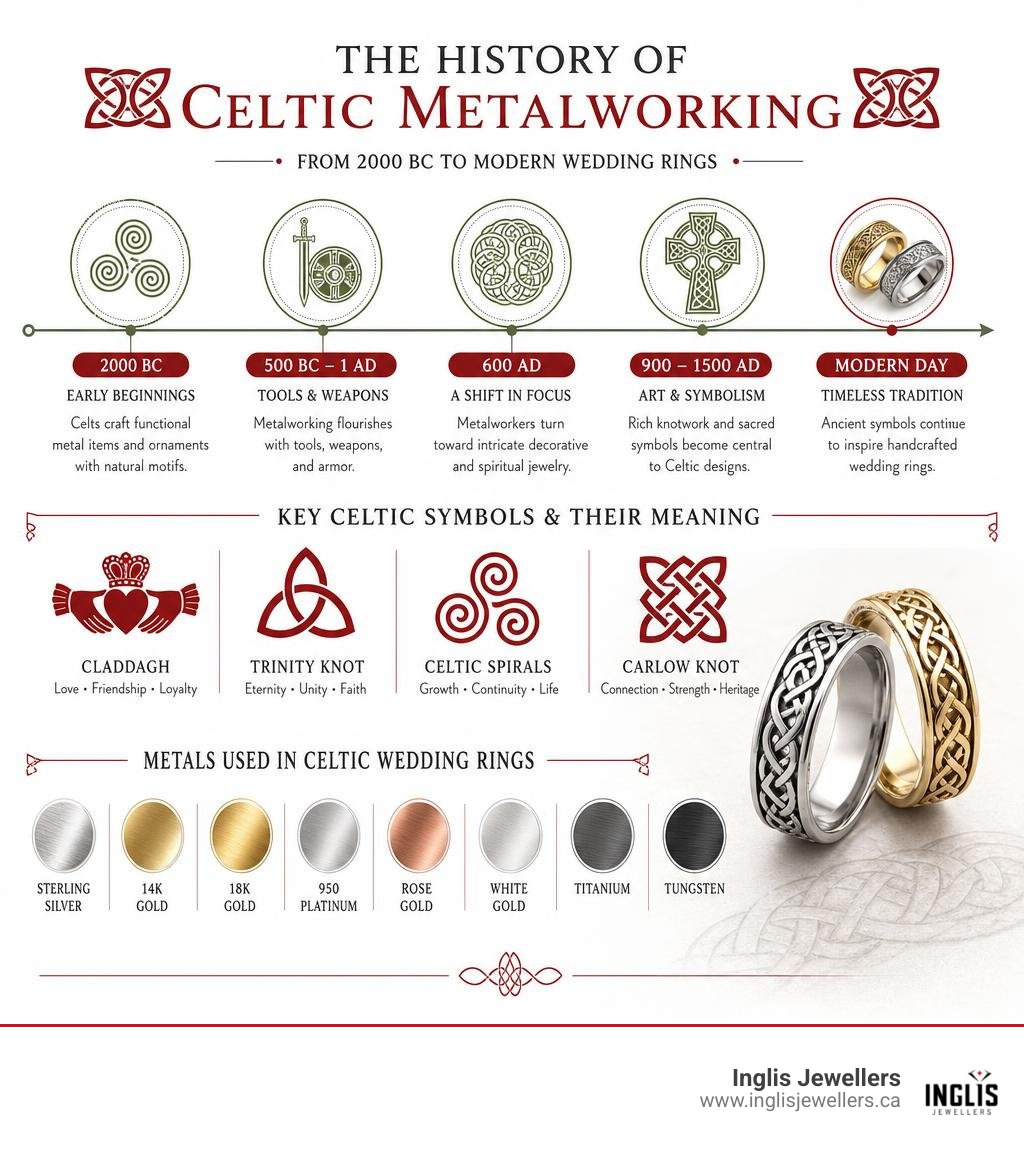
- What metals are available? Sterling silver, 14K gold, 18K gold, 950 platinum, rose gold, white gold, titanium, and tungsten
- How much do they cost? Sterling silver options start around $65. Gold bands range from roughly $590 to over $4,000 depending on design complexity and metal type
- Can they be customized? Yes — metal type, width, finish, engravings, and two-tone combinations are all common options
- Can they be resized? Rings with continuous knotwork generally cannot be resized without damaging the pattern, so getting sized correctly the first time is critical
Celtic jewelry has roots going back to roughly 2000 BC. Around 600 AD, Celtic metalworkers shifted their focus from weapons and armor toward intricate decorative and spiritual jewelry — laying the groundwork for the symbolic designs we still see on wedding rings today.
Choosing the right ring means understanding the symbols, metals, craftsmanship, and sizing considerations that make these bands so special — and so different from what you'll find mass-produced on a shelf.
At Inglis Jewellers, we specialize in helping couples across Atlantic Canada find and create meaningful, high-quality handmade Celtic wedding rings built to last a lifetime.
The Artistry of Handmade Celtic Wedding Rings vs. Mass-Produced Bands
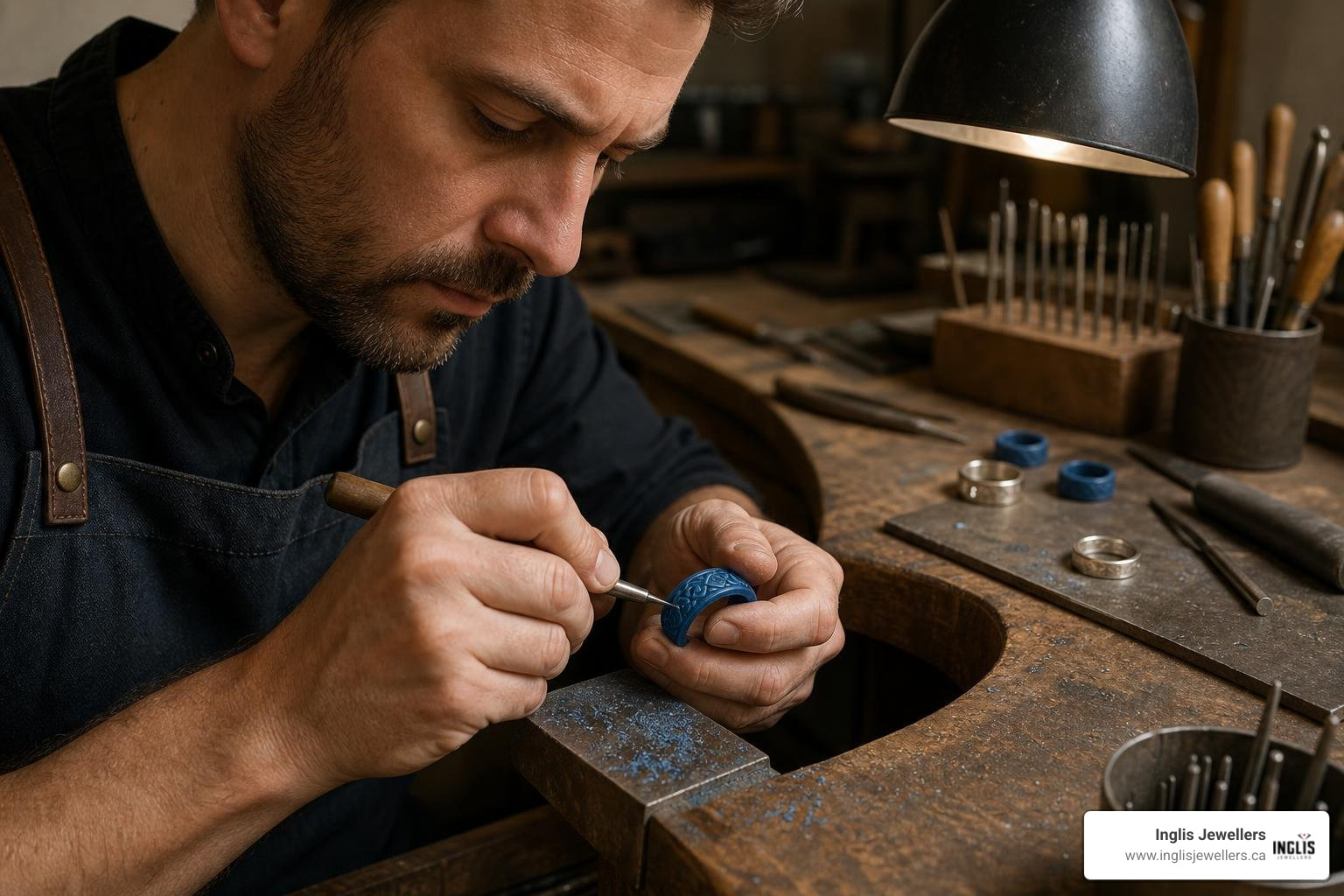
When shopping for a wedding band, it is easy to assume all rings are created equal. However, when it comes to intricate cultural heirlooms like handmade celtic wedding rings, the difference between an artisan-crafted piece and a mass-produced alternative is night and day.
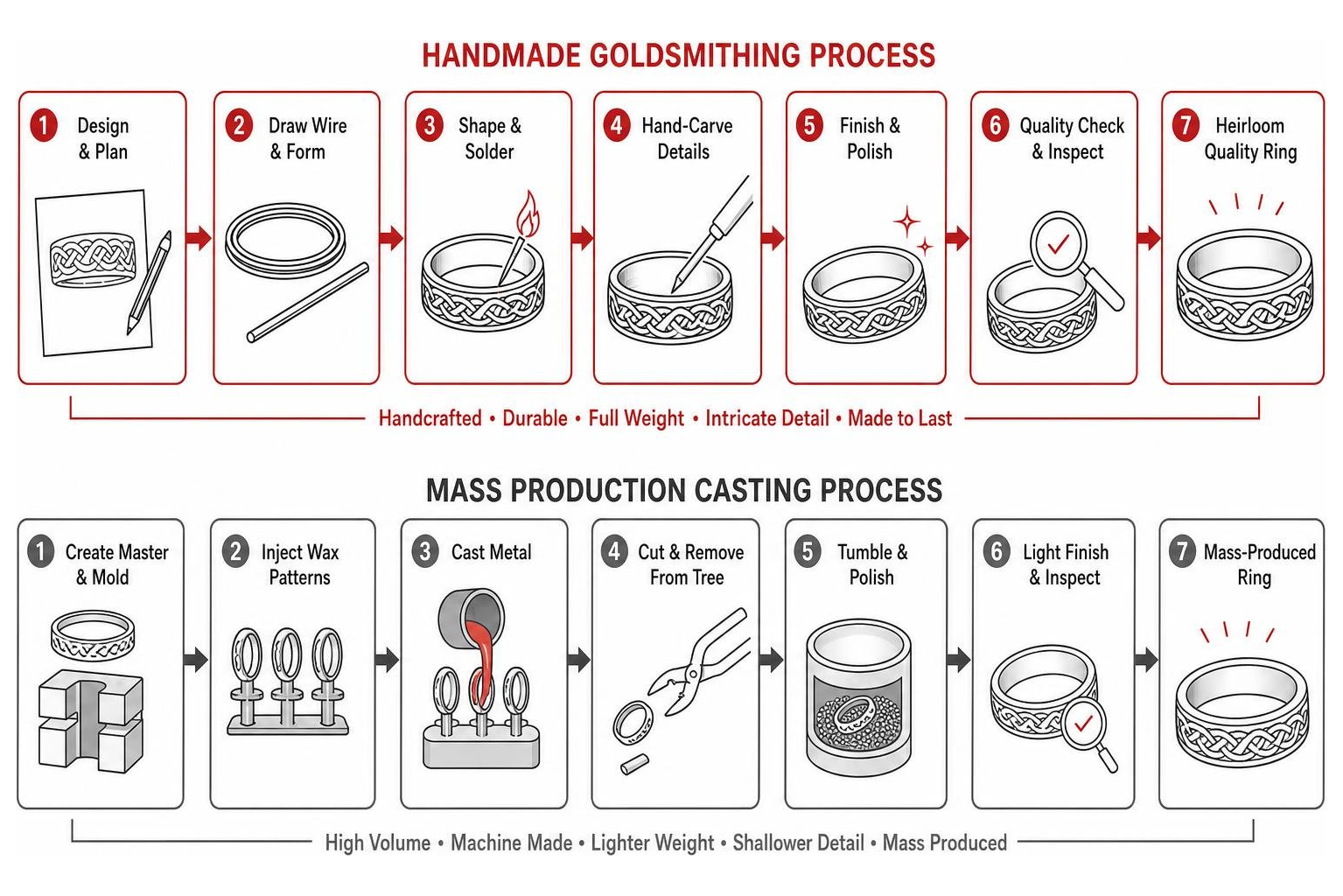
Mass-produced rings are typically manufactured using high-volume die-striking or automatic casting machines. In this commercial process, thousands of identical bands are popped out of generic molds. Because these factories prioritize speed and cost reduction, the fine details of the Celtic knots are often shallow, soft, or easily worn away over time. Furthermore, mass-produced rings are frequently hollowed out on the inside to save on metal weight, leaving you with a band that feels light, cheap, and structurally vulnerable to bending.
In contrast, an artisan goldsmith approaches a wedding band as a sculpture. Traditional goldsmithing relies on time-honored techniques like hand-milling, manual wire-drawing, and precise hand-engraving. Instead of injecting liquid metal into a rubber mold, an artisan may construct the ring from scratch by drawing down wire, bending it into shape, and soldering the individual strands together.
One of the most romantic methods used by bespoke jewelers is "same-melt bonding." Rather than casting two separate rings from generic factory gold, the jeweler melts down a single bar of gold or platinum. From this shared, singular melt, both partner's rings are forged. This means your wedding bands are chemically inseparable at the atomic level—made of the exact same physical material. For couples choosing different metals (such as one partner wanting platinum and the other yellow gold), artisans can even fuse a tiny bead of the partner's metal into the underside of each other's bands, creating an invisible, symbolic connection.
Understanding Celtic Symbols and Their Meanings
Every twist, turn, and loop in Celtic art tells a story. When you wear a Celtic wedding band, you are not just wearing a beautiful piece of jewelry; you are carrying thousands of years of heritage, folklore, and spiritual philosophy on your finger.
The Claddagh Ring
Perhaps the most famous of all Irish jewelry designs, the Claddagh ring was first created in the tiny fishing village of Claddagh, Galway, in the 17th century. The design consists of three distinct elements:
- The Heart: Symbolizes love (grá).
- The Hands: Symbolize friendship (cairdeas).
- The Crown: Symbolizes loyalty (dílseacht).
How you wear a Claddagh ring historically communicates your relationship status. If worn on the right hand with the heart facing outward (away from the body), it means you are single and looking for love. If worn on the right hand with the heart facing inward, your heart is captured. When worn on the left hand with the heart facing outward, you are engaged. Finally, wearing it on the left hand with the heart facing inward indicates you are married, symbolizing that your hearts are permanently bound together.
Celtic Knots and Spirals
Celtic knots are characterized by their endless paths. Because they feature no visible beginning and no end, they are the ultimate representation of eternity, the cycle of life, and unbroken devotion.
- The Trinity Knot (Triquetra): This three-pointed symbol represents unity and eternal love. Historically, it has represented various trilogies: the pagan Earth, Sea, and Sky; the Christian Holy Trinity; or the stages of life (youth, adulthood, and wisdom).
- The Lemniscate (Infinity Symbol): Often woven into rope-like patterns, this motif represents the harmony and simplicity of two people weaving their lives together from the present into infinity.
- The Three-Strand Carlow Knot: In this intricate design, three distinct strands are woven together. In the context of a wedding, the third strand often represents the creation of a new family unit or a child, seamlessly interconnected with the union of the two lovers.
- Josephine's Knot, Dal Riada, and Lochalsh Knots: These regional designs feature distinct geometric weaves. Josephine’s Knot, with its double-looped structure, represents the physical and spiritual interlocking of two distinct souls.
Choosing the Right Precious Metals and Finishes
Choosing the metal for your handmade celtic wedding rings is a balancing act between budget, lifestyle, and visual preference. Because Celtic patterns rely on deep recesses to create shadows and contrast, your choice of metal will directly affect how clearly the design stands out.
| Metal Type | Purity | Mohs Hardness | Best Suited For | Visual Characteristics |
|---|---|---|---|---|
| Sterling Silver | 92.5% Silver | ~2.5 - 3 | Budget-friendly, casual wear | Bright white, highly reflective; looks incredible when oxidized |
| 10K Gold | 41.7% Gold | ~3.5 - 4 | High-durability, active lifestyles | Slightly paler yellow, highly scratch-resistant |
| 14K Gold | 58.3% Gold | ~3.5 | Everyday wear, balanced durability | Rich color, excellent for both yellow and white gold |
| 18K Gold | 75.0% Gold | ~2.75 | Luxury, sensitive skin | Deep, warm yellow; softer and heavier |
| 950 Platinum | 95.0% Platinum | ~4.5 | Lifelong durability, hypoallergenic | Naturally bright white-grey; develops a lovely satin patina over time |
Gold, Platinum, and Sterling Silver Options
Pure gold (24K) is incredibly soft—registering at just 2.5 on the Mohs hardness scale (about the same hardness as a human fingernail). To make it durable enough for a wedding ring, it must be alloyed with other metals.
When choosing white gold, 14K is often preferred over 18K. Because 14K white gold contains a higher percentage of white alloy metals, it is naturally whiter, harder, and more scratch-resistant than 18K white gold. However, if you are choosing yellow gold, 18K gold offers a richer, warmer, and more historically authentic gold hue that beautifully complements traditional Celtic designs.
For the ultimate in durability, 950 platinum consists of 95% pure platinum. It is dense, hypoallergenic, and does not lose metal when scratched (the metal is merely displaced, creating a "patina" of wear). Sterling silver, composed of 92.5% fine pure silver, is an exceptionally affordable option. Brands like Amos Pewter showcase how beautiful handcrafted regional silver-toned designs can be, making sterling silver a popular entry-level metal for budget-conscious couples.
The Benefits of Two-Tone and Mixed-Metal Designs
One of the best ways to highlight the intricate geometry of a Celtic knot is to use a two-tone metal combination. When a ring is made of a single polished metal, the details of the knotwork can sometimes get lost in the reflections.
By combining metals—such as weaving a yellow gold Trinity knot over a white gold or sterling silver base—you create a stunning visual contrast. The warmth of the yellow gold pops dramatically against the cool, bright background, making the symbols instantly recognizable from across a room.
Finishes and Textures
The finish of your ring dictates how it interacts with light:
- High Polish: A mirror-like finish that reflects light brilliantly. It looks classic but will show scratches over time.
- Satin / Brushed Matte: A soft, non-reflective texture that hides daily scuffs incredibly well. This is highly recommended for those who work with their hands.
- Patina / Oxidation: A chemical process that darkens the recessed areas of sterling silver or white gold. This creates a high-contrast, antique look, making the deep lines of the Celtic knots look dark and defined.
Ethical Sourcing and Sustainable Materials
Your wedding rings symbolize love and commitment, so it makes sense that you want their origin story to be as beautiful as their design. Traditional gold mining is historically one of the world's most environmentally taxing industries. Fortunately, modern couples have fantastic ethical options.
At our workshop, we prioritize using recycled precious metals. Recycled gold and platinum are melted down from post-consumer sources (like old jewelry or industrial components) and refined back to their pure state. This process requires zero new mining and has an incredibly low carbon footprint.
For those looking for a deeply personal, natural touch, some artisan jewelers offer the option to incorporate sustainably panned alluvial river gold. This gold is gently panned by hand from natural riverbeds, ensuring no toxic chemicals (like mercury) are introduced into the environment.
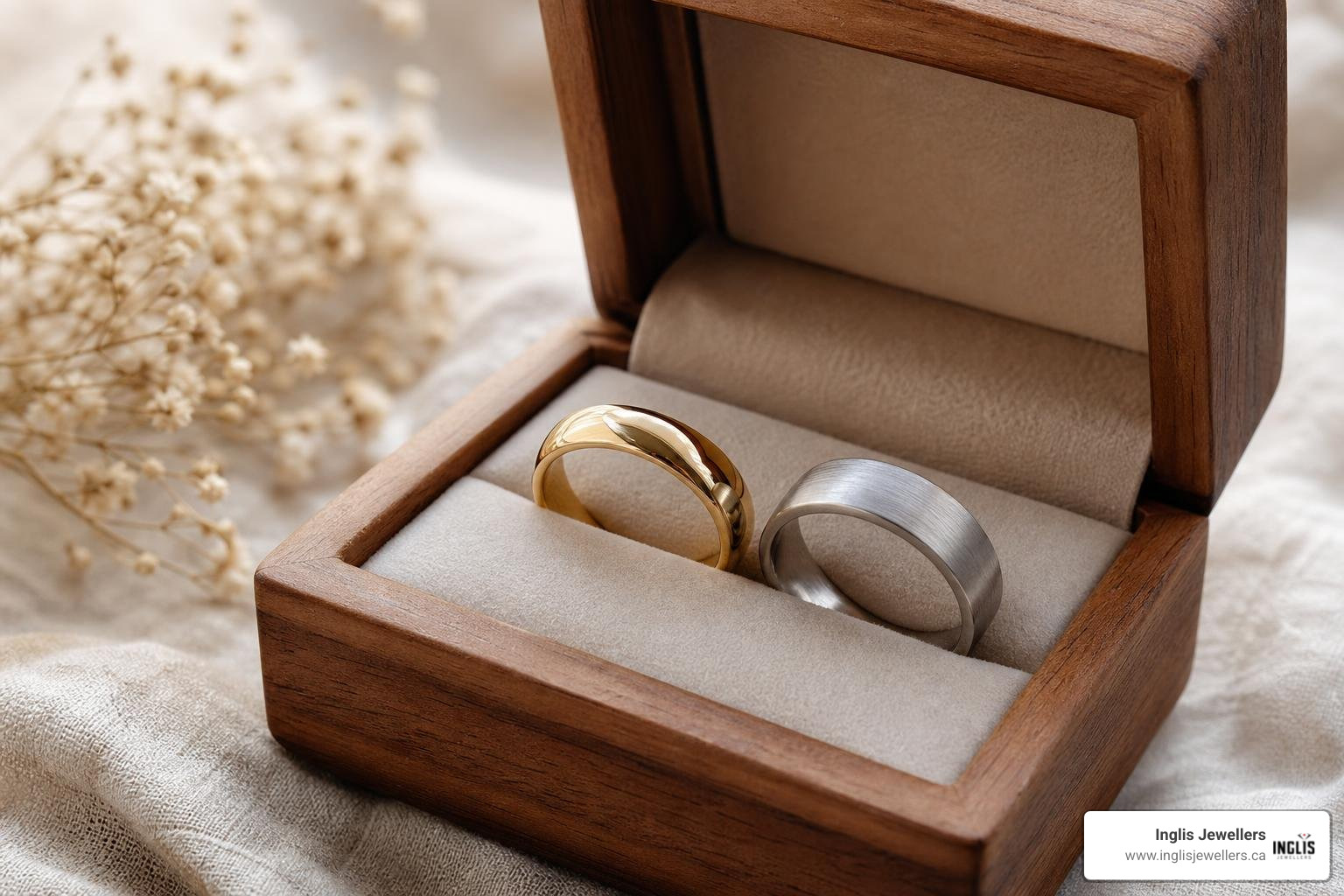
To complete the ethical circle, we recommend housing your rings in sustainable packaging. Instead of cheap plastic or synthetic velvet boxes, opt for ring boxes crafted from sustainably foraged local wood and lined with ethically sourced felted wool.
The Customization and Bespoke Design Process
If you want a ring that is completely unique to your love story, going the bespoke route is an incredibly rewarding experience. When you design a custom ring, you aren't limited to what is in a display case; you become an active collaborator in the creative process.
Designing Custom Handmade Celtic Wedding Rings
The journey of creating custom handmade celtic wedding rings typically follows a structured, collaborative process:
- The Consultation: You meet with our design team to share your ideas, sketches, and preferred symbols. If you are looking for a Custom Design Jewelry Near Me experience in Nova Scotia or New Brunswick, you can sit down in-store with our specialists to map out your vision.
- Sketching & CAD Design: Our designers translate your ideas into detailed sketches. We then create a 3D Computer-Aided Design (CAD) model, allowing you to see exactly how the ring will look from every angle. This is the perfect stage to explore a Bespoke Ring Design that incorporates personal family crests or unique knot configurations.
- The Wax Model: We grow a 3D wax model of your ring so you can try it on your finger, feel its width, and verify the scale of the Celtic knotwork before we cast it in your chosen metal.
- Forging & Hand-Finishing: Our master goldsmiths cast the ring, hand-file the details, set any accent gemstones, and apply your preferred finishes.
Whether you are looking to create Custom Rings for both partners, a rugged Customised Ring For Men, or a contoured band through our Bespoke Wedding Rings To Fit Engagement Ring service, the result is an instant family heirloom.
Sizing, Pricing, and Choosing an Artisan Jeweler
Purchasing a handmade wedding band requires a bit more planning than buying a standard plain band. Because of the complex nature of Celtic patterns, sizing and budgeting must be handled with care.
Sizing Challenges for Continuous Knotwork
This is the most critical technical point to understand: continuous Celtic knotwork rings generally cannot be resized.
If you cut a continuous knotwork band to make it larger or smaller, you will break the pattern, leaving a highly visible, mismatched seam that ruins the flow of the design. If a ring is sized incorrectly, the jeweler usually has to melt it down and remake the entire ring from scratch, which often incurs a remake fee of up to 35%.
To avoid this:
- Never rely on paper or printable online sizing charts.
- Visit a professional jeweler to get sized using a physical sizing set.
- Request a physical multi-stage sizing kit if ordering remotely.
- Choose a comfort-fit interior (a slightly domed inner profile) which makes wider bands (6mm to 10mm) much easier to slide over the knuckle.
Price Ranges and Cost Factors
The cost of a handmade Celtic ring is influenced by three main factors: metal weight, design complexity, and labor.
- Sterling Silver: Extremely accessible. Simple Celtic knot bands can start as low as $65, while heavy, highly detailed designer silver bands can range up to $1,100.
- Gold (10K, 14K, 18K): Gold bands generally start around $590 for narrow, simple designs. Intricate, wider, or two-tone gold bands typically range from $1,100 to over $4,000. For example, a premium handmade 14ct white gold Celtic ring like the Avonbeg starts around £2,763 (approximately $4,800 CAD), reflecting the intense labor required to hand-cut the delicate patterns.
- Platinum: Because platinum is incredibly dense and difficult to work with, platinum Celtic rings generally start around £2,839 (approximately $4,950 CAD) and go up based on width.
How to Care for Your Handmade Celtic Wedding Rings
Because Celtic rings feature intricate crevices, they can easily trap dirt, lotion, and soap residue, which dulls their shine.
- Use a Polishing Cloth: Gently rub your ring with a specialized jewelry polishing cloth to remove oils and restore shine.
- Avoid Liquid Cleaners on Oxidized Rings: If your ring has a dark, oxidized patina in the recesses to highlight the knotwork, never submerge it in liquid silver cleaning solutions. The chemical bath will instantly strip away the dark artistic finish, leaving the ring flat and bright white.
- Remove During Rough Activities: Take your ring off before swimming in chlorinated pools, gardening, lifting weights, or using harsh household chemicals to prevent scratching and chemical tarnish.
Frequently Asked Questions about Celtic Wedding Bands
Can Celtic wedding rings with continuous knotwork be resized?
In almost all cases, no. Because the knotwork pattern is designed to flow seamlessly around the entire circumference of the band, cutting the ring to resize it will interrupt and ruin the continuous design. If your size changes significantly over the years, the ring will likely need to be remade or replaced. This is why getting professionally sized before production is absolutely vital.
Why does white gold sometimes have a slightly yellow tint?
Gold is naturally yellow. To make white gold, yellow gold is alloyed with white metals like manganese, palladium, or nickel. This alloy still retains a very faint, warm yellow undertone. To make it bright white, commercial jewelers plate the ring in rhodium. However, this plating wears off over time. Many artisan jewelers choose not to rhodium-plate their handmade white gold rings, allowing the natural, warm, vintage-looking "unplated white gold" hue to shine through.
What is the difference between 14K and 18K gold for Celtic rings?
14K gold contains 58.3% pure gold, making it harder, more durable, and highly resistant to scratching—ideal for active individuals. 18K gold contains 75% pure gold, making it heavier, softer, and more luxurious. 18K yellow gold has a noticeably richer, more vibrant yellow color, which beautifully emphasizes historic Celtic designs, but it will show scratches more easily than 14K.
Conclusion
A wedding ring is the ultimate symbol of your shared journey. Choosing a handmade Celtic band allows you to weave history, art, and personal heritage into a daily reminder of your love. By understanding the craftsmanship of handmade jewelry, the deep meanings behind the symbols, and the practicalities of metal selection and sizing, you can choose a ring that will be cherished for generations.
Whether you prefer a classic Claddagh design, a modern two-tone Trinity Knot, or a completely bespoke creation, our team at Inglis Jewellers is here to guide you every step of the way. With locations across Nova Scotia and New Brunswick—including Truro, New Glasgow, Riverview, and Sydney—we bring trusted Atlantic Canadian craftsmanship and personalized support to your wedding journey.
Ready to find or design your perfect ring? Visit our Inglis Jewellers Goldsmith Studio today to begin your custom design consultation.