


How to Tell if a Gold Jewellery Shop Charges a Fair Price
A reputable gold jewellery shop should tell you the gold's karat, weight, and price before you buy. Ask for an itemized quote that separates the gold value from the cost of making the piece, any gemstones, and taxes. Compare the gold value with the current market price, then check the shop's return policy and what support is available after the sale. A low price means little if you cannot verify what you are buying.
At Inglis Jewellers, we offer online and in-store jewellery shopping across Atlantic Canada, along with custom design and goldsmithing services.
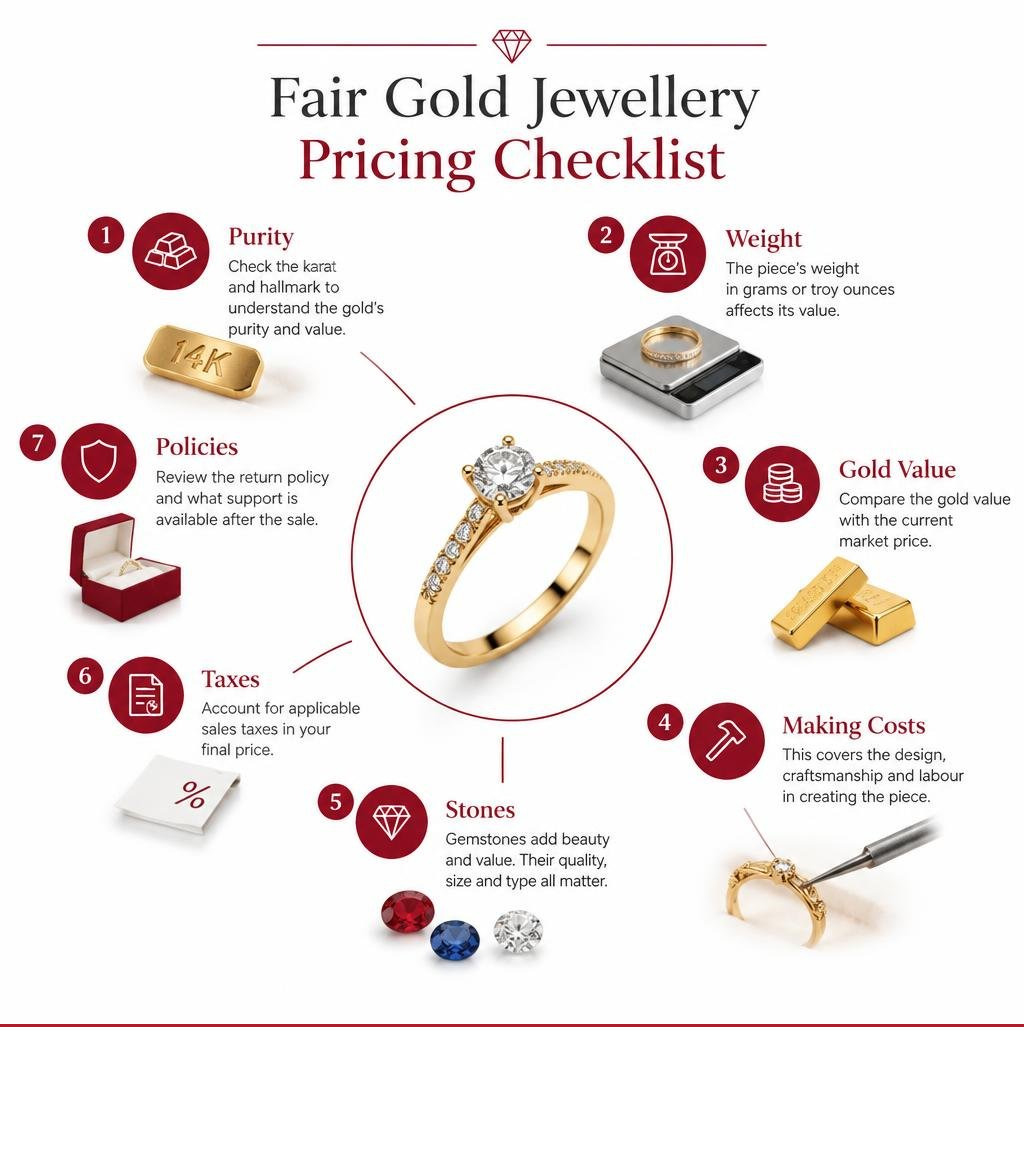
1. Purity Breakdown: How Karats and Hallmarks Determine Fair Value
To evaluate whether a quote is fair, you must first understand the fundamental relationship between gold purity and raw market value. Gold pricing starts with the live spot market rate, which dictates the value of pure, unrefined 24-karat gold per troy ounce or gram. Because pure gold is naturally soft and malleable, goldsmiths blend it with alloy metals like copper, silver, zinc, and nickel to improve strength, alter working properties, and produce distinct hues.
In Canada, precious metal standards are legally defined. When assessing fine pieces, consumers can reference the federal Guide to the Precious Metals Marking Act and Regulations to understand how quality marks and national trade rules ensure honesty at the sales counter.
| Karat Rating | Purity Percentage | Fineness (Parts per 1,000) | Best Applications & Durability | Common Alloy Blend |
|---|---|---|---|---|
| 24K | 99.9% | 999 | Investment bars, coins, high-purity specialty charms; very soft | None (Pure Gold) |
| 22K (916) | 91.6% | 916 | Traditional bridal, intricate filigree, heritage investments; rich yellow tone | Copper, Silver |
| 18K | 75.0% | 750 | Fine bridal, luxury designer rings, premium gemstone settings; balanced luxury | Copper, Silver, Zinc |
| 14K | 58.3% – 58.5% | 585 | Everyday rings, chains, active wear; exceptional durability and scratch resistance | Copper, Silver, Nickel/Zinc |
| 10K | 41.7% | 417 | Highly durable daily jewellery, entry-level budgets; very hard alloy | Copper, Silver, Zinc, Nickel |
Understanding 10K, 14K, 18K, and 22K (916) Gold
Choosing the right karat involves balancing durability, color saturation, and budget. While 24K gold offers maximum intrinsic metal value, its softness makes it impractical for secure, gem-set everyday rings.
At 91.6% purity, 22K gold (often stamped as 916 gold) provides a deep, warm yellow luster. It is prized globally for high-karat filigree, traditional bridal trousseaus, and cultural statement items. Moving down the scale, 18K gold strikes a classic balance for fine bridal designs, pairing rich coloration with solid structural integrity.
For North American lifestyles, 14K and 10K gold remain the most popular choices for day-to-day resilience. A 14K alloy delivers an appealing balance of authentic gold content and resistance to bending or scratching, while 10K provides an accessible, durable entry point. Beyond karat grades, alloy chemistry creates different shades of fine gold:
- Yellow Gold: Retains its warm hue through balanced additions of copper and silver.
- White Gold: Blended with nickel or palladium and finished with rhodium plating for a bright, mirror-like sheen.
- Rose Gold: Uses higher copper proportions to create a romantic pinkish-red tone.
Verifying Authenticity with Assay Hallmarks and Certifications
A hallmark is a permanent micro-stamp applied to the inner band, clasp tag, or reverse side of a fine jewellery piece. These stamps identify the fineness of the precious metal and the registered trademark of the maker.

When you examine an authentic item through a jeweller's loupe, look for clear fineness stamps such as 10K (or 417), 14K (585), 18K (750), or 22K (916). High-karat imports frequently feature international assay office stamps alongside registered identification numbers. When purchasing diamond-accented pieces, ensure the seller pairs metal hallmarks with independent grading certificates from recognized laboratories like GIA or IGI.
2. Key Signs You Are Visiting a Reputable Gold Jewellery Shop
A trustworthy retailer practices open transparency. Rather than offering vague bundle prices, an experienced team explains how each element of a piece contributes to its final cost.
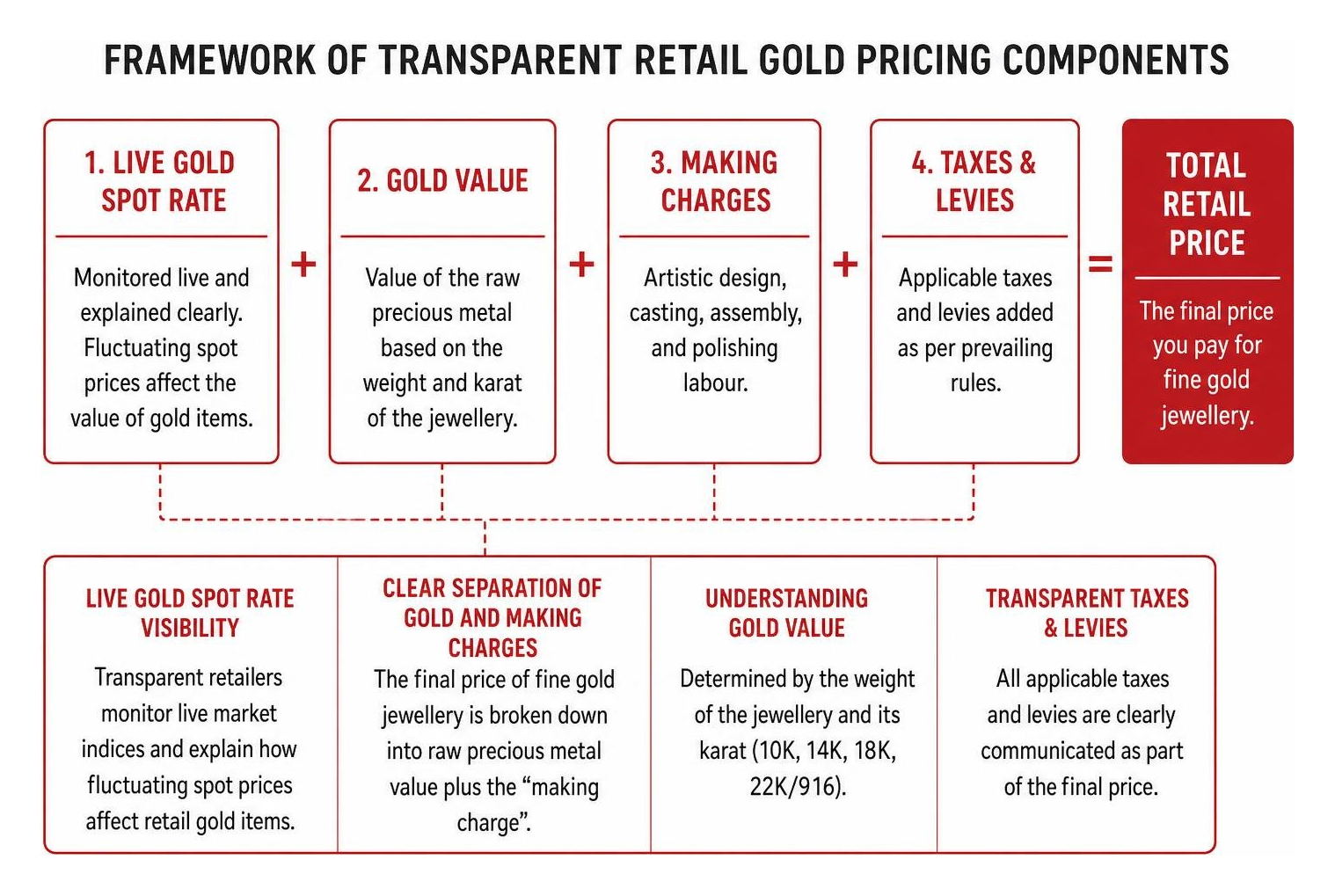
What to Look for When Choosing a Gold Jewellery Shop
When assessing a local shop or browsing online, look for clear signs of fair business practices:
- Live Gold Spot Rate Visibility: Transparent retailers monitor live market indices and explain how fluctuating spot prices affect retail gold items.
- Clear Separation of Gold and Making Charges: The final price of fine gold jewellery should be broken down into raw precious metal value plus the "making charge" (the artistic design, casting, assembly, and polishing labour).
- Accurate Net Weight Calculation: If a piece incorporates gemstones, pearls, or enamel, your price per gram should calculate the net gold weight alone, deducting the weight of non-gold materials.
- Itemized Documentation: Your final invoice must clearly state the karat grade, verified gram weight, and warranty or return terms.
Full-Service Capabilities and Professional Care
A complete jewellery store does more than sell off-the-shelf items; it provides long-term bench maintenance. Having skilled goldsmiths on-site means you can handle sizing, maintenance, and restorations under one roof.
To keep fine gold secure and pristine over decades of wear, look for shops offering dedicated jewellery repairs, such as:
- Precision laser welding and ring resizing
- Clasp replacements and chain re-soldering
- Prong retipping and channel wall rebuilding
- Ultrasonic cleaning and rhodium refinishing
3. Popular Gold Categories and Making Charge Expectations
Making charges reflect the time, skill, and equipment required to produce a specific design. Machine-stamped curb chains, for example, carry lower labor fees per gram than hand-carved filigree or bezel-set temple jewellery. Understanding these differences helps you evaluate quotes fairly across different styles.
Essential Everyday Chains, Necklaces, and Earrings
Foundational jewellery pieces combine daily durability with classic styling. The most common wardrobe essentials include:
- Chains and Necklaces: Sturdy box, Figaro, and curb links provide durability for daily pendant wear, while hollow rope chains maximize visual volume at a lighter, budget-conscious weight. Browse versatile gold chains and layered gold necklaces to compare solid versus hollow profiles.
- Earrings: Daily wear demands secure backings and comfortable balances. Classic gold earrings, including lever-back drops, huggies, and polished studs, require minimal labor additions beyond their gold weight.
Statement Bangles, Pendants, Anklets, and Charms
Intricate designs involve higher manufacturing detail, which naturally increases the making charge portion of the price tag:
- Bangles and Bracelets: Solid slip-on bangles or hinged designs offer lasting structural integrity. Explore enduring gold bangles for classic styles, or look for cultural motifs like dragon carvings and abacus-inspired links.
- Pendants and Charms: From religious medallions to personalized keepsakes, explore artistic gold pendants and buildable gold charm bracelets that celebrate personal milestones.
- Anklets: Lightweight, warm-weather gold anklets require durable soldered jump rings and secure lobster clasps to prevent loss during movement.
4. In-Store Experience vs. Buying Gold Jewellery Online
Shopping for fine gold in person and ordering online each offer unique benefits. Knowing what to expect from both channels ensures you enjoy a safe, well-informed purchase.
The In-Person Experience at a Local Gold Jewellery Shop
Visiting an established boutique allows you to handle pieces directly and verify their specifications. You can check the heft of solid links, inspect how different gold shades look against your skin, and watch the scale balance in real time.
For Atlantic Canadians, working with our local team at our jewellery store in Sydney Nova Scotia—or at our locations in Truro, New Glasgow, and Riverview—delivers face-to-face guidance and accessible ongoing maintenance.
Digital Shopping Safeguards and Delivery Standards
When shopping online, look for clear trust markers:
- Insured, Tracked Courier Transit: High-value parcels should ship in discrete, tamper-evident packaging requiring an adult signature upon delivery.
- Clear Return Windows: Transparent online shops provide fair inspection windows, allowing you to examine the piece and its hallmarks before committing.
- Secure Payment Options: Trustworthy e-commerce stores accept established payment methods like major credit cards, Apple Pay, Google Pay, and verified financing options.
5. Design Trends, Customization, and Preserving Value
Today's fine jewellery market combines minimalist modern trends with rich heritage techniques. Contemporary buyers often layer delicate yellow gold paperclip chains with multi-tone white and rose gold accents, while antique finishes, meenakari enamel, and cultural motifs remain popular for milestone celebrations.
Custom Creations and Bespoke Craftsmanship
If off-the-shelf showcases do not match your vision, custom goldsmithing brings your ideas to life. You can design an original piece from scratch or transform unworn family heirlooms into modern keepsakes.
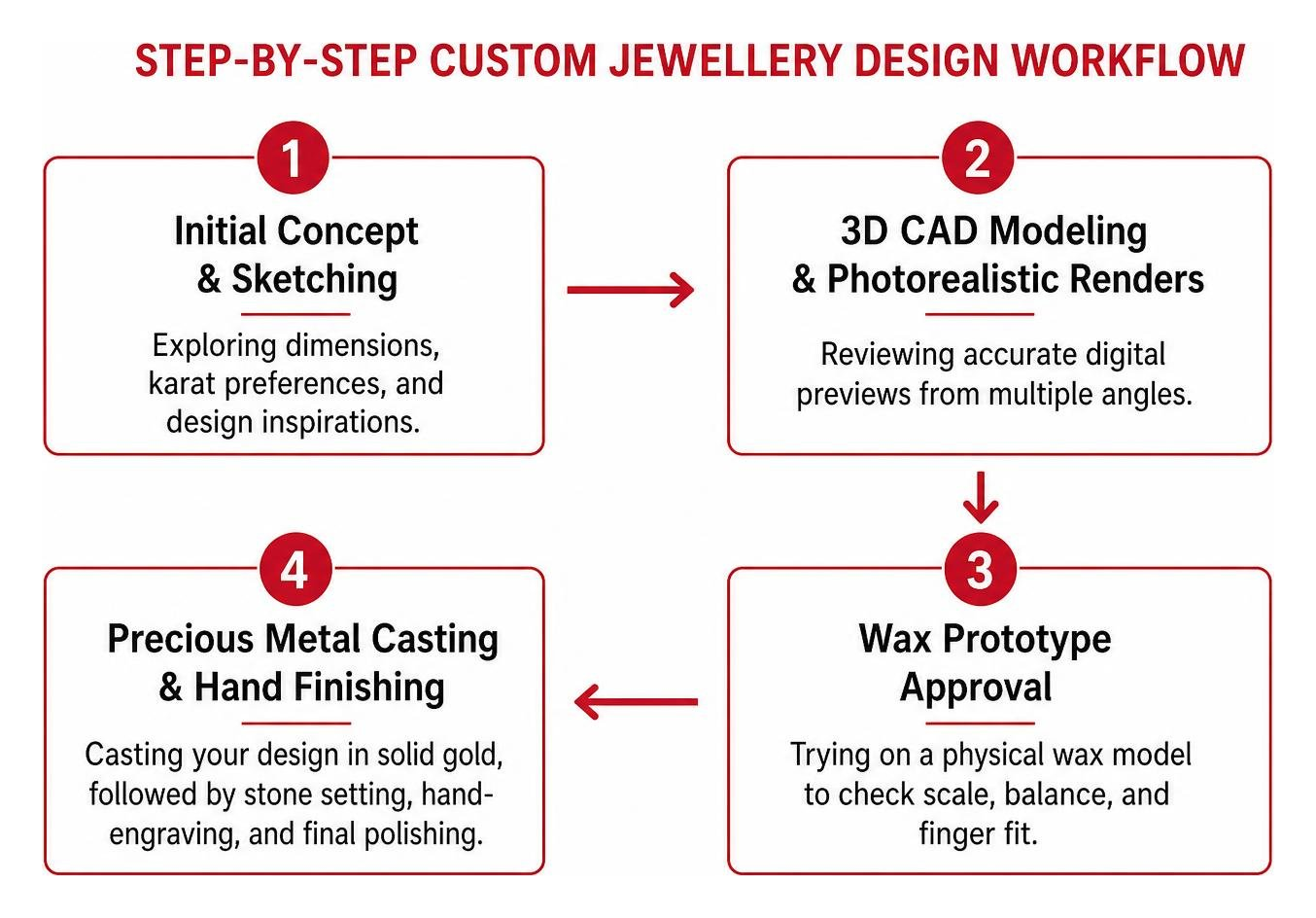
Our custom jewellery design process walks you through every stage:
- Initial Concept & Sketching: Exploring dimensions, karat preferences, and design inspirations.
- 3D CAD Modeling & Photorealistic Renders: Reviewing accurate digital previews from multiple angles.
- Wax Prototype Approval: Trying on a physical wax model to check scale, balance, and finger fit.
- Precious Metal Casting & Hand Finishing: Casting your design in solid gold, followed by stone setting, hand-engraving, and final polishing.
Multi-Segment Demographics and Investment Potential
Gold jewellery serves diverse purposes across different demographics:
- Men's Collections: Heavy solid curb chains, signet rings, and identity bracelets prioritize durable construction and high gram weights.
- Children's Keepsakes: Dainty baby bangles, safety-clasp earrings, and engravable pendants commemorate christenings and birthdays.
- Wealth Preservation & Liquidity: Because karat gold carries intrinsic market value, fine jewellery functions as wearable wealth. When reallocating your collection or updating older assets, turn to transparent gold buying in Nova Scotia to convert unwanted pieces into cash or store credit based on verified melt value.
Frequently Asked Questions About Fair Gold Pricing
How do I calculate whether a gold jewellery price is fair?
To calculate whether a retail price is fair, multiply the verified net gram weight of the piece by its gold purity percentage (for example, 0.585 for 14K, or 0.750 for 18K). Multiply that result by the live pure gold market price per gram to find its raw melt value. Subtract this metal value from the total retail asking price. The remaining amount represents the making charge, gem value, and retail margin. If this craftsmanship charge aligns with the design's complexity and includes solid warranty support, the price is fair.
What is the difference between 916 gold and 14K gold for everyday wear?
The difference lies in metal purity, color richness, and surface hardness:
- 916 Gold (22K): Contains 91.6% pure gold, giving it a vibrant yellow luster. However, its softness makes it more prone to surface scratches, bending, and prong wear during intense manual activity.
- 14K Gold: Contains 58.5% pure gold combined with 41.5% strengthening alloy metals. This blend resists deformation and holds diamond prongs securely, making it ideal for daily wedding bands and active lifestyle wear.
How can I verify that my gold jewellery is real?
You can verify authentic gold through several reliable steps:
- Inspect Hallmarks: Use a loupe to check for official purity stamps (such as 417, 585, 750, 916, or standard karat marks).
- Physical Magnet Test: Real gold is non-magnetic; if a chain attaches firmly to a strong magnet, its primary composition is likely base metal (though some clasps contain small internal steel springs).
- Professional Testing: Visit a professional jeweller for non-destructive electronic testing, X-ray fluorescence (XRF) scans, or traditional touchstone acid testing to confirm exact alloy percentages without damaging your piece.
Conclusion
Finding fair pricing on fine gold comes down to three key steps: confirming the exact karat purity, verifying the net gram weight, and working with an accredited jeweller who openly explains making charges. When you buy from a transparent retailer, you can wear every piece with lasting confidence.
Explore our curated All Gold collections to find timeless, certified designs for every occasion. If you want to evaluate existing pieces in your collection or trade in older items toward a new bespoke creation, discover transparent trade-in values and investment insights through our comprehensive gold buying services and market guidance. Stop by your nearest Inglis Jewellers showroom in Truro, New Glasgow, Sydney, or Riverview, or connect with our goldsmithing team online today.