


The Most Brilliant Choice: What to Know About Diamond Pave Wedding Bands
Diamond pavé wedding bands are one of the most popular styles in bridal jewellery right now — and for good reason. They wrap your finger in continuous sparkle, using rows of tiny diamonds set so close together that the metal underneath nearly disappears.
Quick answer: What are diamond pave wedding bands?
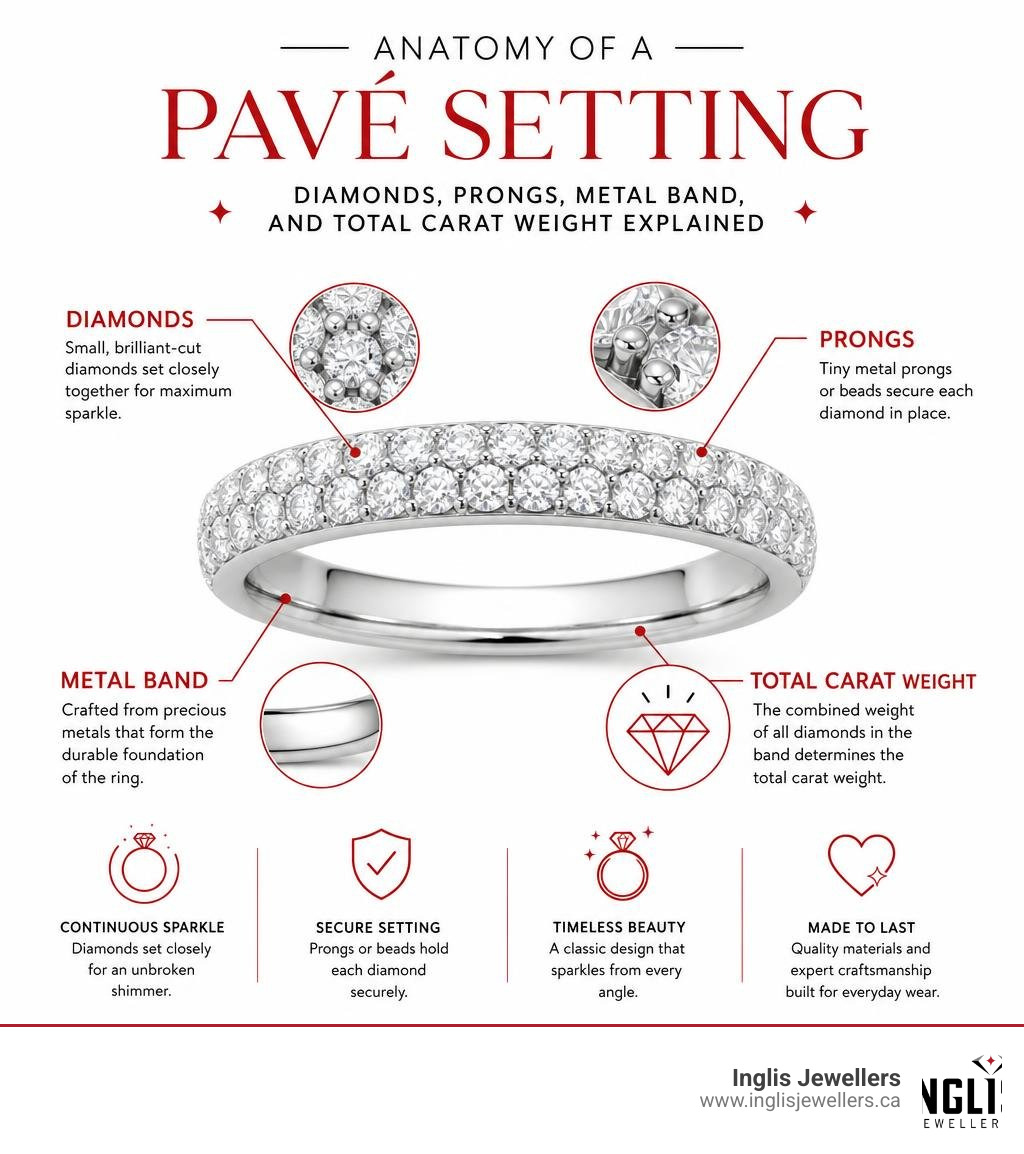
- Setting style: Small diamonds are held in place by tiny prongs or beads, covering the band's surface
- Effect: Creates an unbroken surface of shimmer — like the band itself is paved with diamonds
- Common carat weights: Roughly 1/5 ct to 0.69 ct total diamond weight, depending on the band width and style
- Metal options: 14k gold, 18k gold, and platinum are the most common choices
- Price range: From a few hundred dollars to several thousand, based on metal, diamond quality, and total carat weight
- Best for: Pairing with an engagement ring, stacking, or wearing solo as a statement band
Choosing the right pave band means understanding how the setting works, what quality factors matter, and how different styles compare. Whether you're drawn to a delicate single row of micro-pavé diamonds or a bold three-row design with milgrain edges, there's a lot to consider before you buy.
This guide walks you through everything — settings, metals, pricing, care, and how to find a band that fits your ring and your lifestyle perfectly.
Understanding Diamond Pave Wedding Bands: Settings and Styles
The word pavé comes from the French word for "paved," as in a cobblestone street paved with beautiful, glittering stones. In a diamond pave wedding band, the surface of the ring is literally paved with tiny, brilliant-cut diamonds. This effect is achieved by placing small diamonds into miniature wells drilled into the metal shank, then securing them with microscopic beads or prongs of metal.
However, not all pavé settings are created equal. As we look at bridal trends in June 2026, jewellers use several distinct techniques to secure these tiny stones, each offering a slightly different visual texture and level of brilliance:
- Traditional Pavé: Small diamonds are nestled in a line, held by tiny metal beads raised directly from the band. It offers a classic look with a subtle hint of visible metal framing the stones.
- French Pavé: This technique involves cutting tiny V-shaped notches into the metal beneath the diamonds. By removing excess metal from the sides, more light can enter the diamonds from the sides, boosting their overall fire and scintillation.
- Micro-Pavé: This refers to the size of the diamonds used. Micro-pavé bands feature incredibly tiny diamonds (often under 0.01 carats each) set under high-magnification microscopes. The result is an ultra-delicate, almost fabric-like sheet of shimmer.
- Petite Pavé: Similar to traditional pavé, but uses much smaller, thinner prongs to secure the stones. This maximizes the visibility of the diamonds while keeping the band exceptionally slim.
- Milgrain Pavé: This style features delicate, beaded metal borders that frame the pavé rows. If you love vintage elegance, a milgrained pave set curved diamond wedding band in 14k white gold is a stunning example of how vintage detailing and modern sparkle can blend seamlessly.
Pave vs. Channel and Bezel Settings
When selecting a diamond wedding band, pavé is often compared to channel and bezel settings. Understanding how they differ in metal visibility, light performance, and security will help you decide which setting matches your lifestyle.
- Metal Visibility: Pavé settings are designed to hide as much metal as possible, creating a continuous surface of diamond brilliance. In contrast, channel settings hold diamonds between two parallel walls of metal, making the gold or platinum borders highly visible. Bezel settings encircle each individual diamond entirely in a rim of metal, creating a modern, graphic frame.
- Light Performance: Because pavé settings use tiny, delicate prongs, more of each diamond's surface is exposed to light. This results in superior sparkle and fire. Channel settings block light from entering the sides of the diamonds, slightly muting their brilliance. Bezel settings block the most light from the sides, though they still offer excellent top-down reflection.
- Diamond Security: While modern craftsmanship makes pavé highly durable, its tiny prongs are naturally more vulnerable to snagging or wearing down over decades of daily wear. Channel and bezel settings offer the highest level of protection, shielding the edges of the diamonds from bumps, scrapes, and everyday impacts.
| Setting Type | Metal Visibility | Light Performance | Diamond Security | Best For |
|---|---|---|---|---|
| Pavé | Very Low | Exceptionally High | Moderate | Maximum sparkle, delicate stacking, vintage styles |
| Channel | Moderate | Moderate to High | High | Active lifestyles, classic tailored looks, snag-free wear |
| Bezel | High | Moderate | Very High | Ultra-modern aesthetics, maximum protection of stones |
Key Features: Carats, Metals, and Diamond Types
When shopping for diamond pave wedding bands, the beauty is in the details. The combination of carat weight, metal type, and diamond origin determines not only how the ring looks on your hand, but also how it fits into your budget.
Carat Weight and Diamond Sizes
Because pave bands are made of many small diamonds (often called "melee" diamonds), the carat weight is measured as Total Carat Weight (cttw). This is the combined weight of all the tiny diamonds in the band.
- Slim, stackable bands typically feature a total carat weight of 0.15 to 0.25 cttw. These are perfect for nesting alongside delicate engagement rings.
- Medium-width bands range from 0.30 to 0.50 cttw, offering a noticeable presence on the hand without overpowering a center stone.
- Thicker or multi-row bands can easily reach 0.69 cttw or higher, featuring dozens of carefully matched diamonds for a lavish, high-impact look.
Metal Options and Durability
The metal you choose serves as the foundation for your pave setting. Because the prongs in a pave band are incredibly small, choosing a strong, durable metal is essential:
- 14k Gold (White, Yellow, or Rose): Highly recommended for pave settings. Alloyed with other strong metals, 14k gold is harder and more scratch-resistant than 18k gold, making it excellent at holding tiny prongs securely in place over time.
- 18k Gold (White, Yellow, or Rose): Offers a richer, more luxurious color (especially in yellow and rose gold) due to its higher gold content. While slightly softer than 14k, it is still a beautiful, premium choice for fine bridal jewellery.
- Platinum: The ultimate choice for security. Platinum is a dense, malleable metal. Unlike gold, when platinum is scratched or bumped, the metal shifts rather than wearing away. This makes platinum prongs incredibly secure and less likely to break.
Major jewellery retailers across North America showcase a massive variety of these designs, with many offering over 130 natural diamond pave options to suit different tastes and metal preferences.
Natural vs. Lab-Grown Diamond Pave Wedding Bands
One of the most important decisions couples face in June 2026 is choosing between natural and lab-grown diamonds for their wedding bands. Both options are physically, chemically, and optically identical--they are both pure carbon crystals with a hardness of 10 on the Mohs scale. However, they differ significantly in origin, price, and environmental considerations. For a gemological overview, the Gemological Institute of America explains the differences between natural and laboratory-grown diamonds.
- Price Difference: Lab-grown diamonds generally cost 30% to 70% less than natural diamonds of equivalent quality. In a pave band, opting for lab-grown diamonds can allow you to choose a wider band or a higher total carat weight for the same budget.
- Chemical Composition: Both natural and lab-grown diamonds exhibit the exact same brilliance, fire, and scintillation. Even professional gemologists require specialized lab equipment to tell them apart.
- Sourcing and Sustainability: Natural diamonds are mined from the earth, which carries historical and environmental footprints, though modern ethical mining practices have vastly improved local community support. On the other hand, lab-grown diamonds are grown in controlled laboratory environments using advanced technology. Many jewellers have gained popularity by offering lab-grown wedding bands designed with a modern focus on fully traceable origins.
- Which should you choose? If you value the rarity, geological history, and traditional prestige of stones formed deep within the earth over billions of years, natural diamonds are the classic choice. If you prefer to maximize your budget or prioritize modern technological sourcing, lab-grown diamonds are an excellent, high-quality alternative.
Pros, Cons, and Styling Tips for Pave Bands
Like any jewellery style, diamond pave wedding bands come with their own unique set of advantages and challenges. Weighing these factors will ensure you select a ring that brings you joy every single day.
The Advantages (Pros)
- Maximum Brilliance: By minimizing the visible metal, pavé settings allow light to bounce off the diamonds from almost every angle, creating a continuous, intense sparkle.
- Vintage Aesthetic: Pavé settings have a rich history in antique and Art Deco jewellery. They pair beautifully with milgrain detailing and intricate engraving for a timeless, romantic look.
- Flattering to Center Stones: A delicate pavé band acts as a supportive frame, drawing the eye toward your engagement ring's center stone and making it appear even larger and more brilliant.
The Disadvantages (Cons)
- Delicate Prongs: Because the prongs holding each diamond are microscopic, they can wear down over time or bend if subjected to hard impacts.
- Snagging Risk: The small metal prongs can sometimes snag on delicate fabrics, knit sweaters, or hair if they are not perfectly finished.
- Difficult Resizing: Because the band is drilled with holes to accommodate the diamonds, resizing a pavé band—especially a full eternity band—can be incredibly challenging and sometimes impossible without compromising the security of the stones.
Styling and Stacking Trends
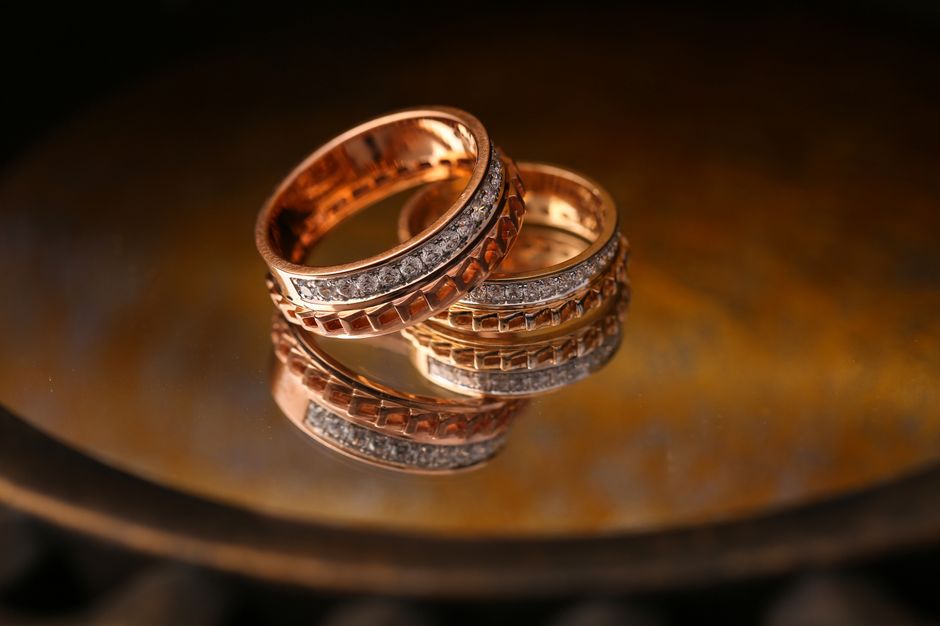
One of the biggest trends in modern bridal wear is creating a personalized "ring stack." Rather than wearing just a single wedding band, many brides choose to layer multiple slim bands together.
Luxury design houses frequently showcase dozens of slim stackable options, and you can easily find nearly 100 designs at luxury houses to draw inspiration from. For a modern, fashion-forward look, try pairing a platinum pavé band with a graphic yellow gold band, or sandwich your engagement ring between two ultra-slim rose gold micro-pavé bands.
Customizing Your Diamond Pave Wedding Bands
If you want a ring that is truly one-of-a-kind, custom design is the way to go. Customizing your wedding band allows you to decide exactly how many rows of diamonds you want, the specific metal alloy, and whether to include delicate details like milgrain borders or custom engraving.
For couples living in Atlantic Canada, working with a local goldsmith provides a deeply personal and stress-free experience. If you are looking to design a bespoke set, collaborating directly with skilled artisans who understand the rich traditions of crafting fine jewellery in Atlantic Canada can help inspire your design journey.
How to Match Your Band to an Engagement Ring
A wedding band should complement your engagement ring, not compete with it. Here is how to ensure a harmonious match:
- The Flush Fit: If your engagement ring has a high setting (where the center stone is raised on a basket or peg head), a straight pavé wedding band will sit flush against it without any gaps.
- Curved and Contour Bands: If your engagement ring has a low-set center stone or a wide halo, a straight band will push against the setting, leaving a gap. A curved or contour band is gently arched to hug the contours of your engagement ring perfectly.
- Tapered and V-Shaped Designs: For marquise, pear, or oval-shaped center stones, tapered V-shaped diamond pavé contour wedding bands are an incredible option. They draw the eye outward, framing the elongated diamond beautifully and creating a balanced, royal aesthetic.
Frequently Asked Questions about Pave Wedding Bands
How much do pave diamond wedding bands cost?
The cost of a diamond pave wedding band is determined by several factors: the purity and weight of the metal, the total carat weight of the diamonds, and the complexity of the hand-setting process.
On average, a simple 14k gold micro-pavé band can start around $800 to $1,500, while high-carat platinum or multi-row designs can range from $2,500 to $5,000 or more.
When shopping, it is incredibly helpful to read reviews; top-rated pavé bands often gather thousands of five-star reviews from happy couples who praise their comfort and daily wearability. We always recommend taking your time to explore a wide selection of designs, comparing pricing and styles to find the perfect match for your budget.
How do you clean and maintain a pave setting?
Because pavé bands have dozens of tiny crevices around the prongs, they can easily trap dirt, lotion, hand sanitizer, and soap residue. This build-up blocks light from entering the diamonds, making them look cloudy or dull.
To keep your band sparkling like new, follow these simple maintenance tips:
- Gentle Home Cleaning: Soak your ring in a bowl of warm water mixed with a few drops of mild dish soap for 15 to 20 minutes. Gently brush the band with a baby toothbrush (which has ultra-soft bristles) to clear away dirt. Rinse thoroughly under warm running water (make sure the drain is plugged!) and pat dry with a lint-free cloth.
- Professional Inspection: We recommend bringing your pavé band to a professional jeweller at least once a year. They will inspect the ring under magnification to check for loose stones or bent prongs and give it an ultrasonic cleaning to restore its original brilliance.
- Safe Wear Habits: Remove your pavé ring before heavy physical activities, such as working out, gardening, cleaning with harsh chemicals, or rock climbing. This prevents the delicate prongs from bending or snagging.
Can pave wedding bands be resized?
Resizing a pavé band depends entirely on the design of the ring:
- Half-Eternity Bands: These rings feature diamonds across the top half of the band, leaving the bottom half as plain metal (often called a "sizing bar"). Half-eternity bands are relatively easy to resize because the jeweller can cut and adjust the plain metal section without disturbing the diamond settings.
- Full-Eternity Bands: These rings feature diamonds that go all the way around the band. Because there is no plain metal section, resizing a full-eternity band is extremely difficult and often impossible. Stretching or compressing the metal ring would distort the circular shape of the wells, causing the tiny diamonds to pop out of their settings. If you choose a full-eternity style, ensuring an accurate professional ring sizing before ordering is absolutely critical.
Conclusion
A diamond pave wedding band is a breathtaking way to celebrate your love, offering an unmatched level of sparkle and elegance. Whether you prefer a classic, ultra-slim micro-pavé band, a vintage design bordered with milgrain, or a custom contour band designed to hug your engagement ring, this style is guaranteed to turn heads for decades to come.
At Inglis Jewellers, we have spent years helping couples across Atlantic Canada find and create their dream bridal jewellery. With our convenient physical locations in Truro, NS, New Glasgow, NS, Sydney, NS, and Riverview, NB, we provide trusted craftsmanship, custom design services, and full-service goldsmithing support both online and in-store.
Our in-house goldsmiths are always ready to help you design a custom band that aligns perfectly with your engagement ring and personal style. Visit our Goldsmith Studio for custom wedding bands and let us help you write the next chapter of your love story with a ring that sparkles from every single angle.