


How to Choose Custom Designed Wedding Rings
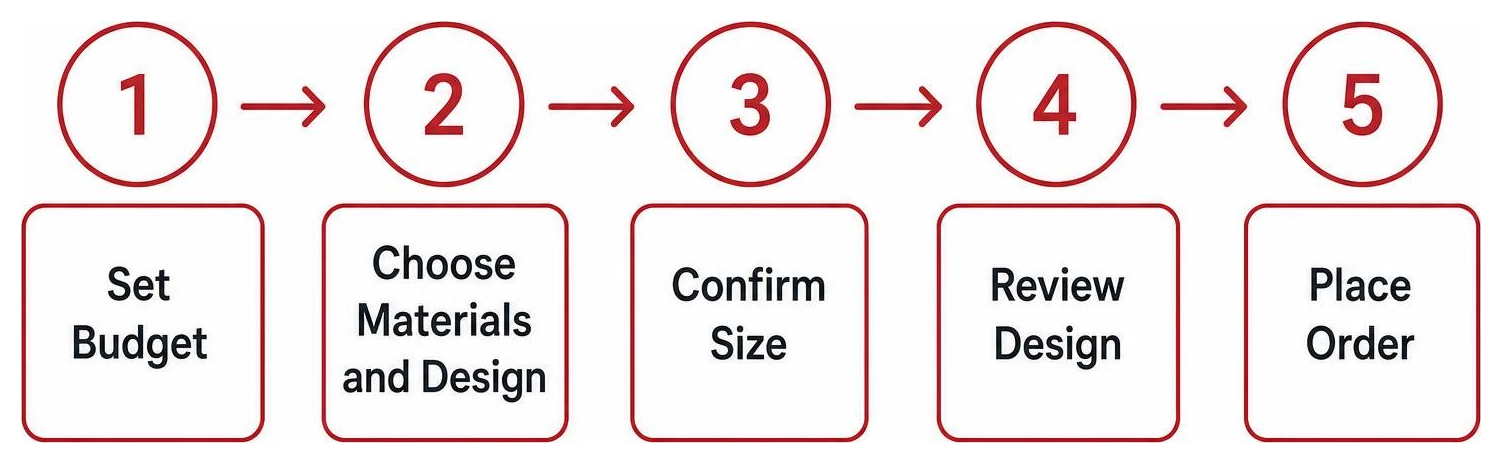
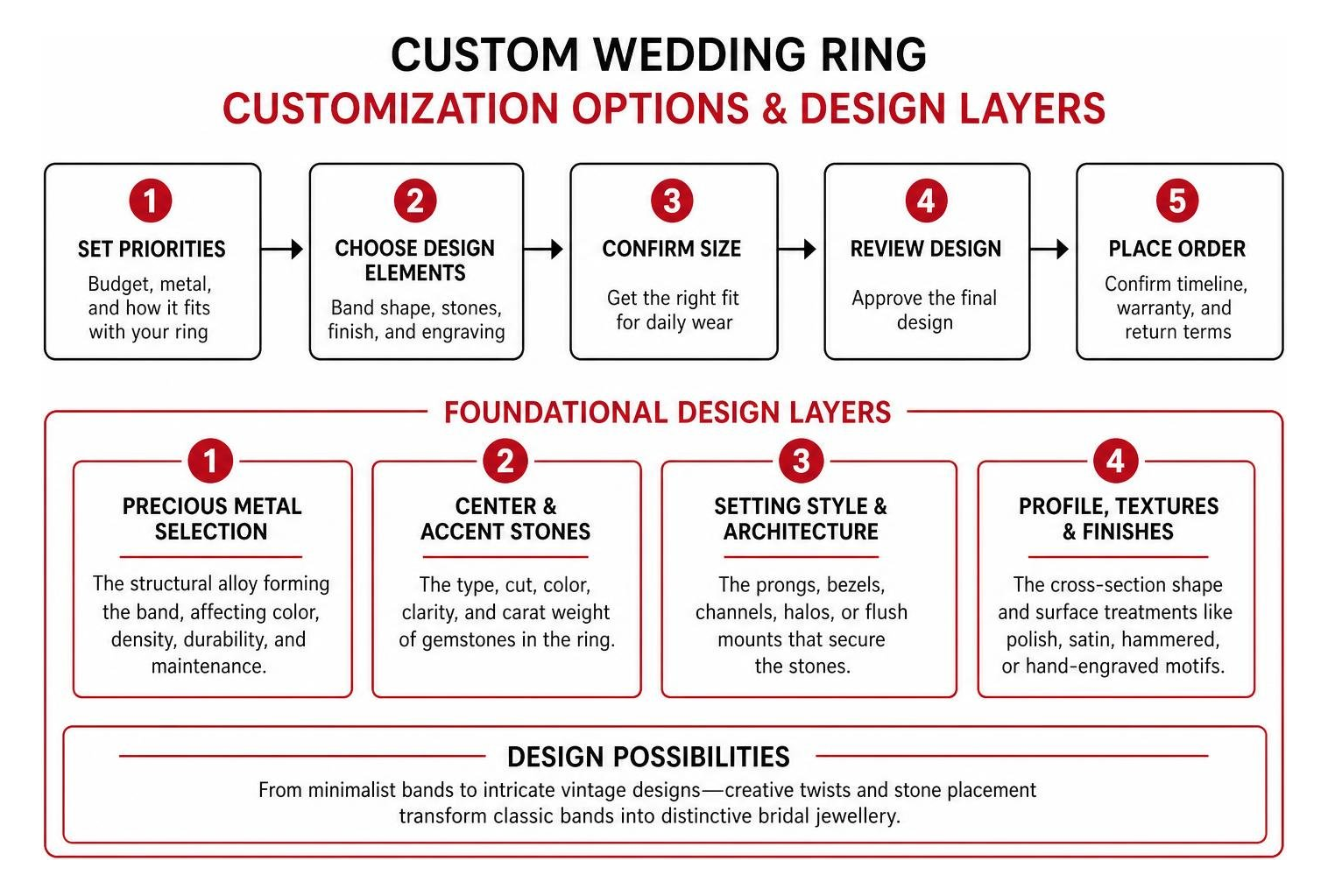
Start with the choices that matter most: your budget, the metal you want to wear every day, and how the ring should fit beside an engagement ring. Then choose the band shape, stones, finish, and any engraving. Before you order, confirm your ring size, review the final design, and ask about the timeline, warranty, and return terms.
A custom ring should feel personal and hold up to daily wear. We're Inglis Jewellers, and our custom jewellery design services can help you turn those choices into a ring that fits your style.
Customization Options for Custom Designed Wedding Rings
Choosing to commission custom designed wedding rings gives you complete control over every artistic and structural element of your band. Rather than settling for mass-produced inventory, you dictate the metal alloy, center stone carat, accent stone arrangement, profile silhouette, surface texture, and personalized interior engraving.
Every bespoke design begins with four foundational layers:
- Precious Metal Selection: The structural alloy forming the band, which influences color, density, long-term durability, and maintenance needs.
- Center and Accent Stones: The type, cut, color, clarity, and carat weight of gemstones incorporated into the ring.
- Setting Style and Architecture: The physical prongs, bezels, channels, halos, or flush mounts that hold the stones securely.
- Profile, Textures, and Finishes: The ergonomic cross-section (comfort-fit, flat, domed) paired with aesthetic treatments like high polish, satin brush, hammered facets, or hand-engraved motifs.
Design variations can span from minimalist bands to intricate vintage pieces, highlighting how creative twists and stone placement transform classic wedding bands into distinctive bridal jewellery.
Precious Metals Comparison: Gold, Platinum, and Argentium Silver
Selecting the right precious metal requires balancing daily wear resistance, aesthetic preference, skin sensitivity, and budget. Solid gold remains the traditional standard across wedding bands, available in 10K, 14K, and 18K purities, as well as yellow, white, and rose hues. Platinum offers superior density and natural white luster, while high-grade modern alloys like 935 Argentium Silver offer alternative entry points.
- 10K Solid Gold: Composed of 41.7% pure gold alloyed with silver, copper, and zinc. It is the hardest gold purity, making it scratch-resistant, though its lower gold content produces a paler yellow tone.
- 14K Solid Gold: Composed of 58.3% pure gold. As the most popular choice for engagement and wedding rings, 14K gold hits the sweet spot between warm color richness, excellent structural durability, and value.
- 18K Solid Gold: Composed of 75% pure gold. It provides a rich, deep golden tone and high hypoallergenic purity. Being softer than 14K, it develops a natural patina over years of wear.
- Platinum: A dense, heavy precious metal that is naturally 95% pure and hypoallergenic. Unlike white gold, which requires rhodium replating over time to maintain an icy sheen, platinum never changes color. When scratched, the metal displaces rather than wearing away, making it exceptionally secure for prong settings.
- 935 Argentium Silver: A modernized sterling alloy containing germanium. It offers increased tarnish resistance, brighter white reflectivity, and higher durability than traditional 925 sterling silver.
- Alternative Metals: Modern couples often explore alternative metal wedding bands such as tungsten, titanium, or tantalum for industrial-strength durability and contemporary aesthetics.
| Metal Type | Gold / Pure Metal Purity | Hardness & Durability | Hypoallergenic Rating | Maintenance & Care | Relative Cost |
|---|---|---|---|---|---|
| 935 Argentium Silver | 93.5% Silver + Germanium | Moderate; softer than gold | High | Occasional polishing; high tarnish resistance | Budget |
| 10K Solid Gold | 41.7% Gold | Very High; highly scratch-resistant | Moderate (contains base alloys) | Routine cleaning | Accessible |
| 14K Solid Gold | 58.3% Gold | High; ideal balance for daily wear | High | Routine cleaning; rhodium replating for white gold | Moderate |
| 18K Solid Gold | 75.0% Gold | Moderate; softer feel | Very High | Polishing; rhodium replating for white gold | Premium |
| Platinum | 95.0% Platinum | Very High; dense and wear-resistant | Exceptional (100% hypoallergenic) | Occasional buffing to restore shine | Luxury |
Whether you prefer traditional wedding bands or bespoke combinations, matching the metal purity between your engagement ring and wedding band prevents premature friction wear between the two rings.
Gemstone Selection: Natural Diamonds and Lab Diamonds
Selecting the primary gemstones for your custom wedding ring involves deciding between earth-mined diamonds, lab-created diamonds, and specialized alternative gemstones.
Natural diamonds, including ethically sourced Canadian diamonds, are mined from the earth and prized for their geological rarity, historic symbolism, and enduring value.
Lab-grown diamond rings feature diamonds cultivated in controlled laboratory environments using Chemical Vapor Deposition (CVD) or High Pressure High Temperature (HPHT) processes. Chemically, physically, and optically, lab diamonds are identical to mined diamonds. They score a perfect 10/10 on the Mohs hardness scale and display identical light refraction, yet cost up to 70% less than natural diamonds of identical carat, color, and clarity. This price differential allows couples to maximize center stone carat size or choose higher color and clarity grades within their target budget.
For alternative stones, Moissanite (silicon carbide) ranks at 9.25 on the Mohs scale with a refractive index of 2.65 to 2.69, delivering intense fire and brilliance.
| Gemstone Type | Chemical Composition | Mohs Hardness | Refractive Index (Fire & Sparkle) | Origin & Production | Cost Comparison |
|---|---|---|---|---|---|
| Natural Diamond | Pure Carbon (Crystalline) | 10.0 / 10 | 2.42 | Geologically mined (Earth-formed over billions of years) | Premium standard |
| Lab-Grown Diamond | Pure Carbon (Crystalline) | 10.0 / 10 | 2.42 | Lab-grown via CVD / HPHT technologies | Up to 70% lower than natural |
| Moissanite (Brilliant / Crushed Ice) | Silicon Carbide (SiC) | 9.25 / 10 | 2.65 – 2.69 | Lab-created thermal gemstone | Accessible alternative |

Technical Quality Standards: The 4Cs and Diamond Certifications
A successful custom ring design requires choosing diamonds that deliver exceptional optical life and structural durability. Understanding the foundational gemological standards outlined in our diamond education materials ensures your stones show bright, lively brilliance without hidden inclusions.
Evaluating the 4Cs in Custom Designed Wedding Rings
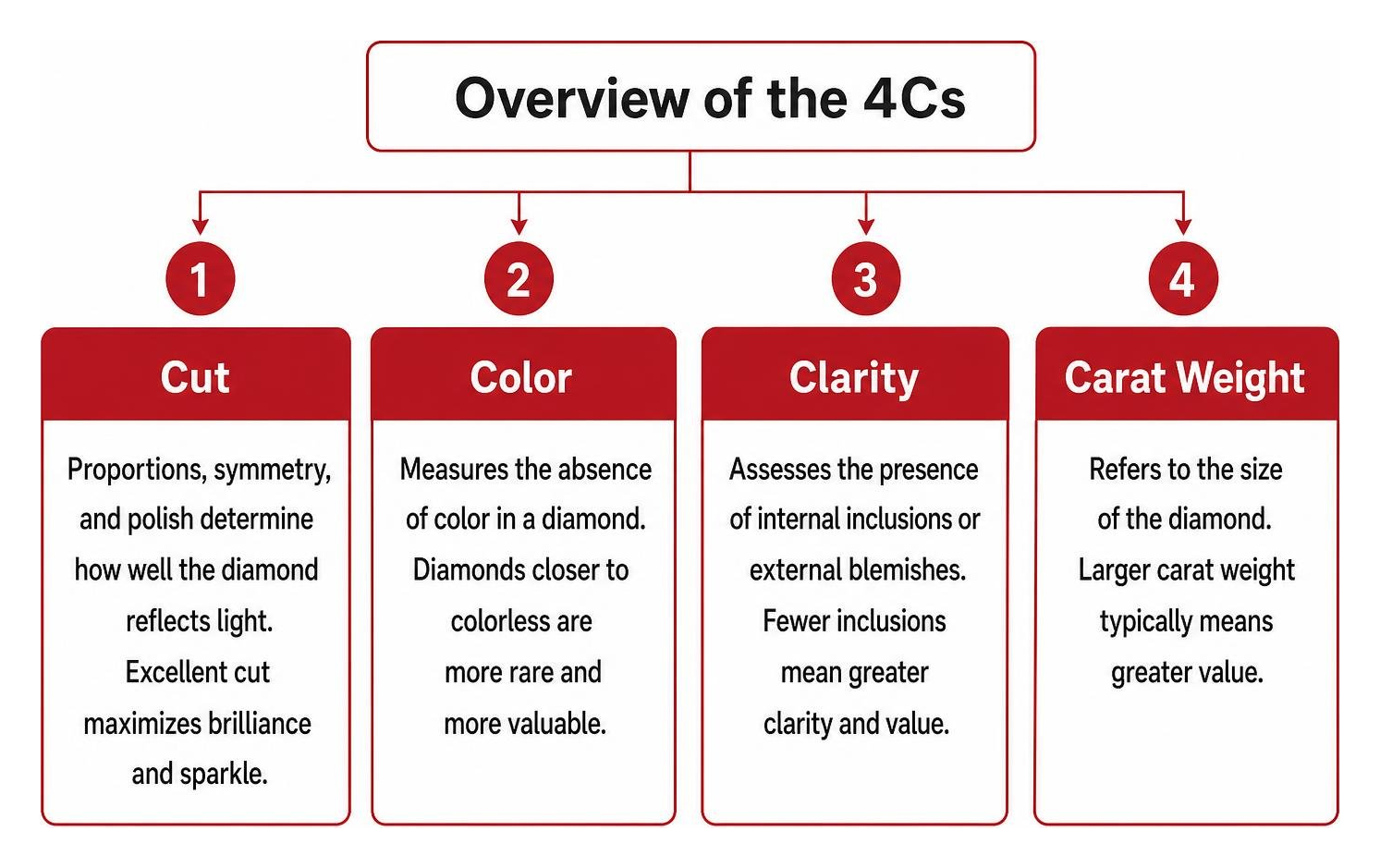
When configuring center stones and accent pavé for custom wedding bands, evaluate each of the 4Cs:
- Cut Quality: The most important factor for light performance. An Ideal or Excellent cut ensures light entering the stone reflects through the crown facets rather than leaking out the base, preventing dull or dark spots.
- Color Grade: Diamonds are graded alphabetically from D (completely colorless) to Z (light yellow or brown). The D–F colorless bracket represents the finest, ice-white tier certified by gemological institutes, ensuring crisp contrast against platinum and white gold settings. G–H near-colorless grades also face up clean in yellow and rose gold bands.
- Clarity Grade: Measures internal inclusions and surface blemishes under 10x magnification. Diamonds graded VS1 to VS2 (Very Slightly Included) are 100% eye-clean, meaning inclusions are invisible to the naked human eye while avoiding the extreme price premiums of Flawless grades.
- Carat Weight and Millimeter Dimensions: Carat measures weight, but millimeter measurements define physical surface area and presence on your finger.
| Diamond Carat Weight | Approximate Round Diameter | Visual Finger Coverage |
|---|---|---|
| 1.0 Carat | ~6.5 mm | Classic, balanced proportions |
| 1.5 Carat | ~7.3 mm | Pronounced spread across the finger |
| 2.0 Carat | ~8.2 mm | Statement coverage |
| 3.0 Carat | ~9.3 mm | Maximum visual prominence |
Custom bands with halo designs or side accents must scale their secondary stones proportionally to frame the center stone cleanly without overpowering its silhouette.
GIA and IGI Certification Standards
Independent gemological grading certificates verify that your diamond matches its stated quality specifications:
- GIA (Gemological Institute of America): The global benchmark for diamond grading, widely utilized for natural and Canadian diamonds.
- IGI (International Gemological Institute): The primary authority for grading lab-grown diamonds, delivering precise cut, color, clarity, and growth analysis.
Natural and lab-grown diamond center stones over 0.7 carats include independent certification reports from GIA or IGI. These stones feature microscopic laser inscriptions on the girdle matching the report number, allowing you to confirm authenticity and grading integrity throughout the ring's lifespan.
The Made-to-Order Design and Sizing Process
A bespoke wedding ring moves through dedicated stages of technical design and goldsmithing:
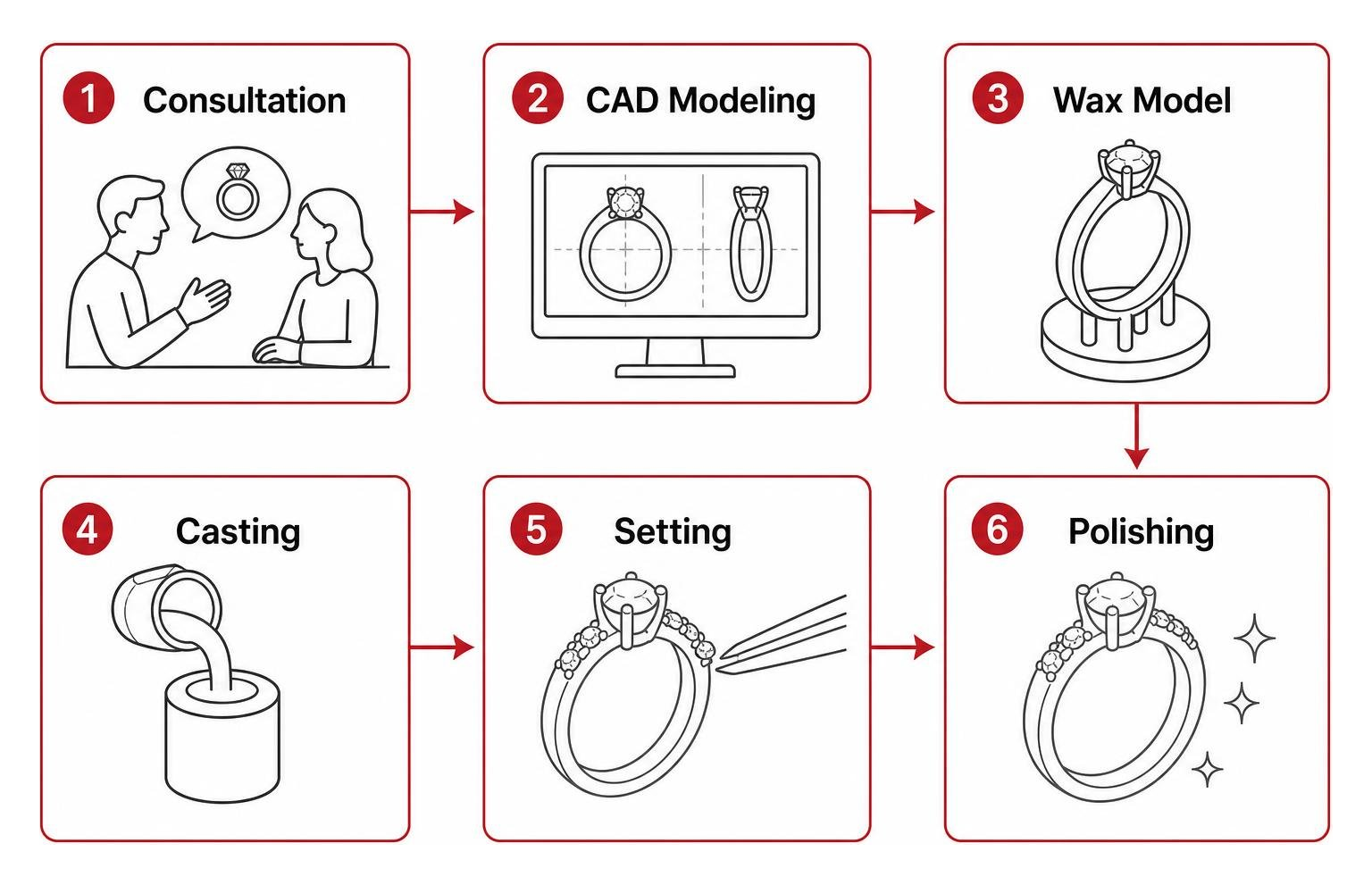
- Design Consultation: We establish your aesthetic preferences, diamond choices, metal purity, and budget parameters.
- 3D Computer-Aided Design (CAD): Our designers generate 3D digital renderings of your ring, showing exact proportions, stone placements, and structural dimensions from multiple angles.
- Wax Prototyping: A high-resolution resin or wax model is 3D-printed, allowing you to check the scale, height profile, and finger coverage in person.
- Precious Metal Casting: Using the lost-wax casting method, your selected metal (gold, platinum, or silver) is melted and cast into the solid ring mount.
- Stone Setting & Goldsmithing: Master goldsmiths hand-seat each center and accent gemstone, securing prongs, bezels, or channels.
- Finishing & Hallmarking: The piece receives hand polishing, surface texturing, rhodium plating (if white gold), and quality verification.
Perfect Sizing and Profile Customization for Custom Designed Wedding Rings
Accurate sizing is critical for custom wedding rings, especially for continuous eternity bands or tension settings that cannot be resized easily later. Rings are produced in standard North American sizes, with fractional quarter-size increments available.
Refer to our ring size guide to measure your finger accurately. Finger size fluctuates with temperature, activity, and time of day, so we recommend sizing your finger at room temperature in the late afternoon. Comfort-fit bands, which feature a slightly domed inner surface, slide over knuckles smoothly and fit more comfortably during daily wear.
For complex sets, bespoke wedding rings to fit an engagement ring can be custom-contoured using 3D scans of your engagement band. This ensures both rings sit flush without gaps, friction wear, or uncomfortable rocking.
Production Timelines, Warranties, and Returns
Custom jewellery requires careful manufacturing timelines to ensure quality across every stage of fabrication:
- Production Timelines: Typical custom wedding band creation requires 3 to 6 weeks from initial CAD approval through casting, stone setting, and final quality inspection.
- Shipping: Finished pieces are sent via fully insured, signature-required shipping to ensure secure delivery.
- Warranties & Care: Custom pieces are backed by manufacturing warranties covering structural defects, prong integrity, and casting flaws. Routine inspections, cleaning, and prong maintenance help protect your jewellery for generations.
- Return & Adjustment Policies: Because made-to-order pieces are tailored to personal specifications, return policies on custom projects differ from standard off-the-shelf inventory. Reputable jewellers review adjustments and CAD modifications before metal casting to ensure complete alignment with your vision.
Frequently Asked Questions About Custom Wedding Bands
How far in advance should we order a custom wedding band?
We recommend starting the custom design process 8 to 10 weeks prior to your wedding day. This provides ample time for design consultations, 3D CAD modeling, wax model review, casting, gemstone setting, engraving, and any final sizing adjustments without rush fees or stress before the ceremony.
Can a custom wedding ring be designed to contour around an existing engagement ring?
Yes. Creating custom contour, curved, or notched wedding bands to frame low-set engagement rings or unusually shaped center stones (such as marquise, pear, or radiant cuts) is one of the main advantages of bespoke design. We can match the curve, metal alloy, and pavé diamond dimensions of your existing engagement ring for a flush, seamless bridal stack.
What is the price difference between lab-grown and natural diamond custom rings?
Lab-grown diamonds cost up to 70% less than earth-mined natural diamonds of comparable carat, cut, color, and clarity. Choosing lab-grown stones allows you to allocate more of your budget toward heavier metal weights or larger center diamonds, while natural diamonds offer traditional geological rarity and heirloom market value.
Conclusion
Custom designed wedding rings allow you to create meaningful, durable jewellery tailored to your exact tastes, budget, and lifestyle. By choosing your precious metal, selecting high-performing certified diamonds, and fine-tuning every millimeter through 3D CAD modeling, you ensure your wedding band stands up to daily wear while telling your personal story.
At Inglis Jewellers, our goldsmiths and design specialists guide you through every step of creating a custom piece across our locations in Truro, New Glasgow, and Sydney, Nova Scotia, as well as Riverview, New Brunswick. Explore the possibilities of bespoke ring design and start designing your custom wedding ring today.