


Buy a Hypoallergenic 14K Gold Nose Stud That Lasts
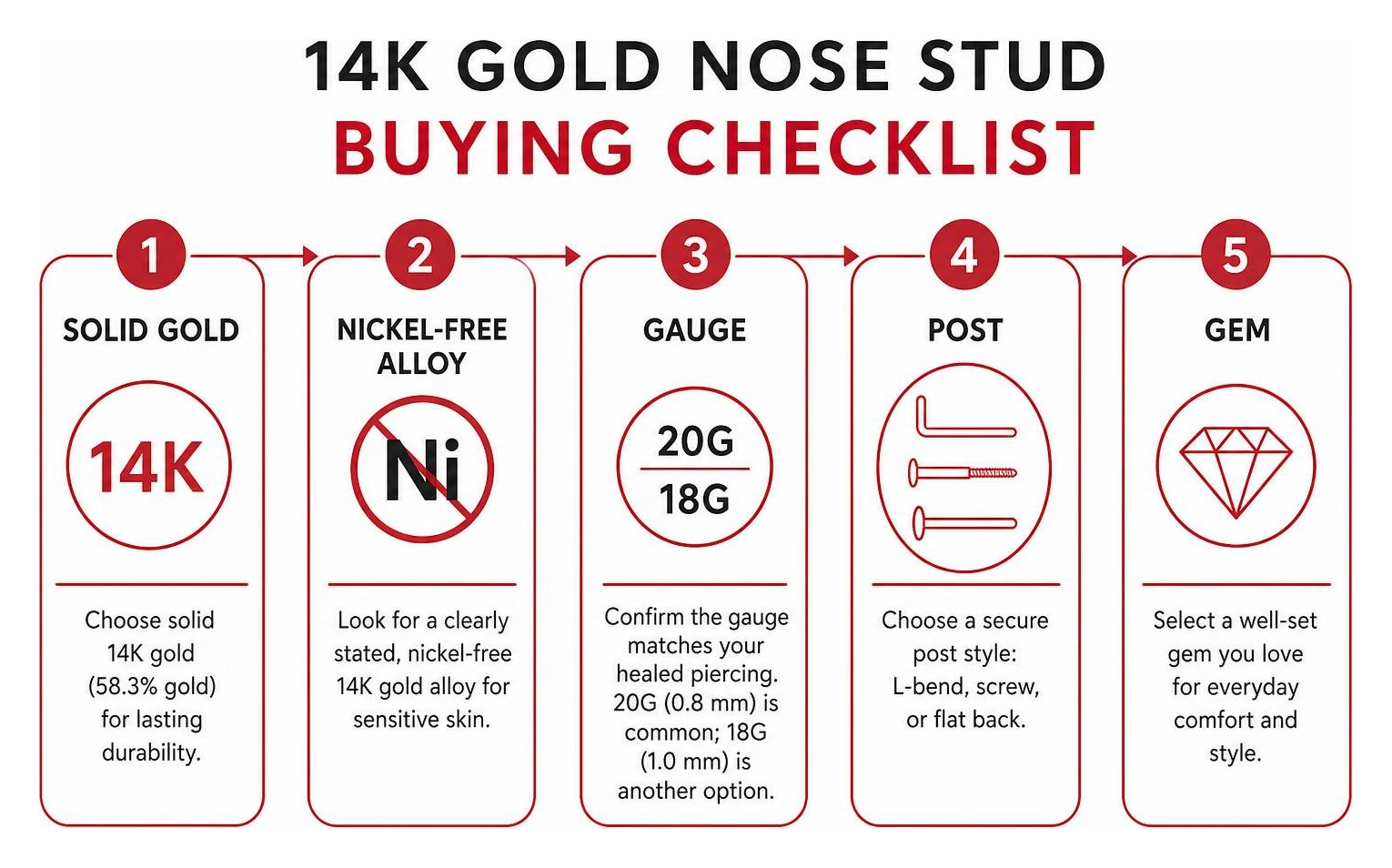
A solid 14K gold nose stud is a strong choice for everyday wear because it contains 58.3% gold and is more durable than higher-karat gold. For sensitive skin, look for a clearly stated solid, nickel-free 14K gold alloy, confirm the gauge matches your healed piercing, and choose a secure post style such as an L-bend, screw, or flat back.
Avoid treating "14K gold" as a complete quality claim. Some low-priced options are gold-plated over sterling silver or another base metal, while true solid gold costs more but will not lose a surface layer over time. A well-made stud also needs the right fit: 20G (0.8 mm) is common for nostrils, while 18G (1.0 mm) is another frequent size. For broader context on how gold purity affects durability and skin safety, the gold standards used in fine jewellery are a useful reference.
In this roundup, Inglis Jewellers will help you compare lasting, skin-conscious 14K gold nose studs and find a style that feels as good as it looks.
Solid vs. Plated: Choosing a Quality 14k Gold Nose Stud
When you begin shopping for facial body jewelry, the broad spectrum of prices can be surprising. You might see pieces advertised anywhere from $20 to over $150. The secret behind this vast price difference almost always comes down to metal purity, construction, and alloy composition.
Understanding how different gold options perform inside a facial piercing will save you from the irritation, discolouration, and regret that come with low-quality metals. You can explore true gold purity standards to understand how alloy ratios influence long-term wear.
| Feature | Solid 14k Gold | Semi-Solid / Gold-Filled | Gold-Plated (over Silver/Brass) |
|---|---|---|---|
| Gold Content | 58.3% pure gold throughout | 5%–10% gold mechanically bonded | Microscopic layer (under 0.05%) |
| Durability | Decades of daily wear | Moderate (lasts several years) | Short (months to 1 year) |
| Tarnish Resistance | Completely tarnish-proof | High resistance | Low; tarnishes when base is exposed |
| Water / Sweat Safe | Yes; gym, shower, and sleep safe | Mostly safe; avoid harsh chemicals | No; plating wears off quickly |
| Skin Reaction Risk | Extremely low (when nickel-free) | Low | High once the base metal surfaces |
| Average Price | $50.00 – $150.00+ | $30.00 – $60.00 | $15.00 – $30.00 |
Solid 14K Gold Purity and Hypoallergenic Benefits
Solid 14k gold strikes the ultimate balance between purity, structural strength, and biocompatibility. Pure 24-karat gold is far too soft for body jewelry; a delicate nose post made from 24k would easily bend, warp, or scratch during routine wear. By alloying 58.3% pure yellow gold with stabilizing metals like copper, silver, and zinc, goldsmiths produce a metal that stands up to the mechanical friction of facial movements.
For sensitive skin, solid 14k gold offers exceptional corrosion resistance. The nasal mucosal environment is humid, exposed to natural skin oils, makeup, facial cleansers, and sweat. Low-grade metals corrode when exposed to these elements, leaching metallic salts into the surrounding tissue. Solid, nickel-free 14k gold remains inert, preventing the dreaded "black ring" stain and keeping your piercing channel calm, healthy, and pristine.
Semi-Solid and Gold-Plated Alternatives
Gold-plated nose studs feature an ultra-thin flash of gold electroplated over an underlying core, typically 925 sterling silver or base brass. While attractive to budget-conscious shoppers, gold plating in a nose piercing faces a hostile environment. Constant friction and natural skin acids quickly wear away the microscopic gold layer.
When the base silver or copper is exposed, it oxidizes, leading to localized skin discolouration and contact dermatitis. If you have any metal sensitivities, sticking strictly to solid 14k gold ensures that your skin only ever touches hypoallergenic, biocompatible metal.
Nose Stud Sizing: Choosing the Right Gauge and Post Style
Choosing the perfect piece of jewelry involves more than picking a pretty gem; it requires matching your unique nostril anatomy with the correct post thickness and back style.
Gauge refers to the thickness of the post, and nostril piercings operate on an inverted scale: the smaller the gauge number, the thicker the wire.
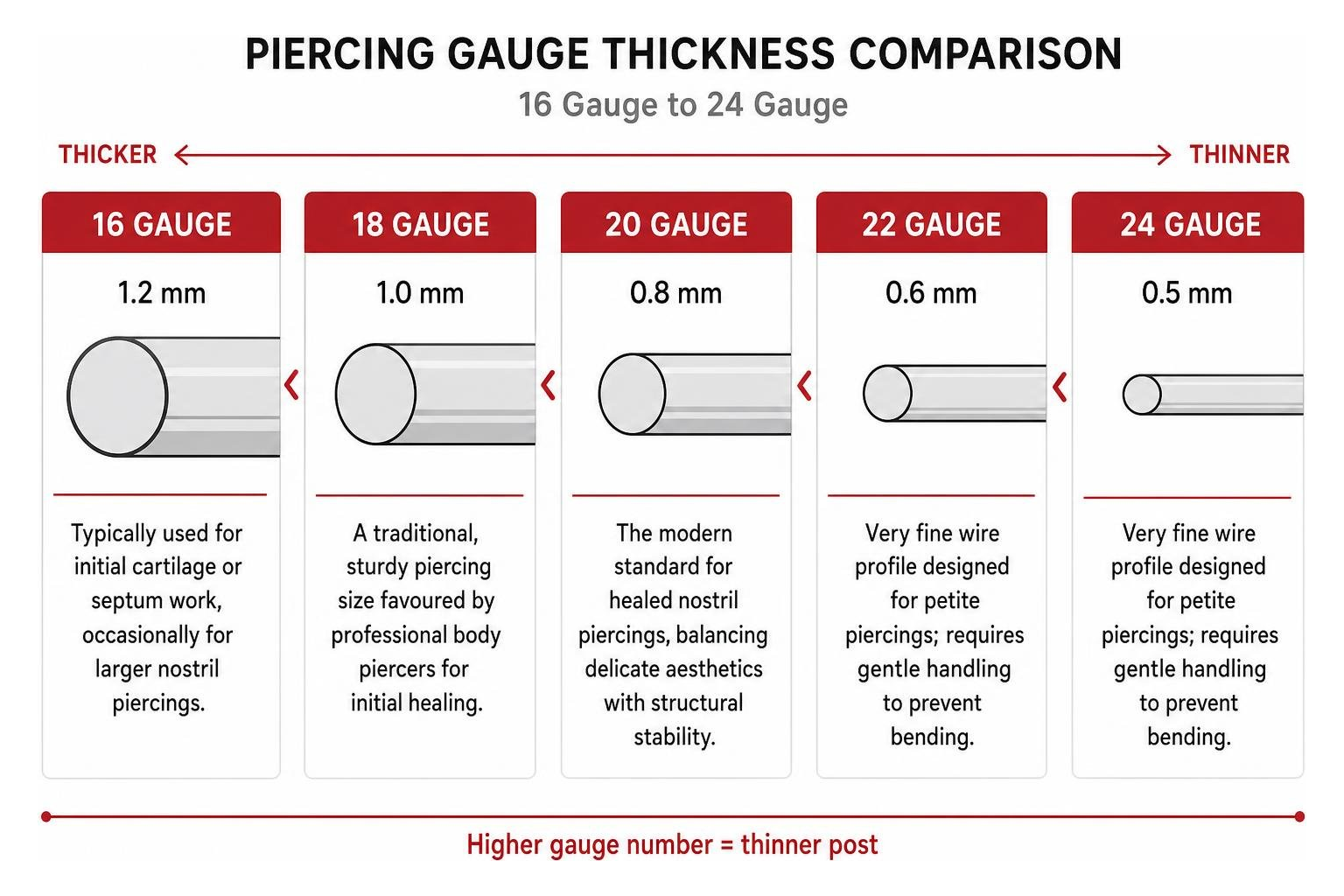
- 16 Gauge (1.2 mm): Typically used for initial cartilage or septum work, occasionally for larger nostril piercings.
- 18 Gauge (1.0 mm): A traditional, sturdy piercing size favoured by professional body piercers for initial healing.
- 20 Gauge (0.8 mm): The modern standard for healed nostril piercings, balancing delicate aesthetics with structural stability.
- 22 Gauge (0.6 mm) & 24 Gauge (0.5 mm): Very fine wire profiles designed for petite piercings; requires gentle handling to prevent bending.
If you are expanding your collection beyond facial piercings, browsing curated gold body jewellery will give you a clear sense of how gauges and post styles interact across different body placements.
Classic L-Shape and Screw 14k Gold Nose Stud Styles
- The L-Shape Post: Bent at a clean 90-degree angle, the L-bend stud is popular because it is exceptionally easy to insert and remove. It sits comfortably against the interior roof of the nostril without excess hardware. Because it lacks a locking mechanism, it is best suited for well-heeled piercings where you want effortless style changes.
- Nose Screws (Nostril Screws): These feature a half-loop corkscrew tail that hooks securely into the nostril cavity. They come in dedicated left-bend and right-bend orientations to match whichever side of your nose is pierced. While they require a gentle rolling motion to insert, they offer superior security against accidental snags during sleep or washing.
Flat Back and Bone 14k Gold Nose Stud Variations
- Flat Back Labrets (Threadless / Push-Pin): Widely celebrated by modern piercers, flat back labret posts feature a smooth disc that rests flush against the interior septum wall. A decorative 14k gold gem top with a slightly bent pin pushes firmly into the hollow post, creating strong spring-tension retention. Flat backs eliminate poke-points and prevent tissue irritation completely.
- Nose Bones: A straight post featuring a slightly flared ball end that is gently pushed through the piercing channel. While sleek and low-profile, nose bones are recommended exclusively for fully matured, loose piercings, as pushing the wider bulb through an unhealed channel can cause micro-tears.
Accent Gems: CZ, Lab Diamonds, and Natural Diamonds
The focal point of your nose stud is its decorative front end. Whether you prefer a subtle 1.0 mm metallic dot or a vibrant 2.5 mm sparkling stone, understanding your gem choices ensures you select the right balance of brilliance and budget.
- Cubic Zirconia (CZ): High-grade (AAAAA) cubic zirconia offers exceptional visual dispersion and crisp fire at an accessible price point. It is an excellent choice for everyday casual pieces or trend-forward shapes like hearts, trinities, and stars.
- Lab-Grown Diamonds: Chemically, physically, and optically identical to mined diamonds, lab-grown diamonds deliver permanent brilliance, high clarity, and diamond-grade hardness (10 on the Mohs scale) with minimal environmental footprint.
- Natural Diamonds: Prized for timeless prestige and heirloom quality, natural conflict-free diamonds add an unmistakable touch of luxury to fine gold body jewelry.
Beyond the stone itself, pay close attention to the setting style:
- Bezel Settings: The gold forms a solid rim around the circumference of the gem. This is the most practical choice for everyday nose jewelry because it eliminates exposed prongs that can catch on towels, knit sweaters, or face cloths.
- Prong Settings: Tiny gold claws hold the gem aloft, allowing maximum light to enter from all angles for amplified sparkle.
If you have an exact vision for a one-of-a-kind setting, exploring our custom jewellery design services allows you to partner with master bench jewelers to bring personalized concepts to life.
Piercing Aftercare, Cleaning, and Healing Protocols
Even the finest 14k gold jewelry can become dull or trap debris if neglected. Establishing a consistent aftercare and cleaning routine keeps your skin healthy and your gold sparkling.
To protect both your piercing and your gold, follow this safe cleaning procedure:
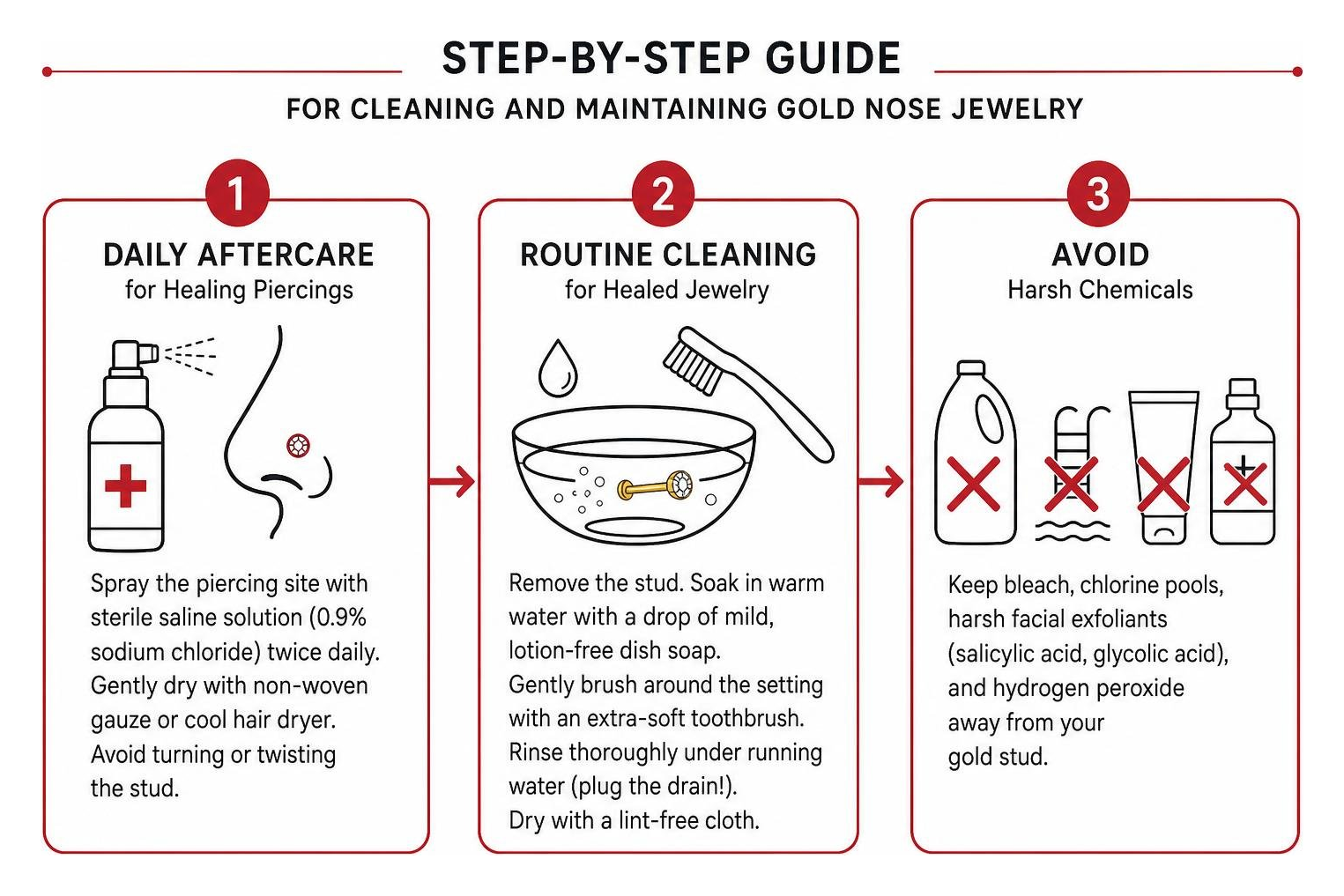
- Daily Aftercare for Healing Piercings: Spray the exterior and interior piercing site with a sterile isotonic saline solution (0.9% sodium chloride) twice daily. Gently dry the area using non-woven gauze or the cool setting of a hair dryer. Avoid turning or twisting the stud.
- Routine Cleaning for Healed Jewelry: Over time, makeup, moisturizers, and natural sebum build up behind gemstone settings. Remove the stud and soak it in warm water with a drop of mild, lotion-free dish soap. Gently brush around the setting with an extra-soft toothbrush, rinse thoroughly under running water (making sure the sink drain is securely plugged!), and dry with a lint-free cloth.
- Avoid Harsh Chemicals: Keep bleach, chlorine pools, harsh facial exfoliants (salicylic acid, glycolic acid), and hydrogen peroxide away from your gold stud.
For comprehensive preservation techniques covering fine metals and gemstones, review our detailed jewellery care and cleaning guide. If a prong ever loosens or a post bends, our goldsmiths provide trusted in-house professional jewellery repairs to restore your pieces to factory perfection.
Frequently Asked Questions About Gold Nose Piercings
Can I put a 14k gold stud in a freshly pierced nose?
Yes, provided that the jewelry is solid 14k gold, completely nickel-free, and configured as a threadless flat back post or an appropriately sized nostril screw. Initial piercings should never use gold-plated silver, gold-filled metal, or nose bones. Always ensure the post is long enough to accommodate natural swelling during the initial 6 to 8-week healing window.
How do I determine my correct nose stud gauge size?
Most initial nostril piercings are performed using an 18G (1.0 mm) or 20G (0.8 mm) needle. If you are unsure of your current size, an experienced body piercer or professional jeweler can measure your existing jewelry using a precision digital caliper. Using a gauge that is too thick will cause uncomfortable stretching, while choosing one that is too thin may cause your piercing channel to naturally shrink over time.
Will 14k yellow, white, or rose gold irritate sensitive skin?
- 14k Yellow Gold: Naturally hypoallergenic when formulated without nickel, relying instead on silver, copper, and zinc.
- 14k Rose Gold: Formulated with a higher proportion of copper to achieve its warm, blush tone. It is virtually hypoallergenic for most people, though those with rare copper sensitivities should monitor their skin.
- 14k White Gold: Traditionally alloyed with nickel or palladium and finished with rhodium plating. To guarantee sensitive-skin safety, always verify that your 14k white gold body jewelry is certified nickel-free.
Conclusion
A fine nose stud is one of the most expressive, intimate pieces of jewelry you can wear. By choosing solid, nickel-free 14k gold paired with the correct gauge and post design, you ensure lasting brilliance without risking allergic irritation or premature wear.
Whether you are looking for an ultra-subtle gold ball, a shimmering bezel-set diamond, or an elegant corkscrew stud, investing in fine goldsmith craftsmanship makes all the difference. For more expert insights into choosing timeless gold pieces that elevate your personal collection, read our ultimate gold ring and fine jewellery guide.